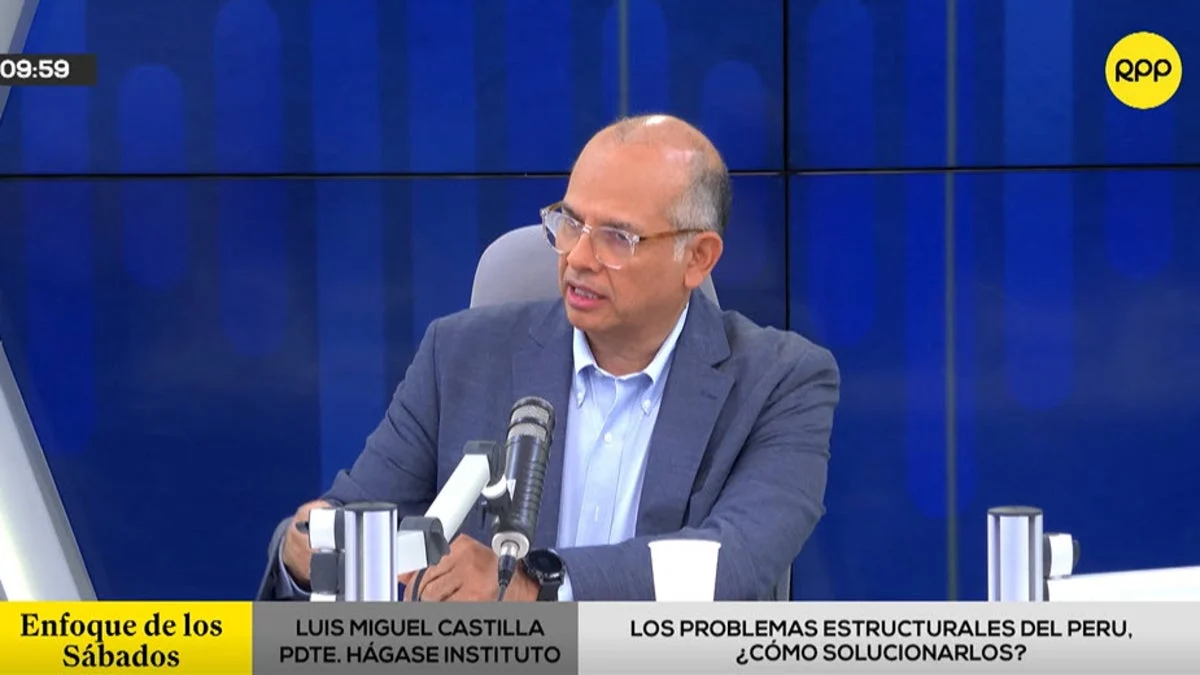
In a political landscape often defined by rhetorical stagnation and a perpetual cycle of planning without execution, a new initiative has emerged with a singular, pragmatic mission: bridging the cavernous gap between public policy design and its actual implementation. Hágase Instituto, a self-described "think and do tank," has been officially launched by three prominent former ministers of the Ollanta Humala administration—Luis Miguel Castilla, Milton von Hesse, and Paola Bustamante.
The trio, possessing decades of combined experience in the highest echelons of the Peruvian state, seeks to pivot away from the traditional model of academic think tanks that limit their scope to theoretical papers. Instead, they aim to provide on-the-ground technical assistance to regional and local governments, fostering a "vocational approach to building the country rather than just theorizing about it."
Main Facts: A Shift from Theory to Practice
The core philosophy of Hágase Instituto is rooted in the belief that Peru is suffering from "diagnosis fatigue." According to Luis Miguel Castilla, the former Minister of Economy who currently serves as the president of the institute, the nation is drowning in reports, white papers, and academic studies, yet the quality of life for the average citizen remains stagnant.
The institute’s mandate is built upon four operational pillars designed to disrupt the status quo:
- Context-Specific Solutions: Rejecting "one-size-fits-all" recipes, the institute prioritizes local diagnostic assessments to identify the specific bottlenecks hindering progress in each jurisdiction.
- Executive Empowerment: Emphasizing that leadership is the catalyst for change, they focus on strengthening the decision-making capacity of heads of government.
- Presence In Situ: Moving beyond "remote" advisory services from Lima, the institute insists on technical teams being physically present in the regions to monitor, guide, and support local implementation.
- Full Transparency and Independence: Crucially, the institute operates on a donation-based model, explicitly prohibiting any quid-pro-quo arrangements with the authorities they assist, thereby safeguarding their institutional probity.
Chronology: The Evolution of a Collaborative Vision
The seeds for Hágase Instituto were sown over a decade ago when the three founders served together in the Council of Ministers. What began as a professional cabinet relationship evolved into a long-standing partnership, with the founders collaborating on various technical projects across the private and public sectors.
- 2011–2016: The foundational years of professional collaboration during the Humala government.
- 2016–2023: A period of individual transitions through academic, private, and international consulting roles, where each founder witnessed the growing disconnect between the central government in Lima and the realities of the provinces.
- Late 2023/Early 2024: The formal conceptualization of Hágase Instituto as a mechanism to address the "divorce" between the prosperous coast and the struggling interior regions.
- Mid-2024: The public unveiling of the institute, signaling a shift toward direct intervention in public management to prepare for the administrative cycles of the coming years.
Supporting Data: The Cost of Institutional Volatility
Milton von Hesse, former Minister of Housing and director at the institute, has provided stark evidence regarding the "much-needed order" in the public sector. His analysis of current administrative trends reveals a system in crisis:
- Administrative Instability: In one recent case study of a national investment unit, von Hesse identified that the organization cycled through 20 executive directors in just five years.
- The Price of Turnover: This constant churn of leadership has resulted in catastrophic inefficiencies. Projects monitored by the institute showed that cost overruns exceeded 35% of the original budget, with project delays stretching beyond 1,800 days.
- Erosion of Institutional Memory: Von Hesse argues that the "five-minute memory" syndrome—where new officials arrive and discard the knowledge and processes of their predecessors—is the primary driver of systemic failure. Without institutional memory, the state loses the ability to distinguish between corruption and simple administrative negligence, as the "traceability" of bad decision-making is effectively erased by the high turnover of personnel.
Official Responses and Perspectives
The founders of Hágase Instituto maintain that their initiative is not merely an advisory service, but an aggressive attempt to reclaim the integrity of public service.
The Perspective of Luis Miguel Castilla
Castilla emphasizes the ethical dimension of the "implementation gap." He notes that the distance between a law being passed and its actual application is where the most significant corruption occurs. "You can go to a municipality and find perfect regulations on paper, but if you dig deeper, you find massive discretion and, ultimately, extortion of the citizens," Castilla remarked. The institute intends to use data-gathering tools, including field surveys, to provide information that is currently unavailable to regulatory bodies like the Comptroller General or the Congress.
The Perspective of Paola Bustamante
Paola Bustamante, former Minister of Development and Social Inclusion (MIDIS), underscores the importance of human capital. For Bustamante, the strength of a nation lies in the capacity of its regional and local officials. She posits that by providing technical assistance to those taking office in the upcoming electoral cycles, the institute can foster a new standard of public management. "The opportunity to strengthen the state exists, but it requires a sustained, collaborative effort to professionalize the public workforce at the local level," she stated.
Implications: A New Model for Civil Society Engagement
The arrival of Hágase Instituto carries profound implications for how public policy is handled in Peru. By positioning themselves as a "do tank," they are challenging the traditional boundaries of civil society organizations.
Implications for Regional Governance
The institute’s focus on the "territorial" reality acknowledges a fundamental political truth in Peru: the regional divide. By offering technical support to governors and mayors, they are aiming to reduce the power of local "caudillos" who operate in the shadows of administrative complexity. If successful, this could reduce the influence of corrupt middlemen who exploit the confusion created by poorly understood regulations.
Implications for Transparency
By making their findings public and bringing them directly to oversight institutions like the Comptroller’s Office, the founders are creating a feedback loop. They are not simply complaining about the state; they are providing the raw data that allows for accountability. This "lupa" (magnifying glass) approach serves as a warning to inefficient or corrupt actors that their administrative failures will no longer be lost in the bureaucracy of Lima.
The Challenge of Sustainability
Despite the noble intentions, the institute faces significant hurdles. The political volatility of Peru is legendary; projects that appear sound can be derailed by sudden shifts in national politics, social unrest, or regional power struggles. The challenge for Castilla, von Hesse, and Bustamante will be to maintain their neutrality and technical focus in an environment where, as Castilla noted, it is "very easy to give, but very difficult to withdraw" subsidies and political promises.
Conclusion
Hágase Instituto enters the Peruvian fray at a time of profound cynicism. By leveraging the prestige and expertise of three former ministers, the organization hopes to transform the landscape of public administration from one of "planning and failing" to one of "doing and achieving."
Whether this effort can withstand the pressures of local political fiefdoms remains to be seen. However, by focusing on the granular, day-to-day mechanisms of government—the TUPA models, the investment timelines, and the administrative record-keeping—they are addressing the very nuts and bolts that keep the state functioning. If the "do tank" can successfully translate its technical expertise into stable, transparent, and efficient regional governance, it may provide a much-needed blueprint for reclaiming the Peruvian state from the grip of institutional disorder.