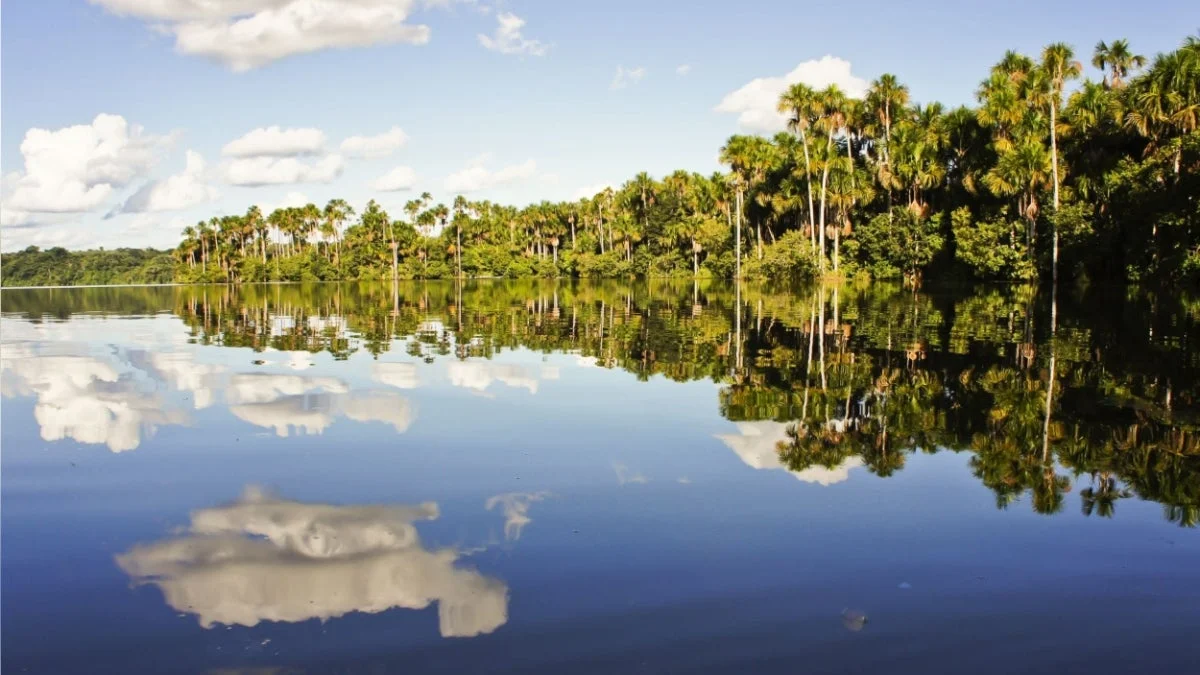
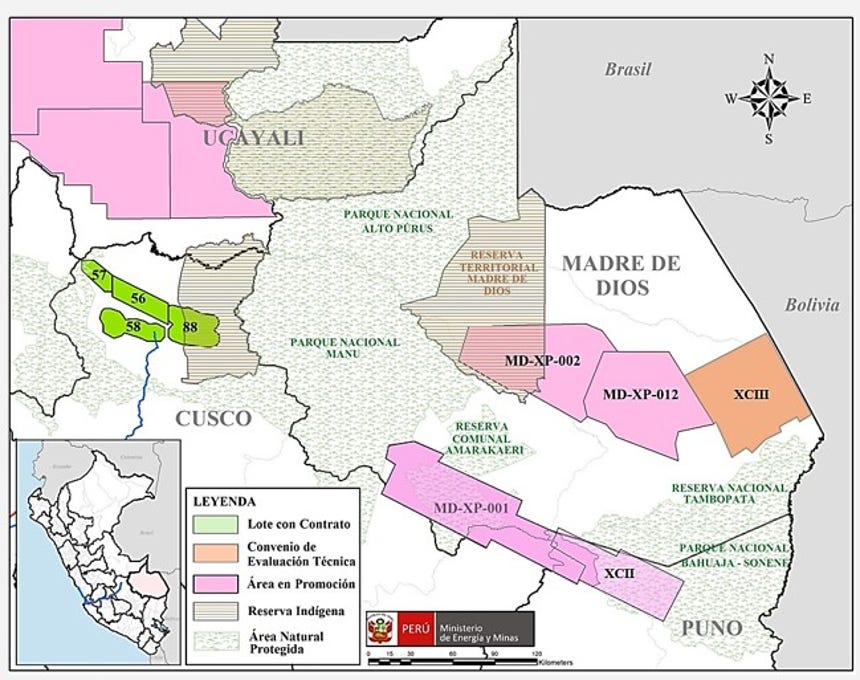
In a move that has reignited the perennial debate between economic development and environmental stewardship, the Peruvian government is actively evaluating a proposal to reopen the Candamo region for natural gas exploration and exploitation. Located within the heart of the Bahuaja Sonene National Park—a sprawling protected area of over 1.09 million hectares that spans the regions of Madre de Dios and Puno—the proposal represents a significant shift in national energy policy.
The administration, led by President Keiko Fujimori, argues that tapping into these reserves is an essential step to secure the country’s energy future. However, the plan faces significant hurdles, both legal and ecological, as it seeks to navigate the complexities of operating within one of the world’s most biodiverse regions.
The Strategic Importance of Candamo
The Candamo region, specifically designated as Area XCII by the state agency Perupetro, is considered one of the most promising hydrocarbon prospects in the Madre de Dios basin. According to the Ministry of Energy and Mines (Minem), the entire basin holds approximately 20.4 trillion cubic feet (TCF) of prospective gas resources—nearly half of the country’s identified potential.
Within this area, the Candamo structure itself is estimated to contain proven reserves of approximately 3.5 TCF. For a nation whose current proven gas reserves provide only about 13 years of autonomy, the potential to incorporate these volumes into the national energy matrix is a compelling driver for the government’s interest.
Viceminister of Hydrocarbons, Iris Cárdenas, underscored the urgency of this initiative during a recent interview with RPP. She emphasized that the decision to prioritize this area is not arbitrary but rooted in the need to prevent an energy deficit in the coming decades.
Chronology and Historical Context: A Previously Disturbed Landscape
To understand the government’s position, it is essential to look at the history of the site. Proponents of the project argue that Candamo is not a pristine, untouched wilderness in the way environmentalists might portray it.
- Pre-2000s: The area was subject to initial hydrocarbon exploration, including seismic surveying and the drilling of exploratory wells.
- The Current State: The government claims that the area is already suffering from anthropogenic pressure, specifically through the proliferation of illegal mining activities.
- 2025: The Ministry of Energy and Mines announced it was drafting a framework to allow for the coexistence of hydrocarbon activities and protected areas, laying the groundwork for the current push.
- 2026 (Present): The administration is formalizing the evaluation of Candamo for commercial extraction, with an optimistic, albeit challenging, timeline targeting the commencement of production by 2028.
Viceminister Cárdenas noted that because the area has been "previously intervened," the environmental impact of renewed activity could be managed more effectively than in a virgin forest. By focusing on areas already affected by seismic work or illegal mining, the government suggests that it can implement modern, stringent environmental controls to rehabilitate the landscape while extracting energy resources.
The Proposal: A "Gas-for-Conservation" Model
One of the most innovative, yet controversial, aspects of the government’s proposal is the intent to link gas production directly to the funding of environmental conservation. The administration is currently seeking a consensus with the National Service of Natural Protected Areas (Sernanp) to establish a mechanism wherein a percentage of the value generated from the gas production in Candamo would be diverted to the management and protection of the Bahuaja Sonene National Park.
"We could compensate with part of the production, by taking a portion of the value and giving it to the agency so they can protect the entire protected area; that is how we could coexist," Cárdenas explained.
While the exact percentage of royalties or profits to be earmarked for conservation has not been finalized, the conceptual framework marks a departure from traditional extractive models. The government views this as a "win-win" scenario: energy security for the nation, and a sustainable, permanent funding stream for biodiversity conservation that would otherwise be subject to the volatility of the national budget.
Supporting Data and Precedents
The Ministry of Energy and Mines points to the Camisea project and the Lote 95 operations as successful benchmarks for this type of industrial activity. In the case of Camisea, the government asserts that strict adherence to environmental and social protocols has allowed for resource extraction while minimizing the footprint on the local environment and the indigenous communities.
Key protocols referenced by the government include:
- Strict Avoidance Policies: Halting all activity upon the potential sighting of indigenous populations in initial contact or isolation.
- Water Management: Re-injecting production waters back into the subsoil to prevent contamination of surface water bodies.
- Waste Management: Implementing rigorous protocols for the handling and disposal of drilling residuals.
Despite these arguments, critics remain skeptical. Environmental advocacy groups have long warned that the fragile ecosystems of Madre de Dios cannot withstand the infrastructure requirements—such as access roads, pipelines, and drilling platforms—that come with large-scale hydrocarbon extraction, regardless of the safeguards in place.
Legal and Administrative Implications
The path forward is far from straightforward. The legal status of protected areas in Peru strictly prohibits industrial activities that could compromise their ecological integrity. To move forward, the government would need to modify existing legislation or create a specific legal exception for "areas of previous intervention."
According to the Viceminister, the timeline for such an undertaking is extensive. Even if the legislative framework is adjusted, the process involves:
- International/National Bidding: Perupetro must first tender the lot to interested operators.
- Permitting: Obtaining environmental impact assessments (EIAs) and social licenses, which are notoriously difficult to secure in regions with high ecological sensitivity.
- Development Phase: Building the necessary infrastructure in a remote, dense rainforest environment.
Cárdenas estimates that this entire process would take approximately six years, placing the start of commercial production at the end of the decade. This estimation acknowledges that the project is not a "quick fix" for energy shortages, but a long-term strategic investment.
Conclusion: A High-Stakes Balancing Act
The proposal to unlock Candamo is a litmus test for the current administration’s vision of sustainable development. On one side stands the pressing need for energy independence, economic growth, and the hope of using natural resource wealth to fund environmental preservation. On the other side stands the global commitment to protect the Amazon, the home of thousands of unique species and the backbone of regional climate stability.
The government’s gamble rests on the premise that technology and rigorous regulation can mitigate the inherent risks of extraction. Whether the public, environmental agencies, and the scientific community will accept this "coexistence" model remains to be seen. For now, Candamo sits at the center of a national conversation about the cost of progress and the true price of energy. As the government moves to reconcile its energy goals with the preservation of Bahuaja Sonene, the eyes of the international environmental community will be fixed on the outcome, knowing that the precedent set here could define the future of the Peruvian Amazon.