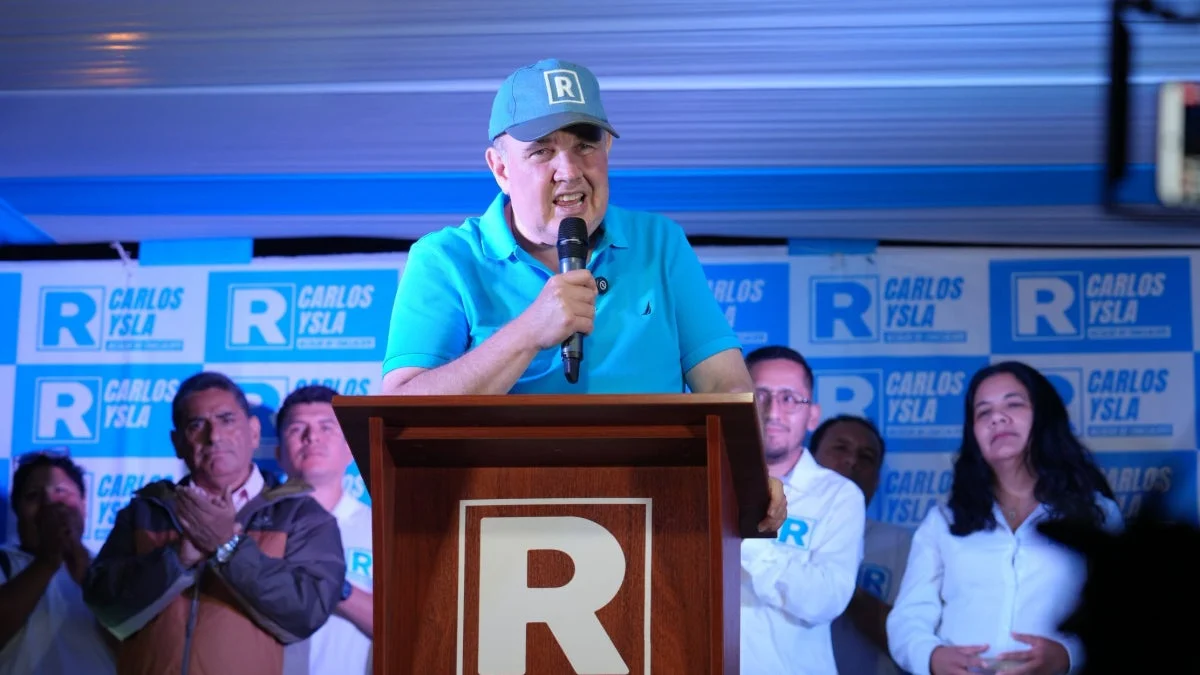
LIMA, PERU – In a definitive ruling that settles a contentious legal challenge within the current municipal electoral cycle, the Lima Centro Special Electoral Jury (JEE) has dismissed a petition seeking the exclusion of Rafael López Aliaga, a candidate for provincial councilor for the Renovación Popular party. The decision, handed down on August 23, 2026, effectively clears the path for López Aliaga to continue his participation in the upcoming regional and municipal elections scheduled for Sunday, October 4, 2026.
The controversy stemmed from a challenge filed by citizen Ronald Castillo Rojas, who alleged that López Aliaga’s candidacy constituted a "covert re-election," claiming it violated constitutional prohibitions regarding the consecutive terms of municipal authorities. However, the electoral body’s resolution, identified as N° 05790-2026-JEE-LICN/JNE, rejected these arguments, citing both procedural lapses and a lack of legal grounds for exclusion.
The Core Dispute: Defining "Covert Re-election"
The heart of the challenge revolved around the interpretation of Article 194 of the Political Constitution of Peru. Castillo Rojas argued that López Aliaga, through his current position and his strategic placement on the candidate list for Renovación Popular, was circumventing the spirit of the law, which is designed to prevent the indefinite accumulation of power by municipal incumbents.
The petitioner contended that the electoral authorities needed to intervene to protect the integrity of the democratic process. The term "covert re-election" was used to characterize the candidate’s transition from his current role to the candidacy for first councilor, arguing that this trajectory effectively functions as a bypass of the constitutional ban on immediate re-election for mayors.
Chronology of the Legal Battle
The timeline of this case is critical to understanding why the JEE ultimately rejected the petition. The following sequence highlights the procedural path of the complaint:
- July 26, 2026: The Lima Centro JEE officially admits the Renovación Popular list of candidates for the provincial municipal elections. This date marks the beginning of the legal "window of opportunity" for citizens to contest any candidacy.
- Early August 2026: Citizen Ronald Castillo Rojas files a formal request for the fiscalization and subsequent exclusion of Rafael López Aliaga.
- Mid-August 2026: Renovación Popular’s legal representative submits formal responses, arguing that the request is an untimely "covert challenge" (tacha) and that it lacks substantive evidence.
- August 23, 2026: The JEE of Lima Centro issues Resolution N° 05790-2026-JEE-LICN/JNE, officially declaring the petition improcedente (inadmissible).
The JEE’s Legal Reasoning: Procedural Preclusion
The primary reason for the rejection was not the merits of the political argument, but the strict application of electoral procedural law. The JEE clarified that the challenge presented by Castillo Rojas was, by definition, a "tacha"—a formal objection to a candidate or a list.
According to numeral 5.39 of Article 5 of the electoral regulations, a tacha is a written challenge filed by any citizen against an admitted list of candidates for alleged constitutional or regulatory violations. Because the list had been admitted on July 26, the JEE emphasized that the legal period to file such challenges had already expired by the time the complaint reached the jury.
"The time for filing a tacha had already elapsed when the citizen’s report under analysis was submitted," the resolution stated. "Consequently, having passed the established deadline for its filing, the request must be declared inadmissible."
Distinguishing Between "Tacha" and "Exclusion"
A significant portion of the electoral body’s ruling focused on the legal distinction between a tacha (challenge) and an exclusión (exclusion). While the former is a mechanism to contest a candidacy early in the process, the latter is a more drastic measure reserved for specific, severe legal infractions that emerge later in the campaign.
The JEE underscored that an exclusion can only proceed under very specific, legally defined conditions, such as:
- A final criminal conviction resulting in imprisonment.
- Legal incapacitation (interdicción judicial).
- Formal disqualification by the justice system.
The resolution noted: "In this case, the facts presented by Ronald Wilder Castillo Rojas do not indicate that candidate Rafael Bernardo López Aliaga Cazorla has triggered any of these specific scenarios. Therefore, there is no legal basis for exclusion."
The Defense: Renovación Popular’s Response
The legal team representing Renovación Popular was swift in its defense, arguing that the citizen’s complaint was a strategic maneuver intended to disrupt their campaign. They characterized the request as a "tacha encubierta"—an attempt to relitigate the validity of the candidate list long after the formal deadline for objections had passed.
Furthermore, the party argued that the nature of the candidate’s current political position does not automatically translate into a violation of the law. They maintained that a candidacy for "first councilor" is a distinct legal role from that of "mayor," and thus, the argument regarding "immediate re-election" is fundamentally flawed. They emphasized that the situation described by the petitioner was an external matter and did not constitute an infraction of the constitutional principles governing local government.
Broader Implications for the 2026 Municipal Elections
This ruling carries significant weight for the 2026 electoral landscape in Lima. By dismissing the petition, the JEE has reaffirmed the importance of procedural deadlines in maintaining electoral stability. Had the court entertained the petition beyond the established window, it could have set a precedent for continuous, late-stage legal challenges that could destabilize the entire electoral process.
1. Strengthening Electoral Certainty
The decision serves as a reminder to political actors and the public that the electoral process has distinct phases. Once a list is admitted and the window for tachas closes, candidates are shielded from certain types of procedural challenges, allowing the focus to shift toward the campaign and the voters.
2. The Limits of Constitutional Interpretation
The case highlights the ongoing tension between constitutional interpretation and electoral regulations. While citizens retain the right to be vigilant regarding the constitutional behavior of their leaders, the JEE’s decision underscores that these concerns must be channeled through the correct legal instruments within the timeframe provided by the law.
3. Impact on the Campaign
With the legal challenge cleared, Rafael López Aliaga and the Renovación Popular party are now free to focus their resources entirely on the upcoming October 4th election. The resolution removes the shadow of potential disqualification, providing a level of certainty to both the party’s supporters and their political rivals.
Conclusion
The resolution issued by the JEE of Lima Centro on August 23, 2026, acts as a firewall against what the electoral authorities deemed an attempt to circumvent established procedural timelines. By strictly adhering to the regulatory framework, the court has effectively put an end to the "covert re-election" controversy surrounding Rafael López Aliaga.
As Lima approaches the final stretch of the municipal election season, this case serves as a clear illustration of how Peru’s electoral institutions prioritize procedural finality. While the debate over the political implications of re-election and the role of incumbents in new candidacies may continue in the court of public opinion, the legal reality for the October 4th ballot is clear: the path is open for all admitted candidates, including those of Renovación Popular, to present their platforms to the electorate.
The decision serves as a vital case study for legal experts and political observers, highlighting the necessity of understanding the nuances of electoral law—distinguishing clearly between the timing of a challenge and the nature of the alleged offense—to effectively participate in the democratic process.