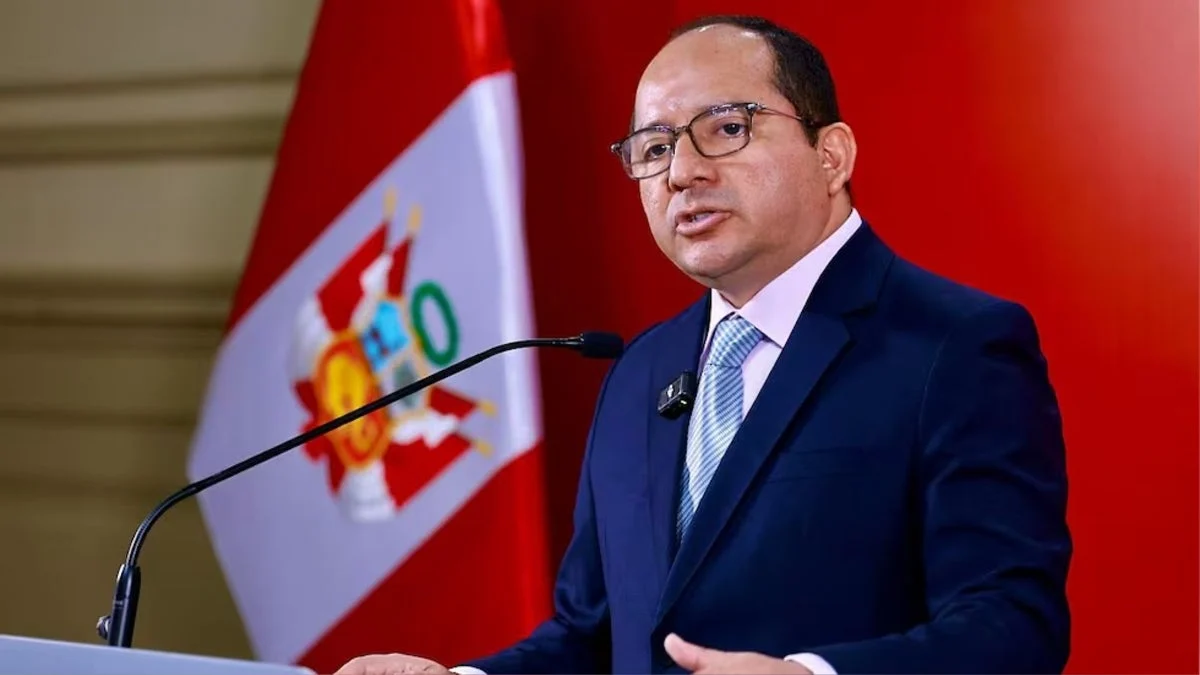
In a sudden pivot that has reverberated through the halls of the Peruvian Congress, Aldo Bravo, a lawmaker representing the Renovación Popular party, announced this Sunday the formal withdrawal of a controversial legislative proposal that sought to criminalize the "apology for crime" during periods of political crisis and social unrest.
The decision marks the conclusion of a volatile week of intense public debate, pitting the legislator’s stated goal of maintaining national order against fierce opposition from press freedom advocates who feared the bill would serve as a tool for state censorship. While the bill has been retracted, the debate it ignited regarding the boundaries of free speech and the definition of criminal incitement remains far from settled.
The Core of the Proposal: A Legislative Overview
The initiative, officially registered as Project No. 00043/2026-2031-CD, proposed a significant hardening of the Penal Code. Specifically, it sought to impose prison sentences ranging from four to five years for individuals deemed to have "capacity for influence" who, during states of political crisis or social conflict, promoted, justified, or glorified the use of explosive devices or hazardous substances.
Bravo consistently defended the bill as a necessary mechanism to curb the escalation of violence. His argument centered on the premise that, in an era of digital mass communication, influencers and public figures wield the power to ignite or sustain civil disorder. By creating a specific penal category for those who use their platform to legitimize the use of weaponry against life or public/private property, the legislator aimed to provide law enforcement with the tools to preemptively stifle violence.
"The proposal is designed to hold those with significant outreach accountable," Bravo stated during a recent interview on RPP’s Ampliación de Noticias. "It is not an attack on the press; it is an attack on the misuse of social media to validate terrorist-like tactics during periods of instability."
A Strategic Retreat: The Motivations Behind the Withdrawal
The decision to withdraw the bill was not, according to Bravo, an admission of defeat, but a tactical adjustment to current national priorities. In a signed column published in the newspaper Expreso, the legislator indicated that the move was heavily influenced by the leadership of his party, particularly the party president, Rafael López Aliaga.
The official narrative provided by Bravo suggests that the current legislative agenda is too crowded with existential threats to the nation to allow for the distraction caused by his proposal. He specifically cited the urgent need for robust parliamentary action to mitigate the anticipated impacts of the "El Niño" climate phenomenon and the rising tide of urban insecurity and crime.
"It is a case of yielding without conceding," Bravo wrote in his column, signaling that he intends to refine the bill for future submission. He further directed a defiant parting message to his political detractors: "To the progressives and the ‘caviares’ [a pejorative term for left-leaning liberals in Peru], this is not for you. It is for Peru."
The Chronology of Conflict: From Proposal to Pressure
The trajectory of Project 00043 was marked by a rapid descent into controversy:
- Initial Submission: The bill was introduced with the stated goal of protecting the public order, aiming to fill what the proponent perceived as a "legal vacuum" during times of protest.
- Public Backlash: Almost immediately upon the proposal’s publication, legal experts and human rights organizations raised alarms. The primary criticism focused on the ambiguity of terms like "political crisis" and "capacity for influence," which appeared to have no clear objective definition in the text.
- Media Mobilization: Leading journalistic institutions, including the Council of the Press (Consejo de la Prensa Peruana) and the Institute of Press and Society (IPYS), issued formal statements condemning the initiative.
- The "Chilling Effect" Argument: Critics argued that the bill would essentially criminalize journalists, reporters, and commentators who cover protests. If a journalist were to interview a protest leader who then makes a violent statement, or if a reporter were to broadcast footage of protesters using incendiary devices, the broad language of the law could theoretically lead to the arrest of the journalist under the charge of "justifying" the act.
- Withdrawal: Faced with mounting institutional pressure and a directive from his own party leadership to refocus on economic and climate-related issues, Bravo formally announced the retraction of the bill this past Sunday.
Institutional Resistance: The Voice of the Press
The organized resistance to the bill was led by the country’s most prominent media advocacy groups, who viewed the proposal as an existential threat to democratic discourse.
The Council of the Press Peruano (CPP)
The CPP issued a scathing critique, noting that the bill lacked the necessary legal precision to be constitutional. Their assessment highlighted that the phrase "periods of political crisis" is subjective. Who determines when a crisis begins? Does a peaceful protest become a "crisis" if the government deems it so? The CPP warned that by failing to define these terms, the bill handed the judiciary a weapon that could be used against any citizen expressing critical dissent online.
The Institute of Press and Society (IPYS)
The IPYS echoed these concerns, emphasizing that the bill would have a "chilling effect" on investigative journalism. They argued that the act of "informing" is fundamentally different from the act of "promoting" violence, yet the draft law failed to distinguish between the two. Their position was clear: the bill should be archived indefinitely to prevent any future attempts to revive it in a modified form.
The National Association of Journalists (ANP)
The ANP added its voice to the chorus of disapproval, stressing that reporting on the reality of civil unrest—including the use of force—is a fundamental duty of the press. To categorize such reporting as "apology for crime" is a perversion of legal standards that could lead to the total silencing of independent media during times of national distress.
Implications for Future Legislation and Free Speech
While the immediate threat posed by Project 00043 has been neutralized, the underlying tension remains. The incident has highlighted a deep ideological divide in the Peruvian Congress regarding the role of the state in controlling digital narratives.
The Danger of Ambiguous Legislation
The primary takeaway for constitutional experts is the danger of drafting laws with overly broad definitions. In a democracy, legislation that touches upon fundamental rights—such as freedom of expression—must be narrow, precise, and subject to strict scrutiny. The failure of this bill serves as a case study in why legal clarity is the primary bulwark against state abuse.
The Role of Social Media in Modern Governance
Bravo’s insistence that his bill was intended to target "influencers" highlights a growing global trend: the struggle of traditional political systems to manage the volatility of social media. Governments worldwide are debating how to regulate the "capacity for influence," yet as this case illustrates, such attempts often end up infringing on the rights of those providing a public service through journalism.
A Prelude to Future Battles?
Bravo’s concluding remarks in his column—stating that the withdrawal is merely a chance to "refine" and "perfect" the proposal—suggest that this debate is not over. The legislator has framed his defeat as a tactical retreat, and his supporters within the Renovación Popular party have already indicated that the issue of "national security versus free speech" remains a priority for their caucus.
Conclusion
The withdrawal of Aldo Bravo’s bill is a victory for those who advocate for the preservation of a robust, independent press in Peru. By forcing the hand of a legislator who initially framed his opponents as mere political enemies, the journalistic community demonstrated the power of public and institutional scrutiny.
However, the event also serves as a warning. The ease with which such a restrictive measure reached the stage of formal legislative debate underscores the vulnerability of democratic norms in the face of political polarization. As Peru moves forward to face the significant challenges of the El Niño phenomenon and the ongoing crisis of public insecurity, the nation must ensure that in its search for order, it does not inadvertently dismantle the very freedoms that allow for the democratic process to function. The legislative "retreat" observed this week may be temporary; the necessity of vigilance, however, remains permanent.