Executive Summary: A New Vision for Peruvian Mining
In a definitive policy statement, Guillermo Shinno, Peru’s Minister of Energy and Mines (Minem), has unveiled an ambitious roadmap to revitalize the country’s mining and energy sector. With a current portfolio of projects valued at over $64 billion, the government aims to catalyze $40 billion in investment within the next five years.
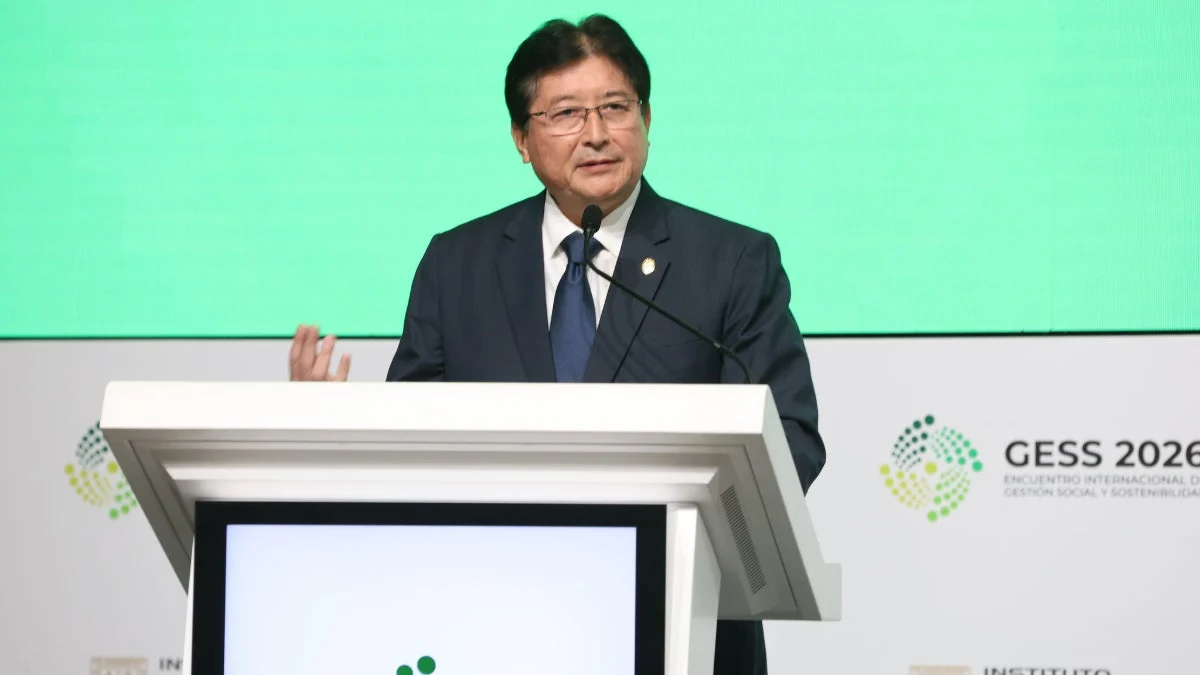
Speaking at the inaugural International Meeting on Social Management and Sustainability (GESS 2026), hosted by the Institute of Mining Engineers of Peru (IIMP), Shinno emphasized a dual-track strategy: aggressive bureaucratic streamlining through technological innovation, coupled with an unwavering commitment to maintaining, and potentially strengthening, environmental compliance.
The Strategic Objective: Unlocking $40 Billion in Five Years
The core of Minister Shinno’s policy is the transition from stagnant administrative pipelines to active development. "Our government assumes the commitment to push forward the portfolio of investments that currently exceeds $64 billion," Shinno stated. He noted that the target of $40 billion is not merely a fiscal goal but a foundational pillar for national economic recovery and development.
To achieve this, the Minem plans to initiate a series of high-level meetings with private sector stakeholders. The objective is to conduct a granular audit of the current project pipeline, identifying "shovel-ready" initiatives that have stalled due to administrative hurdles rather than economic viability. The ministry is particularly focused on fast-tracking projects capable of entering the operational phase within the current five-year government term.
Chronology of Reform: From Reactive to Proactive Governance
The Ministry’s approach represents a departure from the traditional, often reactive, methods of managing extractive industries. The following timeline captures the shift in strategy:
- Phase I (Immediate Term): Comprehensive review of the existing $64 billion project portfolio to categorize projects by regulatory status and infrastructure requirements.
- Phase II (Mid-Term/Year 1-2): Deployment of AI-driven evaluation tools to cut down administrative lead times in permitting, aiming to reduce redundant documentation processes.
- Phase III (Ongoing): Implementation of a new "Territorial Governance Model," moving away from the ad-hoc conflict resolution that has characterized the sector for the last decade.
- Phase IV (Long-Term): Consolidation of the mining sector as the primary driver of rural infrastructure development, ensuring that mining revenue is tethered directly to local community outcomes.
Technological Integration: The Role of AI in Permitting
A central component of Shinno’s strategy is the digitalization of the Minem’s regulatory functions. The Minister explicitly stated that the bottleneck in Peruvian mining is not necessarily a lack of capital or resources, but an "excess of bureaucratic inertia."
By leveraging Artificial Intelligence (AI) and advanced data analytics, the government intends to streamline the environmental impact assessment process. According to the Minister, the integration of these technologies will allow for faster identification of potential regulatory bottlenecks, providing companies with clearer timelines and more predictable outcomes. However, Shinno was categorical in his defense of environmental standards: "Simplifying processes does not mean weakening environmental standards; it means eliminating bureaucracy to generate competitive development."
Environmental Integrity: No Room for Deregulation
The most significant aspect of the Minister’s announcement was the firm reassurance that the pursuit of economic growth would not come at the expense of environmental protection. Concerns regarding the "flexibilization" of standards have historically been a point of contention between NGOs, local communities, and the extractive industry.
Shinno clarified that the government views high environmental standards as a component of "competitive stability." He argued that projects which adhere to the highest global ESG (Environmental, Social, and Governance) standards are more resilient to community pushback and legal challenges, making them more attractive to global capital markets. By maintaining, or even strengthening, these requirements, the Ministry aims to foster a more sustainable, long-term mining ecosystem.
Shifting the Paradigm: Social Governance and Community Relations
One of the most innovative proposals brought forward by Minister Shinno is the transition from "reactive conflict management" to "preventative territorial governance."
Historically, the Peruvian government has intervened in mining regions only after social unrest had already paralyzed operations. Under the new model, the Ministry proposes a tripartite governance structure:
- State Facilitation: Acting as a mediator and regulator to ensure transparency.
- Corporate Accountability: Requiring mining companies to demonstrate tangible community benefits—such as potable water systems, electrification, and road access—well before the extraction phase begins.
- Community Engagement: Formalizing channels for local stakeholders to participate in the oversight of the project’s environmental footprint.
The goal is to ensure that the $40 billion injection results in visible, permanent infrastructure for the populations surrounding the mines, rather than just tax revenue for the central government.
Supporting Data: The Scale of Opportunity
To understand the weight of the $64 billion portfolio, one must look at the concentration of these projects. The portfolio is largely dominated by copper, which remains the primary engine of the Peruvian economy.
- Project Concentration: The majority of the $64 billion is locked in the Andes, with significant clusters in the regions of Apurímac, Cajamarca, and Arequipa.
- Economic Multiplier: Mining contributes approximately 10-12% of Peru’s GDP and accounts for over 60% of total export value. The $40 billion target, if achieved, is expected to increase mining production capacity by approximately 20% over the next decade.
- Employment: The sector currently sustains hundreds of thousands of direct and indirect jobs. The proposed acceleration of projects is expected to generate an additional 150,000 jobs in the construction and operational phases.
Official Responses and Industry Outlook
The industry response to the Minister’s announcement has been cautiously optimistic. Representatives from the IIMP have praised the government’s commitment to digital transformation and the reduction of bureaucratic red tape, noting that the "excessive administrative burden" has been the primary complaint of mining investors for years.
Conversely, environmental advocacy groups are keeping a watchful eye on the details of the "simplified" permitting process. The Minister’s assertion that "standardization does not mean deregulation" will be tested as the government begins to roll out the specific legal frameworks for these streamlined assessments.
Implications for the Future of Peru
The implications of this policy shift are profound. If successful, Peru could solidify its position as the premier mining jurisdiction in Latin America, outperforming regional competitors who struggle with political instability and lack of clarity.
Furthermore, by linking mining development to local infrastructure, the government is attempting to solve the long-standing "development gap" in the Peruvian highlands. This approach recognizes that in the 21st century, a mining project’s "social license to operate" is just as vital as its legal permit.
As Minister Shinno looks toward the next five years, the success of his administration will likely be measured by whether it can maintain the delicate balance between rapid industrial growth and the preservation of the country’s natural and social landscape. The path ahead is clear, but the implementation—as always in the complex world of Andean mining—will require a level of administrative discipline and social sensitivity that has rarely been sustained in the past.
The global markets are watching. With the energy transition increasing the demand for copper, lithium, and other critical minerals, Peru’s $64 billion portfolio is a gold mine of potential—provided the government can bridge the gap between policy and practice.