Executive Summary: A Judicial Impasse
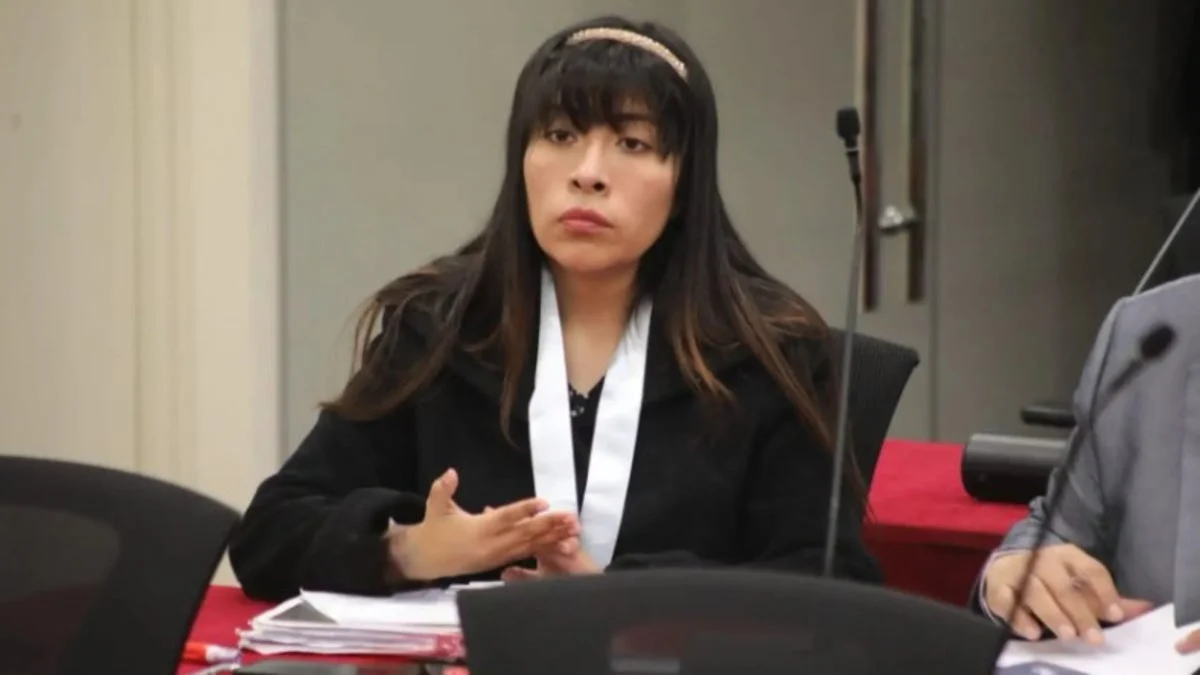
The legal saga surrounding former Peruvian Prime Minister Betssy Chávez reached a new point of contention this week as the judiciary reaffirmed its commitment to securing her incarceration. Following a decisive ruling by Supreme Court Judge Juan Carlos Checkley, the Peruvian government has renewed domestic and international arrest warrants for Chávez. The former official, a key figure in the administration of deposed President Pedro Castillo, remains under a significant prison sentence related to her involvement in the failed coup d’état of December 7, 2022.
However, the path to enforcement remains obstructed by geopolitical complexities. Raúl Noblecilla, Chávez’s lead defense attorney, has openly challenged the court’s order, asserting that any attempt to apprehend his client is a futility. According to the defense, Chávez is currently protected under the mantle of diplomatic asylum in Mexico—a status that creates a direct conflict between Peruvian judicial mandates and international diplomatic conventions.
The Chronology of a Failed Coup and Its Aftermath
To understand the gravity of the current warrant, one must look back at the cascade of events that defined the Peruvian political crisis of 2022.
December 7, 2022: The Breakpoint
On this date, President Pedro Castillo delivered a televised address announcing the dissolution of Congress and the establishment of an "emergency government." Betssy Chávez, serving as Prime Minister, was intimately involved in the administration during this period. The attempt to subvert the constitutional order failed within hours, leading to Castillo’s impeachment and arrest.
The Judicial Process
Following the collapse of the Castillo government, the Public Ministry initiated a high-stakes prosecution against those deemed co-conspirators. The legal proceedings were rigorous, moving through the Penal Chamber of the Supreme Court. By December 4, 2025, the court reached a verdict: Betssy Chávez was found guilty as a co-author of the crime of "conspiracy for rebellion" against the Peruvian State.
The Sentencing
The court handed down a sentence of 11 years, 5 months, and 15 days of imprisonment. Beyond the custodial sentence, the court ordered a two-year ban on holding public office and mandated a joint civil reparation payment of 12 million soles (approximately $3.2 million USD), to be paid collectively by Chávez, Castillo, former Interior Minister Willy Huerta, and former advisor Aníbal Torres.
Supporting Data: The Mechanics of the Arrest Warrant
The recent resolution, issued on August 14 and accessed by media outlets, clarifies the judicial stance. Judge Juan Carlos Checkley Soria has ordered the periodic renewal of these warrants, ensuring that they do not lapse.
Directives to Law Enforcement
The judge’s order is explicit in its reach:
- National Reach: The Lima District Requisition Office of the National Police of Peru has been instructed to maintain active surveillance and apprehension protocols across all regions of the country.
- International Reach: The Central National Office of Interpol Lima has been formally notified to update the "Red Notice," ensuring that should Chávez attempt to cross international borders outside of her current asylum location, she would be subject to immediate detention.
- Historical Precedent: The document highlights that as early as May 19, 2024, the court had already dispatched formal requests to the Judicial Police, underscoring a consistent judicial pressure campaign to bring the former minister to justice.
Official Responses: The Defense’s Counter-Narrative
The response from the defense camp has been swift and dismissive of the court’s recent administrative actions. Raúl Noblecilla, representing Chávez, took to social media to frame the renewal of the warrants as a performative act rather than a practical one.
The Asylum Argument
Noblecilla’s core argument rests on the principle of diplomatic asylum. By claiming that Chávez is currently residing in Mexico under such protection, the defense posits that the Peruvian judiciary is effectively "chasing a ghost." Under international law, particularly the Caracas Convention on Diplomatic Asylum, the receiving state (Mexico) has the right to grant asylum if it deems the persecution to be politically motivated.
"The order is legally disconnected from reality," Noblecilla suggested. By emphasizing that Chávez is sheltered in Mexico, the defense aims to signal to the international community that the arrest warrant constitutes a violation of the safe-haven status she has been granted.
Legal and Political Implications
The standoff between the Peruvian Supreme Court and the reality of Chávez’s location creates a complex web of legal and diplomatic consequences.
The Struggle for Extradition
While the international warrant is active, it does not guarantee extradition. Extradition is a political process as much as a legal one. Even with a Red Notice from Interpol, the Peruvian state must navigate a formal treaty-based request for extradition with Mexico. If Mexico maintains that the conviction was the result of political persecution, they are unlikely to honor the request, leading to a prolonged diplomatic freeze between the two nations.
Financial Liabilities and State Aggrandizement
The 12-million-sol civil reparation is a critical component of the sentence. By ordering this payment in conjunction with other high-level officials, the court is seeking to hold the entire architecture of the attempted coup financially accountable. The challenge for the State, however, will be the recovery of these funds, especially if the primary defendants remain outside of domestic jurisdiction or lack the liquid assets to cover such a significant sum.
The Deterrent Effect
For the Peruvian judiciary, the relentless renewal of these warrants serves a purpose beyond immediate capture. It acts as a permanent legal shadow over the defendants, preventing them from returning to public life or traveling freely. It serves as a reminder that the State does not consider the case of the "failed coup" closed, regardless of where the perpetrators reside.
Conclusion: A Lingering Shadow
As the legal status of Betssy Chávez remains in limbo, the case highlights the ongoing fragility of Peru’s institutional recovery post-2022. The Supreme Court’s insistence on renewing these warrants signals a commitment to the rule of law, even when faced with the limitations of international borders.
For the international observer, the situation remains a study in the intersection of criminal law and political sanctuary. Whether the warrants will eventually lead to an international legal standoff or remain a symbolic gesture depends largely on the future trajectory of Peru-Mexico diplomatic relations. Until such time as the geopolitical landscape shifts, Betssy Chávez remains a convicted official in exile, a figure whose presence—or lack thereof—continues to define the limits of the Peruvian judicial reach.
The case continues to develop as the Office of Requisitorias monitors the borders and the defense continues to leverage the protective umbrella of asylum, ensuring that the final chapter of this political drama remains unwritten.