Introduction: A Regulatory Straightjacket
In the high-stakes arena of Peruvian security policy, a legislative relic from the era of Pedro Castillo has become a primary obstacle for the current administration of President Keiko Fujimori. Law 31570, initially designed to shield police leadership from political interference, now stands as a controversial barrier preventing the executive branch from replacing the Commander General of the National Police of Peru (PNP), Óscar Arriola, despite mounting pressure amid a wave of organized crime and transport-sector attacks.
The current head of the PCM (Presidency of the Council of Ministers), Luis Galarreta, has sparked a firestorm of political debate by publicly conceding that the legislature—which his own party, Fuerza Popular, led in approving—may have committed a grave error by enshrining such rigidity into law.
The Chronology of a Controversial Law
To understand the current impasse, one must trace the legislative history of Law 31570 back to its tumultuous origins.
- 2022: The Clash of Powers: During the administration of Pedro Castillo, the executive branch moved to exercise its traditional authority over the appointment and removal of top military and police brass. In an attempt to prevent the "politicization" of the security forces, the Congress of the Republic pushed back, drafting legislation that would limit the executive’s reach.
- September 2022: Approval by Insistence: When the Castillo administration officially observed (vetoed) the bill, the opposition-controlled Congress chose to ignore the executive’s concerns. With the decisive backing of the Fuerza Popular bench and its allies, the bill was passed by insistence, becoming law despite the government’s warnings regarding the erosion of executive authority.
- The Intent of the Law: Proponents argued that the law provided "stability." By mandating a fixed two-year term for the PNP Commander General, they claimed the police would be insulated from the "revolving door" appointments that had plagued the force during periods of intense political instability.
Supporting Data: What Does the Law Actually Say?
Law 31570, which modifies Articles 8 and 18 of Legislative Decree 1267 (the PNP Law), effectively creates a legal cocoon around the Commander General. Under current provisions, the official can only be removed under a highly restricted set of circumstances:
- Natural Causes: Death of the official.
- Voluntary Withdrawal: A formal request for retirement submitted by the official.
- Permanent Disability: A state of health verified by a medical board that renders the official incapable of performing their duties.
- Disciplinary Infractions: The commission of a "very serious" offense according to the PNP disciplinary regime.
- Criminal Liability: Involvement in a felony, established by a firm judicial sentence, or being caught in flagrante delicto (the act of committing a crime).
This restrictive framework means that "lack of results," "loss of confidence," or "inability to curb rising crime rates"—traditional reasons for a government to replace a police chief—are not sufficient grounds for dismissal under the current statute.
Official Responses: The Galarreta Autopsy of a Political Error
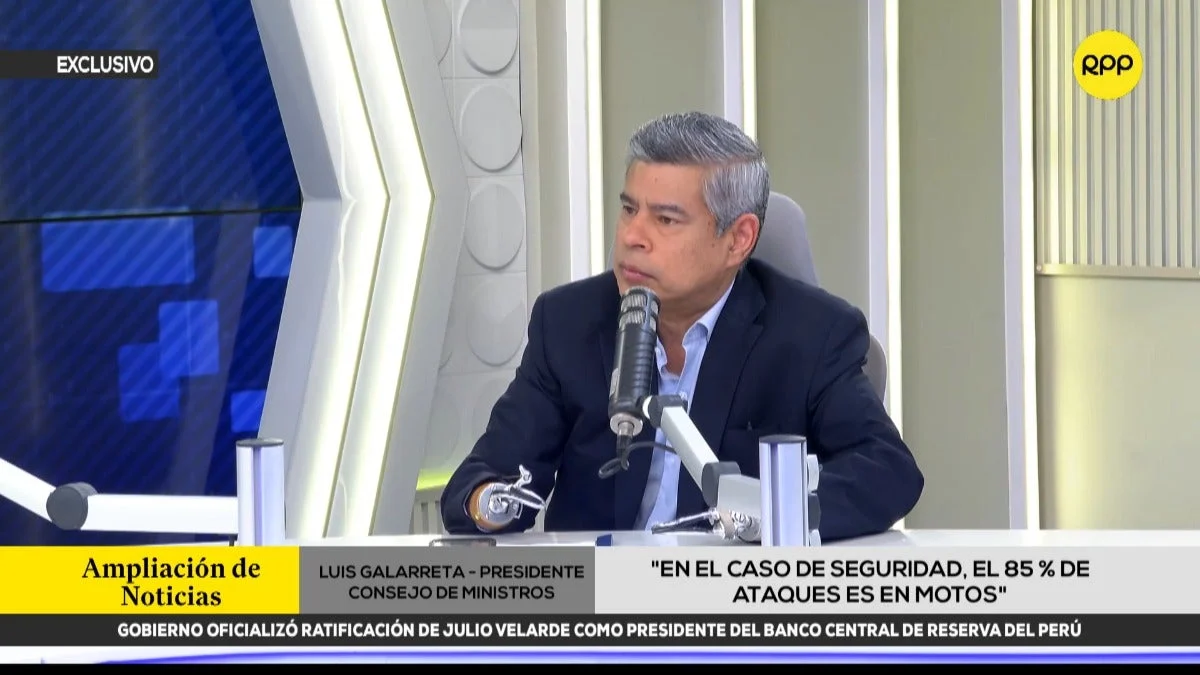
In an exclusive interview with RPP, Prime Minister Luis Galarreta provided a rare moment of political introspection, acknowledging that the legislative strategy of 2022 might have been shortsighted.
The Distinction Between Military and Police
Galarreta attempted to draw a sharp line between the needs of the Armed Forces and the needs of the Police. "In the case of the Armed Forces, we felt it was prudent [to limit executive removal power]," Galarreta stated. "But in the case of the police, we may have committed an error. The dynamics of criminal activity change so rapidly that the police must be equally agile. With two-year fixed terms, you cannot effectively measure if the strategy is working or failing."
The "Results-Oriented" Mandate
Galarreta’s comments signal a significant shift in the Fujimori administration’s approach to the current PNP leadership. Despite the legal constraints, he made it clear that Commander General Óscar Arriola is expected to produce immediate results.
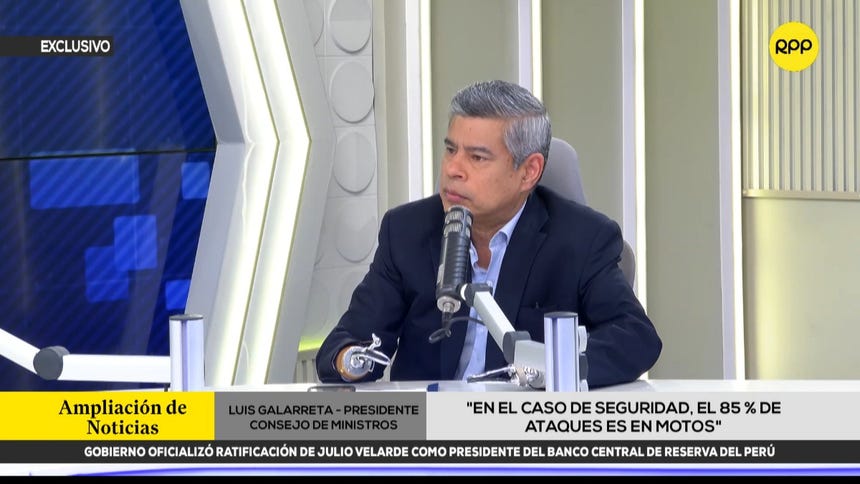
"The Commander General will have to adapt to this government. Confidence can be lost in two days," Galarreta warned. "Mr. Arriola will have to get used to the fact that our priority is results. If the law stops us, then we will look to the delegation of legislative powers to open a space to modify this norm."
Implications: The Looming Crisis of Governance
The debate surrounding Law 31570 is more than just a procedural disagreement; it touches on the fundamental balance of power in Peru.
1. The Executive vs. Legislative Tension
The irony of the current situation is palpable. A law passed by the opposition (Fuerza Popular) to check the power of a previous president (Pedro Castillo) is now handicapping the administration of their own political leader (Keiko Fujimori). This highlights the dangers of "legislating for the moment," where laws are drafted to solve immediate political grievances rather than long-term governance needs.
2. Operational Paralysis in the Face of Crime
The criticism of Arriola’s management, fueled by the recent wave of attacks against transport workers, has created a public expectation for leadership changes. When the public perceives that the government cannot replace an underperforming police chief because of a "bad law," it erodes trust in the state’s ability to provide security.
3. The Path Forward: Delegation of Powers
Galarreta’s mention of "delegation of powers" suggests that the Executive branch may soon ask Congress for the authority to legislate on police reform, specifically targeting the removal clauses of Law 31570. This would essentially force the Congress to admit that the law they passed in 2022 was flawed.
Conclusion: A Lesson in Legislative Rigidity
As Peru navigates the complexities of rising urban violence and economic uncertainty, the case of Law 31570 serves as a cautionary tale. While stability is a vital component of institutional health, the "inviolability" of command positions has effectively created an accountability vacuum.
The challenge for the Fujimori administration is twofold: first, to determine whether they can work within the current legal framework to spur the police into action, and second, to navigate the political fallout of potentially dismantling a law that their own party championed. As Galarreta noted, the dynamics of crime do not wait for legislative cycles to align. For the people of Peru, the question remains whether the state will choose to prioritize the efficacy of its police force over the permanence of its officials.
The next few weeks will be critical as the administration decides whether to formally request the legal tools to bypass this "legislative straightjacket" and restore the Executive’s ability to demand accountability from the highest levels of the National Police.