Executive Summary: A Government in Transition
In a move that has sparked widespread political debate, the administration of President Keiko Fujimori has signaled a potential intent to streamline the Peruvian executive branch. Among the various possibilities under consideration is the consolidation of several cabinet-level ministries to increase administrative efficiency. Central to this discourse is the future of the Ministry of Women and Vulnerable Populations (MIMP), an institution that has become a focal point of discussion regarding both government austerity and the protection of social rights.
Minister María Seminario, currently leading the MIMP, has publicly addressed these rumors, emphasizing that while the executive branch is exploring structural reforms, the autonomy and existence of her ministry remain a matter of presidential prerogative. This article explores the context of these potential changes, the political implications for the Fujimori administration, and the concerns surrounding the possible integration of one of the country’s most vital social entities.
1. The Context: A Push for Administrative Efficiency
The current discussion regarding the restructuring of the state began in earnest following remarks by the Minister of Economy and Finance, Elmer Cuba. Confirming that the reduction of the number of ministries is a topic firmly placed on the government’s agenda, Cuba noted that the administration is seeking ways to optimize public spending and reduce bureaucratic redundancy.
While the Minister of Economy clarified that these discussions are still in a "preliminary stage"—with no final decisions made regarding which specific portfolios might be merged or eliminated—the news sent shockwaves through political circles. For the public and for civil society organizations, the primary concern is not merely the efficiency of the state, but the potential degradation of specialized services intended for the most vulnerable segments of the population.
2. Chronology of Events: From Policy Proposal to Public Scrutiny
- Initial Economic Signals: Minister Elmer Cuba announces that the government is evaluating the structure of the cabinet, citing the need for a leaner, more agile state apparatus.
- Media Speculation: Reports emerge suggesting that the Ministry of Women and Vulnerable Populations (MIMP) could be a candidate for merger or integration into a larger social ministry.
- Internal Crisis at INABIF: Simultaneously, the MIMP faces intense public scrutiny following allegations of mistreatment of minors within the National Program for the Integral Welfare of the Family (INABIF), forcing Minister María Seminario to promise structural changes within the agency.
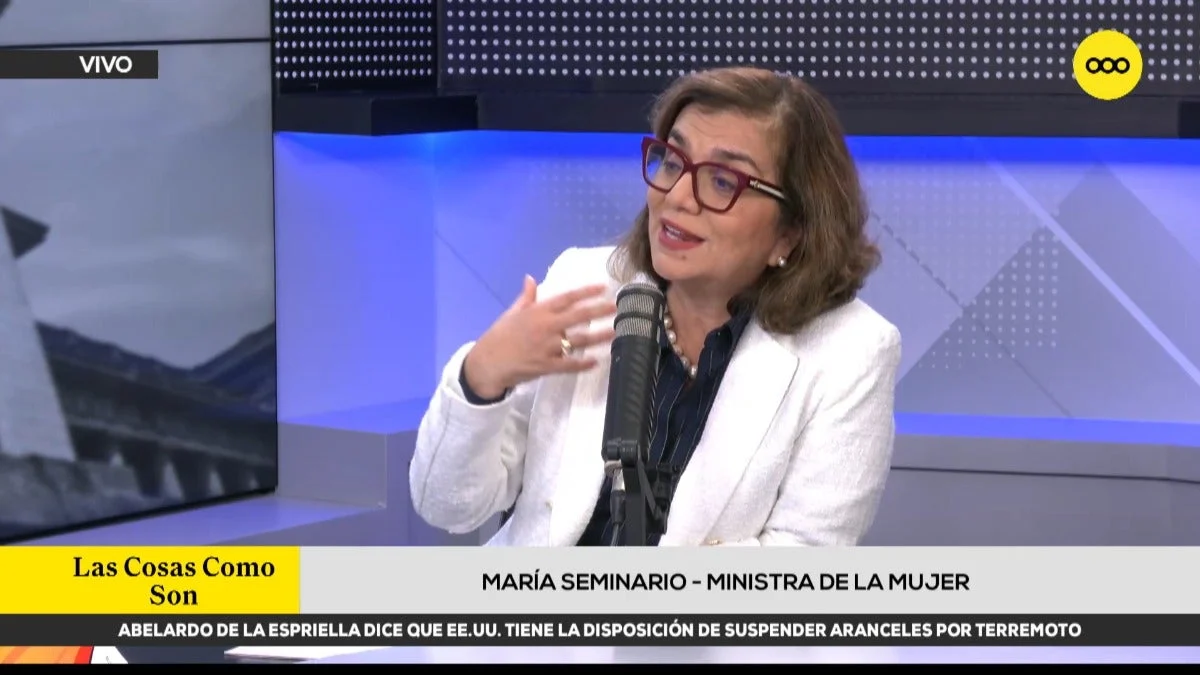
- The "Las Cosas Como Son" Interview: Minister María Seminario appears on RPP to address both the INABIF crisis and the rumors of the ministry’s possible dissolution.
- Current Status: The government continues to deliberate on the scope of the reforms, with no definitive timeline for structural changes.
3. Supporting Data: The Role of the MIMP
To understand the gravity of a potential merger, one must look at the historical and functional significance of the MIMP. Established in 1996 during the administration of the late Alberto Fujimori, the ministry was created to provide a dedicated institutional focus on gender equality, child protection, and the support of elderly and disabled populations.
Historical Significance
The MIMP represents a cornerstone of the state’s social contract in Peru. As Minister Seminario noted in her recent interview, the ministry is part of the "legacy" of the Fujimori family’s governance. Its creation marked a shift in how the Peruvian state addressed domestic violence, child welfare, and social inclusion. To dissolve or merge the entity, critics argue, would be to dismantle a specific legislative and administrative framework built over nearly three decades.
Operational Scope
The ministry currently manages critical programs including:
- AURORA: A national program focused on the prevention and eradication of violence against women and family members.
- INABIF: Responsible for the protection of children and adolescents at risk.
- Specialized Protection Units (UPEs): Services that provide immediate intervention in cases of abuse.
The fear among social advocates is that by folding these specialized agencies into a "super-ministry," the urgency and specific expertise required to manage these crises might be diluted by broader bureaucratic priorities.
4. Official Responses: The Stance of the Executive
The administration’s position remains guarded. President Keiko Fujimori has not yet publicly declared a definitive plan for the cabinet, allowing cabinet members to manage the narrative through interviews and press releases.
Minister Seminario’s Perspective
Minister María Seminario has adopted a measured, pragmatic, and loyalist approach. During her appearance on RPP, she made several key points:
- Presidential Authority: She underscored that the final word on executive structure lies solely with the President. "The decisions regarding the structure and organization of the Executive branch will be made by the President when she deems it appropriate," Seminario stated.
- Lack of Formal Agenda: She explicitly denied that any specific plan to merge her ministry has been discussed with the President to date.
- Institutional Continuity: Even if a merger were to occur, the Minister expressed her belief that the MIMP would not "disappear." She posited that the functions of the ministry are so deeply embedded in the state that they would likely be preserved, even under a different administrative umbrella.
- Acceptance of Transience: Perhaps most telling was her reflection on the nature of ministerial work. Seminario reminded the public that cabinet positions are inherently temporary. "We ministers and officials know we are just passing through. We know when we start, but not when we end," she said, signaling her readiness to accept whatever executive decision the President makes.
5. Implications: The Risk of Political and Social Backlash
The proposal to reorganize the cabinet—and specifically the potential absorption of the MIMP—carries significant political weight.
The Symbolic Cost
For President Keiko Fujimori, a leader who has sought to carve out her own political identity while acknowledging her father’s legacy, the MIMP is a sensitive issue. As the first woman elected to the presidency of Peru by popular vote, the dissolution of the ministry created by her father could be interpreted as a step backward in her commitment to women’s rights. The optics of such a move could alienate a significant portion of her base and provide ammunition for opposition parties.
The Practical Risk
Critics from non-governmental organizations and human rights groups warn that merging the MIMP into another ministry, such as the Ministry of Social Development or a generic Ministry of Human Development, could result in:
- Resource Competition: A smaller department within a larger ministry may lose its budgetary priority.
- Bureaucratic Bottlenecks: Integrated services often suffer from slower response times due to increased layers of administrative oversight.
- Loss of Specialized Focus: The nuanced approach required for cases of domestic violence or sexual abuse could be overlooked by an agency with a broader, more diffuse mandate.
The "INABIF" Factor
The timing of these rumors is particularly challenging given the recent scandal regarding the mistreatment of minors in INABIF facilities. By announcing "structural changes" within the institution to address these abuses, the Minister is attempting to regain public trust. However, the background noise of a possible ministry-wide merger creates an environment of instability that makes it difficult to implement long-term, meaningful reforms within the programs that actually deliver the services.
Conclusion: A Delicate Balance
The debate over the restructuring of the Peruvian cabinet reflects a broader tension between the need for fiscal responsibility and the duty to maintain essential social protections. While Minister Elmer Cuba advocates for a leaner government to meet economic challenges, Minister María Seminario’s cautious comments highlight the vulnerability of social portfolios during times of institutional reorganization.
As the Fujimori administration continues its assessment, the public will be watching closely to see if "efficiency" becomes a synonym for "neglect." The challenge for the President will be to demonstrate that any proposed changes to the executive structure are designed to improve the delivery of services, rather than simply reducing the presence of the state in the lives of those who need it most.
Ultimately, the survival of the Ministry of Women and Vulnerable Populations as a distinct entity remains an open question. Whether the institution is preserved, merged, or reimagined, the administration must ensure that the protection of women, children, and the vulnerable remains an inviolable priority of the Peruvian state. For now, the cabinet remains in a state of watchful waiting, with the President’s final decision set to define the tone for the remainder of her term.