Executive Summary: A Call to Institutional Reform
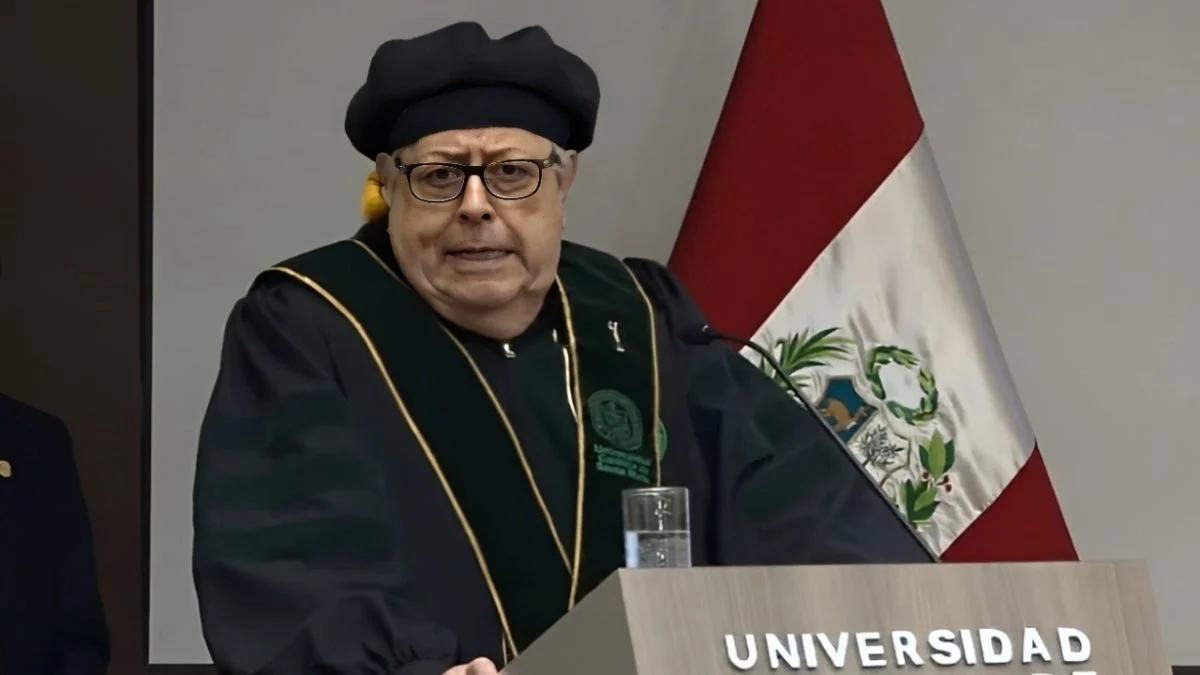
Julio Velarde, the long-standing and highly respected president of the Central Reserve Bank of Peru (BCRP), has issued a sobering diagnosis of the nation’s economic trajectory. In a recent address at the Universidad Católica de Santa María in Arequipa, where he was awarded an honorary doctorate, Velarde articulated a stark reality: Peru has effectively exited the ranks of Latin America’s fastest-growing economies over the past decade.
For years, Peru was heralded as a regional "economic miracle," consistently outperforming its peers in GDP growth. However, according to Velarde, that momentum has evaporated. The central banker did not merely point to external factors; he leveled a critique at the country’s domestic governance, calling for an urgent transition away from "clientelism" and toward a professional, merit-based public administration. His message is clear: while macroeconomic stability is the foundation, it is no longer the engine of growth. To recover its dynamism, Peru must rebuild its institutional framework from the ground up.
The Chronology of Stagnation: From Regional Leader to Laggard
To understand the gravity of Velarde’s warning, one must look at the historical context of Peru’s economic journey.
The Golden Decade (2004–2013)
For roughly ten years, Peru was in a league of its own. Alongside Panama and the Dominican Republic, Peru consistently recorded some of the highest growth rates in the Western Hemisphere. This period was characterized by a commodity boom, prudent fiscal policies, and an open-market approach that attracted significant foreign direct investment. During these years, poverty rates plummeted, and the middle class expanded at an unprecedented pace.
The Turning Point (2014–2024)
Velarde points to the last ten years as the era of divergence. While Panama and the Dominican Republic managed to sustain their high-growth trajectories, Peru began to decelerate. The country fell into a cycle of political instability, bureaucratic inertia, and a failure to implement the structural reforms necessary to transition from a resource-dependent economy to a more complex, productive one.
A particularly stinging indicator mentioned by Velarde is the relative position of the Dominican Republic. Historically, the Dominican Republic had a lower per capita income than Peru. Today, that position has inverted; the Dominican Republic has surpassed Peru, serving as a visceral reminder of what happens when a country loses its competitive edge.
Supporting Data: Why Stability Alone is Not Enough
The BCRP, under Velarde’s leadership, has been the primary architect of Peru’s macroeconomic stability. By maintaining inflation within a strictly controlled range and ensuring the independence of the monetary authority, the BCRP has shielded the economy from the volatility that plagued the country in the 1970s and 1980s.
The Lesson of the 1980s
Velarde took time to remind his audience of the "lost decades" of the 70s and 80s, marked by hyperinflation, the total collapse of purchasing power, and profound social suffering. The institutional safeguards implemented in the early 1990s—most notably the constitutional autonomy of the BCRP and the prohibition of the bank from financing government deficits—were the pillars that restored investor confidence.
The "Stability Trap"
However, Velarde argues that these successes are being taken for granted. He posits that while monetary stability is a necessary condition for growth, it is not a sufficient one. If the government fails to provide quality public services, infrastructure, and a predictable legal environment, the stability provided by the BCRP becomes a "static" benefit rather than a catalyst for development. Without meritocratic public management, the gains of macroeconomic stability are slowly eroded by the inefficiencies of a clientelist state.
The Meritocracy Mandate: A Blueprint for Reform
At the heart of Velarde’s critique is the concept of meritocracy. He highlighted the BCRP itself as the gold standard for this model. The institution is famous for its rigorous, competitive selection processes and a culture of continuous professional development.
Translating BCRP Success to the Public Sector
Velarde’s argument is that the BCRP is not an anomaly of nature, but a result of deliberate institutional design. He calls for this same "meritocratic spirit" to be exported to the broader public administration. Currently, the Peruvian civil service is often plagued by political appointments, high turnover rates, and a lack of technical expertise, which hinders the execution of public investment.
"We must all contribute to making this a less clientelist and more meritocratic country," Velarde insisted. By "clientelist," he refers to the practice of government positions being treated as favors for political supporters rather than roles for the most qualified professionals. This, he argues, is the primary friction point preventing Peru from returning to its former growth trajectory.
Official Responses and Institutional Context
The discourse surrounding Velarde’s comments has been intense, occurring at a time of significant transition for the BCRP.
Strengthening the BCRP Board
The central bank recently swore in new board members: Inés Choy, Luis Miguel Palomino, and Gustavo Yamada. Their appointment is seen as a commitment to maintaining the institutional rigor that has made the BCRP one of the most respected central banks in the world. The market reacted positively to these appointments, viewing them as a guarantee that the bank will continue to act as a ballast against political interference.
Political Reactions
While the political establishment in Lima often finds itself at odds regarding economic policy, Velarde’s status as a technocratic heavyweight—often described as the "most powerful man in Peru"—means his warnings are rarely ignored. His tenure, recently extended with broad support, suggests a consensus among the country’s diverse political factions that the BCRP must remain an island of stability in a sea of political turbulence.
Future Implications: What Lies Ahead for the Peruvian Economy?
The implications of Velarde’s diagnosis are profound. If Peru continues on its current path of institutional stagnation, the risk of "middle-income trap" becomes a reality.
The Need for Structural Transformation
To break the cycle, economists agree with Velarde that several areas require urgent reform:
- Civil Service Reform: Implementing a robust, law-protected career path for public servants that rewards competence over political loyalty.
- Education: As Velarde noted, the quality of human capital is the long-term determinant of growth. Without a focus on technical and higher education that meets modern market needs, productivity will remain stagnant.
- Institutional Strengthening: Moving beyond just the BCRP, the judiciary, regulatory agencies, and regional governments must adopt the same standards of transparency and merit that define the central bank.
The Optimistic View
Despite the gravity of his assessment, Velarde’s address was not one of defeat. By highlighting that Peru has the foundational stability to rebuild, he offered a path forward. The country has the tools; what it lacks is the political will to prioritize institutional health over short-term political gains.
"We need more institutions like the BCRP," Velarde stated, framing the challenge as a collective national project. If Peru can replicate the success of its central bank in other branches of the state, it could theoretically reclaim its position as one of the most dynamic economies in Latin America.
Conclusion: A Turning Point
Julio Velarde’s recent remarks serve as both a retrospective analysis of a "lost decade" and a forward-looking roadmap for recovery. He has challenged the Peruvian leadership to look beyond the numbers and address the human and structural deficits that prevent the economy from reaching its full potential.
The message is a sobering one: the era of "easy growth" driven by global commodity prices is over. The next era of growth must be driven by productivity, merit, and institutional integrity. As the Peruvian government navigates ongoing economic challenges, from fuel price fluctuations to fiscal constraints, Velarde’s call for a meritocratic state remains the most critical, yet most difficult, reform on the table. The coming years will determine whether Peru chooses the path of structural renewal or remains content in its current state of stagnation.