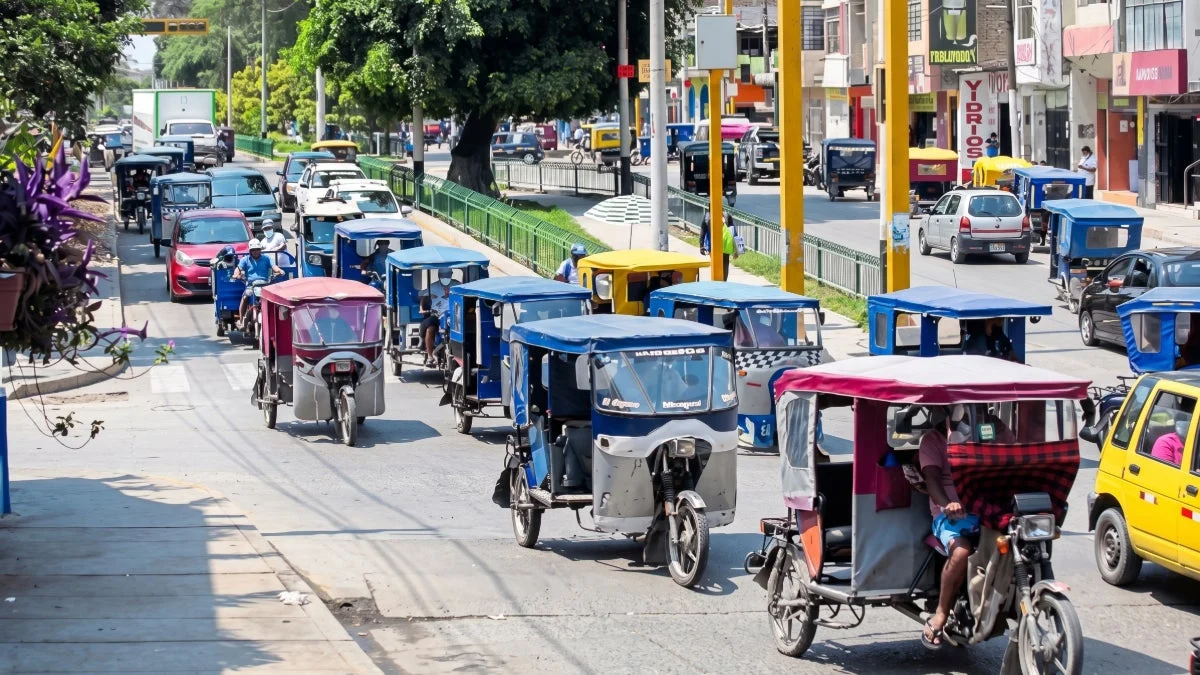
In a decisive move to address the economic volatility affecting the Amazon region, the Peruvian government has officially authorized an emergency subsidy for mototaxi drivers operating in the departments of Loreto, Ucayali, and Madre de Dios. As fuel prices continue to exert upward pressure on operational costs, the Ministry of Economy and Finance (MEF) has unveiled a financial relief package designed to prevent these costs from being passed on to the most vulnerable commuters.
This initiative, formalized through an emergency decree, represents a targeted intervention in one of the most geographically challenging regions of the country, where the mototaxi remains the primary—and often only—mode of affordable public transportation.
The Core Mechanics of the Subsidy
The subsidy program is designed to provide direct financial support to qualified drivers, offering a reimbursement of S/4 for every gallon of gasoline or gasohol purchased. To ensure the aid is distributed equitably and effectively, the government has established a monthly ceiling of S/100 per beneficiary. Given the three-month duration of the program, a single driver who maximizes the usage of this benefit could receive up to S/300 in total support.
By capping the monthly assistance at S/100, the government aims to cover a significant portion of the recent price hikes without creating an unsustainable drain on public coffers. The primary goal is to ensure the continuity of public transport services, which are vital for the economic connectivity of rural and urban centers in the Amazonian basin.
Chronology and Implementation Timeline
The implementation of this policy follows a structured, multi-phase timeline designed to ensure transparency and prevent fraud.
- Phase 1: Authorization: The official publication of the emergency decree sets the starting point for the program.
- Phase 2: Data Capture: The program will operate in six consecutive 15-day cycles. For each cycle, drivers are granted a 15-day window immediately following the period to submit their electronic receipts and purchase data.
- Phase 3: Verification: Once data is submitted via the MEF’s digital platform, the government will conduct cross-referencing checks. The Superintendency of Tax Administration (SUNAT) will validate the authenticity of the electronic invoices, while the Supervisory Agency for Investment in Energy and Mining (OSINERGMIN) will confirm that the fuel was purchased from authorized, registered providers.
- Phase 4: Disbursement: Once verification is complete, the MEF will process the payment data and forward it to the Banco de la Nación. The bank will then facilitate the transfer of funds to the beneficiaries, utilizing existing accounts or opening new ones as necessary to ensure that the process remains free of charge for the drivers.
Supporting Data and Financial Commitment
The magnitude of this intervention is reflected in the budget allocated by the Executive branch. The government has authorized the transfer of approximately S/16,023,000 to the Banco de la Nación. These funds are drawn from the national "Contingency Reserve," a budgetary tool reserved for unforeseen events and emergency stabilization.
The financial model relies heavily on the integration of digital systems. Because the government is committed to a paperless verification process, the requirement for electronic receipts is absolute. This not only serves as a fraud-prevention mechanism but also forces a degree of formalization within the transport sector in Loreto, Ucayali, and Madre de Dios—regions where informal transport has historically been prevalent.
Furthermore, the regulation includes a strict cap regarding vehicle ownership: no more than two drivers can be associated with a single vehicle for the purposes of the subsidy. This ensures that the relief is targeted at individual operators rather than large-scale transport fleets.
Why the Amazon? Official Rationale
The selection of the Amazonian regions for this subsidy is not arbitrary. The high cost of logistics, combined with a heavy reliance on fuel-dependent road and river transport, makes these regions uniquely vulnerable to energy price shocks.
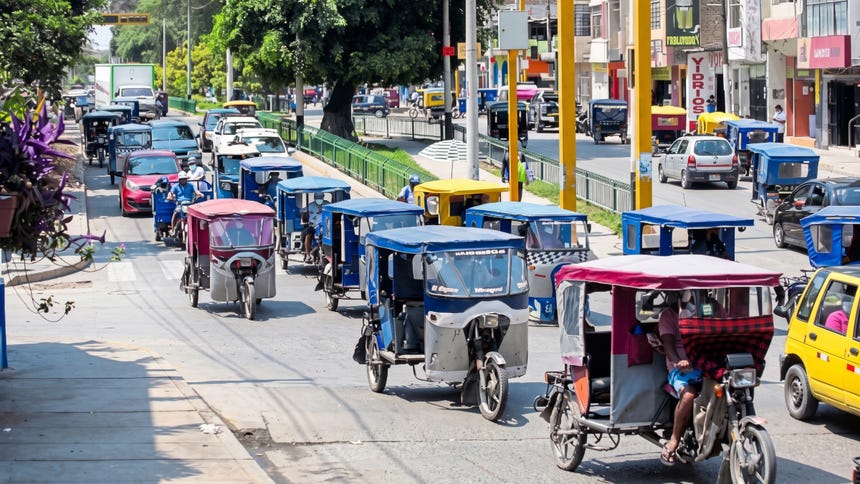
Government spokespeople have emphasized that the rise in fuel costs is not merely a macroeconomic statistic; it is a daily crisis for drivers who have seen their margins shrink to the point of insolvency. By absorbing part of the fuel cost, the state aims to keep the "fare" (the price of a passenger trip) stable. In many Amazonian cities, the mototaxi is the "last mile" transport that connects residents to markets, schools, and healthcare facilities. If drivers were forced to raise prices, the inflationary effect would be felt immediately by the local populace, potentially leading to social unrest and reduced access to essential services.
Implications for the Transport Sector
The long-term implications of this decree are twofold. On one hand, it provides immediate relief to a segment of the workforce that often operates on the fringes of the formal economy. On the other, it introduces a framework of oversight that could serve as a template for future interventions.
1. Formalization of the Sector
By requiring registration with OSINERGMIN and the use of electronic receipts, the government is incentivizing small-scale transport operators to enter the formal tax and regulatory system. While the primary goal is economic relief, the secondary benefit is an increased mapping of the transport sector, which will provide the state with better data for future infrastructure and urban planning.
2. Fiscal Sustainability
Critics of the program may point to the S/16 million price tag as a short-term solution. The government has acknowledged this, framing the measure as a "temporal" relief package. The challenge for the Ministry of Economy will be to determine what happens once the three-month period expires. Will the fuel prices have stabilized? Or will this create a dependency on state subsidies? The current strategy suggests that the government is hoping for a global market correction in fuel prices within the next quarter.
3. Logistical Challenges
The success of this program depends heavily on the "digital literacy" of the beneficiaries. In remote areas of the Amazon, access to reliable internet and digital platforms can be sporadic. The Ministry of Economy and Finance will need to conduct a robust outreach campaign to ensure that drivers in areas like Ucayali or deep in Loreto understand exactly how to register their purchases. If the digital hurdle is too high, the funds may go unclaimed, failing to achieve the desired social impact.
Addressing Potential Risks: Fraud and Compliance
The reliance on automated verification is a sophisticated approach, but it is not without risk. The government has built in several safeguards:
- Cross-Entity Validation: By linking SUNAT, OSINERGMIN, and the MEF, the government has created a "triangulated" verification system. A receipt cannot be claimed if the provider is not a registered fuel vendor, and it cannot be claimed if it is a duplicate.
- Strict Eligibility: The regulation explicitly states that once a vehicle is registered under two drivers, no further changes or additional drivers can be added. This prevents the "stacking" of benefits on a single vehicle.
- Monitoring and Evaluation: The three-month window allows the government to evaluate the program’s performance in real-time. If there is evidence of systematic abuse or if the impact on consumer prices is negligible, the government retains the ability to adjust the parameters of the program before the next cycle of funding is considered.
Conclusion: A Delicate Balance
The decision to subsidize mototaxi fuel in the Amazon is a classic example of "targeted social intervention." It acknowledges the reality that while national macroeconomic policy is often set in Lima, its effects are felt most acutely in the regions.
By prioritizing the stability of transport costs, the government is attempting to purchase time—time for the economy to adjust and for global fuel prices to settle. For the mototaxi drivers of Loreto, Ucayali, and Madre de Dios, this represents a vital lifeline. However, the success of the program will ultimately be measured by its execution: if the money reaches the pockets of the drivers without unnecessary bureaucratic friction, it could be considered a successful model for future regional economic support.
As the program enters its first cycle, all eyes will be on the digital registration platform. The government’s ability to manage this data will define whether this intervention is viewed as a hallmark of efficient crisis management or a well-intentioned, but logistically flawed, experiment. The path forward remains uncertain, but for now, the wheels of the Amazonian mototaxi fleet continue to turn, buffered—at least for the next 90 days—by the state’s intervention.