By Technology Desk
June 12, 2026
This Friday morning, millions of users across the globe were met with unexpected digital silence as Meta’s flagship platforms—Facebook, Instagram, and Threads—suffered a significant and widespread service disruption. The outage, which began early in the morning, prevented users from accessing their accounts, refreshing their feeds, or engaging in private messaging, sparking frustration and immediate concern regarding the stability of the world’s most prominent social media ecosystem.
The Scope of the Disruption: A Global Digital Standstill
Beginning shortly after sunrise, social media monitoring services began recording a sharp spike in error reports originating from every corner of the globe. From major metropolitan hubs in North America to remote regions in Asia and Europe, the inability to authenticate user credentials became the defining narrative of the morning.
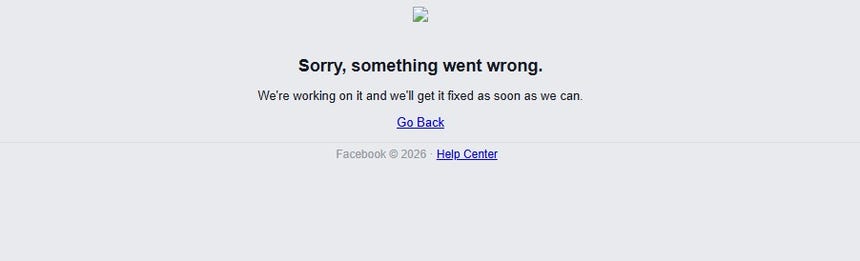
For the vast majority of users, the experience was identical: attempting to log into Facebook or Instagram resulted in a generic error page, often accompanied by the message: "Sorry, something went wrong. We’re working on it and we’ll get it fixed as soon as we can." On Instagram, users reported that their feeds failed to load entirely, displaying blank screens or cached content that could not be refreshed. Threads, Meta’s text-based alternative to X (formerly Twitter), was similarly affected, rendering the platform inaccessible to its core user base.
While the outage was comprehensive, it was not total. Notably, WhatsApp—Meta’s ubiquitous encrypted messaging service—remained fully operational throughout the incident. This discrepancy provided a lifeline for those attempting to coordinate during the outage, as many shifted their communication to WhatsApp or external platforms like X to verify if they were the only ones experiencing connectivity issues.
Chronology of the Outage: From Detection to Restoration
The following timeline details the progression of the technical failure:
- 8:15 a.m. (EST): The first reports of connectivity issues begin appearing on independent monitoring platforms. Users on X start tagging Meta support accounts, noting that login attempts are being rejected by Facebook’s authentication servers.
- 8:45 a.m. (EST): Reports escalate into a full-scale outage. Downdetector and similar services show "peak failure" status for Instagram and Facebook, with thousands of reports filed every minute.
- 9:10 a.m. (EST): The frustration reaches a boiling point on competing platforms. "Meta," "Instagram Down," and "Facebook" trend globally on X as users attempt to troubleshoot by clearing caches and updating applications, to no avail.
- 9:25 a.m. (EST): The first signs of stabilization emerge. Users report that the login portals have begun accepting credentials again, and feeds are gradually populating with new content.
- 9:45 a.m. (EST): Meta’s services return to normal functionality for the majority of users worldwide, though some intermittent latency issues persist in specific geographic regions.
Technical Vulnerabilities and the Risks of Centralized Infrastructure
The outage of June 12 serves as a stark reminder of the fragility inherent in a highly centralized digital ecosystem. Meta, which oversees billions of daily active users, relies on a complex architecture of interconnected servers, databases, and authentication protocols. When one piece of this infrastructure fails—particularly at the authentication layer—the ripple effects are instantaneous and global.
Cybersecurity analysts suggest that such outages are rarely the result of a single point of failure but are often caused by misconfigurations in Domain Name System (DNS) settings, database synchronization errors, or updates to server-side code that trigger unforeseen compatibility issues. While Meta has not yet issued a detailed post-mortem report regarding the specific root cause of today’s incident, the pattern aligns with previous large-scale "cascading" failures that have historically plagued the tech giant.
Economic and Social Implications
The implications of a Meta outage extend far beyond the inconvenience of not being able to view photographs or post updates. In the modern digital economy, Facebook and Instagram are not merely social tools; they are primary engines for small and medium-sized enterprises (SMEs).
For millions of businesses, an outage lasting several hours translates to significant revenue loss. Advertising campaigns, which are meticulously scheduled and budgeted, are halted abruptly. Customer support channels, often managed through Facebook Messenger or Instagram DMs, are severed, leaving businesses unable to communicate with their clients.
Furthermore, the social reliance on these platforms has created a dependency that many critics argue is a structural risk. When platforms go dark, the "digital public square" vanishes, leaving a void that disrupts everything from local community organizing to the dissemination of time-sensitive information.
Official Responses and the Road Ahead
As of this writing, Meta has acknowledged the disruption through brief statements provided to media outlets, confirming that they were "aware of the issue" and that their engineering teams were "working to resolve the problem as quickly as possible." However, the company has remained characteristically opaque regarding the technical specifics of what went wrong.
This lack of transparency has become a point of contention among regulators and privacy advocates. Following a string of global challenges—including recent scrutiny from the Supreme Court of Brazil regarding content moderation and ongoing trade tensions involving the acquisition of AI technologies—Meta finds itself under increasing pressure to demonstrate the reliability and safety of its platforms.
Industry experts argue that as Meta continues to integrate its platforms more deeply—moving toward a unified "Metaverse" infrastructure—the consequences of future outages could become even more severe. The challenge for the company moving forward is to balance the rapid deployment of new features and AI integrations with the fundamental necessity of maintaining 99.99% uptime for its global user base.
The Broader Landscape: Competition and Alternatives
The outage has naturally prompted a renewed conversation about digital decentralization and the necessity of having alternatives to Big Tech platforms. During the period of inactivity, users flocked to decentralized social protocols and alternative messaging services.

This behavior highlights a growing consumer awareness regarding the risks of platform lock-in. While services like WhatsApp, Signal, and Telegram provide robust communication alternatives, the social media landscape remains heavily concentrated. As the world becomes increasingly reliant on digital connectivity, the question of whether "too big to fail" applies to social media conglomerates has transitioned from a theoretical debate to a practical concern for governments and users alike.
Conclusion: A Lesson in Connectivity
The June 12 outage was a brief but potent reminder of the invisible infrastructure that supports modern life. While the services have been restored and the "digital dust" has settled, the event leaves behind lingering questions regarding the resilience of our global digital systems.
For Meta, the task ahead is twofold: providing a transparent explanation to its stakeholders and ensuring that the structural vulnerabilities exposed today are mitigated. For the users, the outage serves as a moment of reflection on the nature of our digital habits and the importance of digital literacy in a world where our social lives, businesses, and communications are tethered to the health of a few massive, interconnected servers.
As the tech sector continues to evolve, the demand for accountability and stability will only grow. For now, the world remains connected—but with a heightened awareness of how easily that connection can be severed.