Introduction
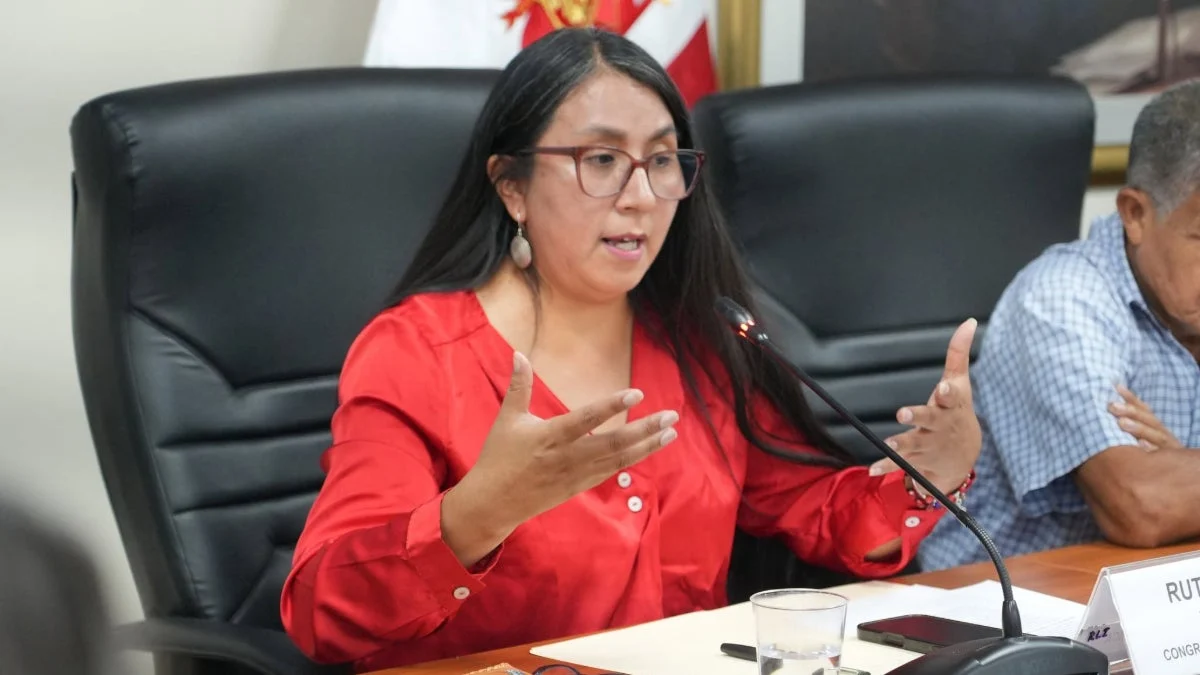
The Lugar de la Memoria, la Tolerancia y la Inclusión Social (LUM), a cornerstone of Peru’s historical reckoning, has found itself at the center of a heated political debate. Senator Ruth Luque, representing the Ahora Nación bloc, has issued a sharp rebuke against proposals to transfer the administration of the LUM from the Ministry of Culture to the Ministry of Justice and Human Rights (Minjusdh). In a recent appearance on RPP TV’s Prueba de Fuego, Luque argued that the move is not a matter of administrative efficiency, but rather a strategic maneuver to ideologically reorient the museum to align with the historical narratives favored by the Fujimorista movement.
Main Facts: The Controversy Over Administrative Control
The proposal, voiced by Minister of Justice Ernesto Álvarez, has sparked significant concern among human rights defenders, academics, and civil society members. The LUM, which opened in 2015, serves as a space dedicated to documenting the internal armed conflict that devastated Peru between 1980 and 2000.
Senator Luque’s opposition is rooted in the fear that moving the LUM under the wing of the Ministry of Justice—a ministry currently headed by a figure who has frequently challenged international human rights mechanisms—would compromise the museum’s pedagogical autonomy. "I do not agree. I have rejected it publicly," Luque stated, emphasizing that the museum’s current placement under the Ministry of Culture is appropriate because the LUM is, at its core, a cultural and educational space designed to foster critical thinking, not a legal or punitive archive.
Chronology: A History of Tension
To understand the current friction, one must look at the historical relationship between the Fujimorista movement and the LUM:
- 2015: The LUM is inaugurated with the goal of providing a space for reflection on the violence of the 80s and 90s, including the actions of the Shining Path (Sendero Luminoso) and the MRTA, as well as the abuses committed by state security forces.
- 2015–2020: The museum faces intermittent criticism from conservative political factions who accuse the exhibits of being "biased" or "left-leaning," claiming that the narrative does not sufficiently emphasize the heroism of the military.
- 2023–2024: Political polarization in Peru intensifies. Discussions emerge within the executive branch regarding the restructuring of state institutions.
- Recent Weeks: Minister Ernesto Álvarez suggests that the LUM’s focus on human rights makes it a more natural fit for the Ministry of Justice. Senator Luque and other critics interpret this as a pretext for "ideological cleansing."
Supporting Data: The Role of the LUM
The LUM serves as a repository for collective memory, housing testimonies, digital archives, and exhibitions that detail the complexities of the 1980–2000 period. According to its mandate, the institution is tasked with:
- Reflecting on the causes and consequences of the conflict.
- Highlighting the suffering of victims from all sectors of society.
- Providing a platform for dialogue that includes academic research, art, and community participation.
Senator Luque highlighted that the museum is intentionally pluralistic. "It places responsibilities in various scenarios," she explained. "It reminds us of the role of subversives, but it also clearly outlines the responsibilities of the Armed Forces and the police in specific, documented cases." By presenting these facts in parallel, the museum aims to prevent the "erasure" of history—a concern that Luque believes is driving the current push for a transfer.
Official Responses and Political Implications
The response from the government has been met with skepticism by members of the legislative branch. Senator Luque specifically challenged Minister Álvarez’s credibility on human rights issues.
"If the argument for moving it is the term ‘Human Rights,’ then I must question and challenge Minister Ernesto Álvarez," Luque stated. She cited the Minister’s public stances, including his advocacy for withdrawing Peru from the jurisdiction of the Inter-American Court of Human Rights (IACHR). "His declarations are, by and large, anti-human rights. How can we entrust the custody of our collective memory to someone who actively seeks to dismantle the international protections of those very rights?"
The Ideological Dimension
The senator’s critique extends beyond the Minister to the broader influence of the Fujimorista movement. For decades, this political faction has attempted to curate a narrative that emphasizes the defeat of terrorism while downplaying or justifying state-sponsored human rights violations. Luque argues that the LUM has become a "stone in the shoe" for those who wish to rewrite history to shield their political allies from accountability.
Pedagogical Integrity
A key point of contention is the pedagogical role of the museum. Luque notes that the LUM has seen a surge in visitors recently, which she interprets as a sign that the public is hungry for the truth. "It is a good thing that people are visiting it more," she remarked. "I hope politicians visit it as well, because they have spent years selling a version of history that claims this space ignores what happened between the 80s and 2000s."
Implications: The Future of Memory in Peru
The potential transfer of the LUM represents a wider trend of "memory wars" currently taking place in Latin America. When a government attempts to shift the oversight of historical sites, it often signals an attempt to control the national narrative.
1. Loss of Autonomy
If the museum is absorbed by the Ministry of Justice, its exhibition content could be subjected to political censorship. Ministerial directives could dictate which historical accounts are emphasized and which are marginalized, effectively turning a space for critical inquiry into a tool for state propaganda.
2. International Standing
Peru is a signatory to various international conventions that protect the rights of victims to truth and memory. A government-led effort to sanitize the narrative of the armed conflict could trigger alarms from international human rights observers, potentially isolating Peru further from global standards.
3. Impact on Victim Communities
For the families of the victims of the conflict, the LUM is more than just a building; it is a sacred space for recognition. The fear is that a shift in administrative control will lead to a re-victimization process, where the pain of the past is once again dismissed by state actors who prioritize political expediency over justice.
Conclusion: A Call for Vigilance
Senator Ruth Luque’s defense of the LUM is a call for institutional independence. By insisting that the museum remain within the cultural sphere, she is advocating for a space that is protected from the shifting winds of political agendas.
As the debate continues, the Peruvian public is faced with a fundamental question: Who owns history? If the state’s role is to preserve, educate, and facilitate reconciliation, then the preservation of a pluralistic, honest, and critical LUM is essential. As Luque aptly put it, the goal of the LUM is not to force a single opinion, but to ensure that the complexities of the past are never forgotten. To surrender the oversight of that memory to an ideologically charged ministry would be a grave blow to the nation’s democratic health.
The coming months will be decisive. Whether the government proceeds with the transfer or retreats in the face of public and legislative pressure remains to be seen. What is clear, however, is that the LUM will remain a critical site of struggle for the soul of Peru’s historical consciousness. The Senator’s intervention ensures that this struggle remains in the public eye, forcing a conversation about the necessity of memory in a country still learning to heal.