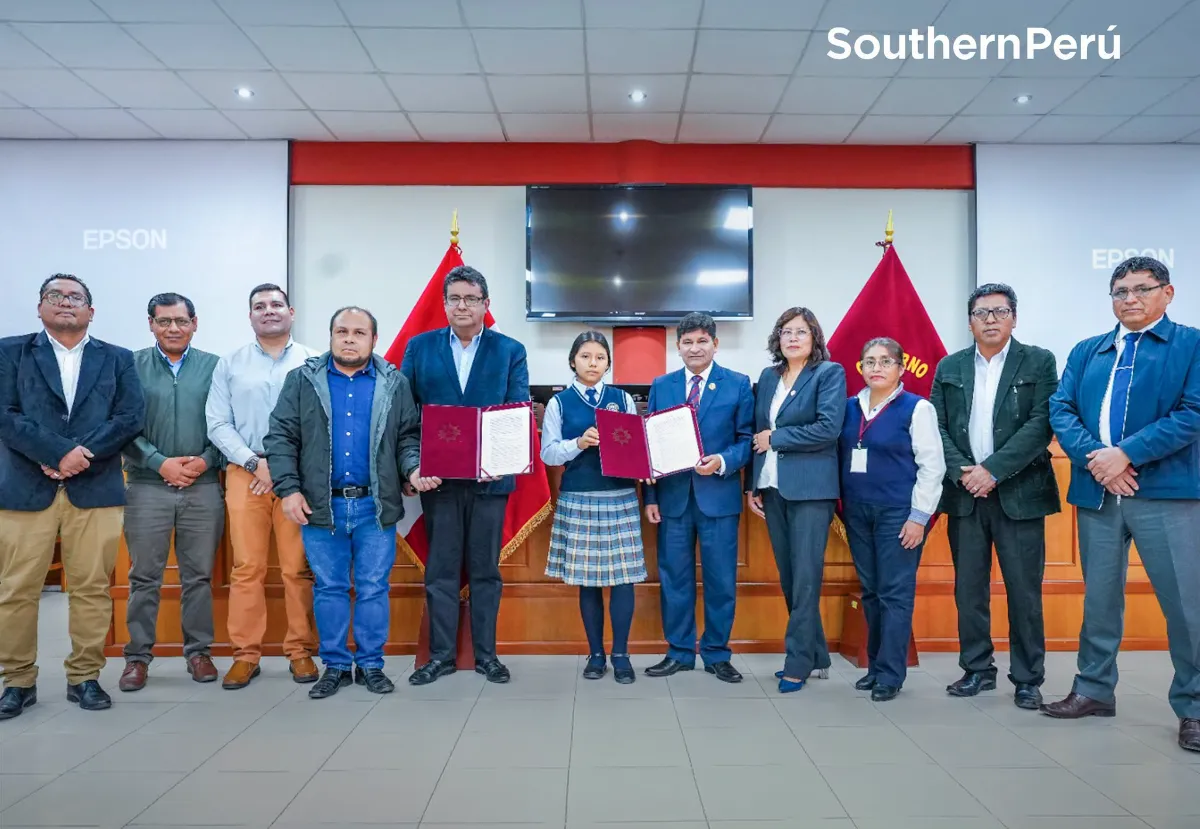
In a significant stride toward bridging the educational infrastructure gap in the Arequipa region, the Regional Government of Arequipa and the mining giant Southern Perú have officially formalized a collaborative agreement. This partnership marks a turning point for the Víctor Manuel Torres Cáceres (Vimatoca) educational institution in the district of Punta de Bombón, signaling a massive investment in the future of the local youth.
Signed on August 11, the agreement leverages the "Obras por Impuestos" (Works for Taxes) mechanism—a strategic model in Peru that allows private companies to invest in public infrastructure projects in exchange for tax credits. This specific initiative is positioned within the broader framework of sustainable development efforts spearheaded by the mining company in the Tambo Valley, a region that is also the site of influence for the highly anticipated Tía María mining project.
The Scope of the Project: Modernizing Vimatoca
The Vimatoca project is not merely a renovation; it is a comprehensive overhaul designed to meet 21st-century educational standards. The scale of the investment is substantial, with a total reference amount of S/ 32.5 million (over USD $8.5 million equivalent). This budget is earmarked to cover the full spectrum of project delivery, including the drafting of the technical file, the physical execution of construction, the provision of state-of-the-art educational equipment, and the necessary oversight and supervision.
The school, which stands as the sole secondary education provider in the district of Punta de Bombón, currently serves more than 450 students. With a history spanning 62 years, the institution has long been a pillar of the community, but its aging infrastructure has struggled to keep pace with modern pedagogical requirements. The new project will be constructed on an expansive site of over 16,000 square meters, providing ample space for both academic and extracurricular development.
The planned facilities are designed to foster innovation and holistic growth. The architectural blueprints include:
- Modern Classrooms: Designed for comfort and optimal learning environments.
- Advanced Laboratories: Dedicated spaces for science and technology.
- Creative Hubs: Specialized workshops for arts, music, and communications.
- Innovation Centers: Integrated computer labs equipped with modern technology.
- Support Facilities: A full-scale kitchen, a spacious dining hall, and updated administrative offices.
- Sports Infrastructure: A large, covered sports court with integrated bleachers and a professional-grade synthetic grass field, promoting physical health and inter-school competition.
A Chronological Roadmap for Development
The success of a project of this magnitude hinges on meticulous planning and adherence to strict timelines. The agreement outlines a structured roadmap, dividing the responsibility between the mining company and the regional authorities to ensure transparency and efficiency.

The Phases of Construction
The total timeline for the completion of the project is set at 873 calendar days. This duration is divided into two critical phases:
- The Planning Phase (150 days): This initial period is dedicated to the creation and approval of the technical file. During these five months, engineers, architects, and educational specialists will finalize the blueprint, ensuring that all structural, electrical, and environmental regulations are met before a single brick is laid.
- The Execution Phase (630 days): Following the approval of the technical file, the construction phase will commence. Over the course of approximately 21 months, the old facilities will be replaced by the modern complex described above.
Distribution of Responsibilities
The governance model of this partnership relies on a clear separation of duties:
- Southern Perú: The company acts as the financier and the executor. They are responsible for securing the resources, managing the contractors, and ensuring the quality of the build.
- Regional Government of Arequipa: The state acts as the supervisor and the final auditor. Their role is to ensure that the project aligns with public standards, oversee the progress of the works, and ultimately perform the final liquidation of the project upon completion.
Supporting Data: Contextualizing the Investment
The investment in Vimatoca is not an isolated event but part of a larger, strategic effort by Southern Perú to integrate itself into the social fabric of the Tambo Valley. By focusing on education, the company aims to address long-standing concerns regarding the quality of public services in the region.
The Tambo Valley, while rich in agricultural and potential mineral wealth, has historically faced challenges regarding social investment and access to high-quality public infrastructure. By focusing on secondary education, Southern Perú is addressing a critical demographic—teenagers and young adults—who are at the most formative stage of their academic lives.
Furthermore, this project follows the momentum of other recent initiatives in the region. Less than a month ago, the company launched the improvement project for the Mariano E. Rivero y Ustariz school in Cocachacra. When viewed alongside the ongoing development of the Colegio de Alto Rendimiento (COAR) in El Pedregal, it becomes clear that Southern Perú is pursuing a policy of "territorial impact." These investments are specifically calibrated to close the infrastructure gap in the province of Islay, ensuring that students in these areas have access to the same quality of facilities as their peers in larger urban centers like Arequipa city.
Official Perspectives and Public Implications
While the project is technically a construction contract, its implications are profoundly social and political. The synergy between the Regional Government of Arequipa and Southern Perú demonstrates a model of "Public-Private Partnership" that, when successful, can neutralize the distrust often found between mining operations and local communities.

Socio-Economic Impact
The influx of S/ 32.5 million into the district of Punta de Bombón will have a ripple effect on the local economy. Beyond the direct improvement of the school, the construction process will generate local employment, stimulate the supply chain for materials, and likely improve the surrounding area’s infrastructure as a secondary consequence.
Educational Equality
For the 450 students currently attending Vimatoca, the new facility represents a significant upgrade in their learning environment. Research consistently shows that physical school environments directly impact student performance, attendance rates, and teacher retention. By providing modern laboratories and ICT (Information and Communication Technology) labs, the project helps level the playing field for rural students who might otherwise lack access to the digital tools necessary for success in a modern economy.
Strengthening Institutional Trust
The collaboration also serves to strengthen the institutional capacity of the Regional Government. By acting as the supervisor of a large-scale project financed by a private entity, the regional administration gains experience in managing complex "Works for Taxes" mechanisms. This capability is essential for future projects, as it allows the government to deliver public works faster than the traditional, often slower, public procurement process.
Strategic Outlook: Beyond the Classroom
The partnership between Southern Perú and the Regional Government of Arequipa is a calculated response to the persistent challenges of regional development in Peru. As the company continues to navigate the complexities surrounding the Tía María project, initiatives like the modernization of the Vimatoca school serve as tangible proof of their commitment to social responsibility.
Critics of large-scale mining often argue that the benefits of extraction do not reach the local populations. By funding education, a sector that offers long-term benefits to the human capital of the region, the company is attempting to shift the narrative. Whether this will lead to a broader social license for their other operations remains to be seen, but the immediate result is the creation of a landmark educational institution that will serve the people of Punta de Bombón for decades to come.
As the 873-day countdown begins, the eyes of the region will be on the progress of the site. The success of this project could serve as a blueprint for future collaborations in other provinces of Arequipa, potentially creating a standard where private investment and regional governance combine to solve chronic infrastructure deficits. In the end, the new Vimatoca will be more than just a school—it will be a symbol of what can be achieved when regional stability and private investment are channeled into the most critical of public services: education.