By Editorial Staff, PeruConstruye
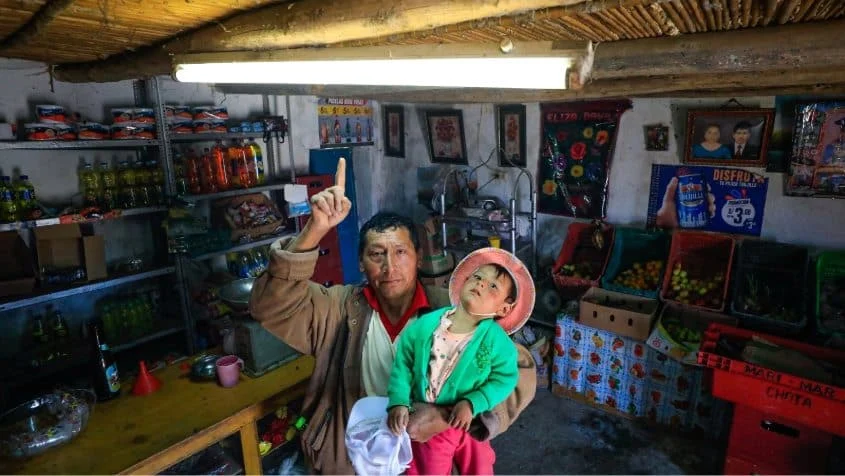
The Andean region of Huancavelica, often characterized by its rugged geography and historical infrastructure deficits, has reached a significant milestone in its path toward modernization. The Ministry of Energy and Mines (MINEM) recently announced the successful completion of two major rural electrification projects. With an investment exceeding S/ 28.4 million, these initiatives are set to provide reliable, continuous, and safe electricity to 7,900 citizens across 242 remote localities. This development marks a pivotal shift for a region that has long awaited the integration of sustainable energy into its economic and social fabric.
Main Facts: Bridging the Energy Gap
The strategic investment represents a concerted effort by the Peruvian government to decentralize development and bridge the "energy gap" that persists in high-altitude communities. The project’s primary objective is not merely to provide lighting, but to create a stable electrical foundation that enables educational advancement, small-scale industrialization, and improved healthcare services.
The two central pillars of this initiative are:
- The Departmental Amplification Project: A massive undertaking involving the expansion of distribution networks across 240 distinct localities, directly benefiting 7,262 citizens.
- The Angaraes District Integration: A localized yet crucial effort focused on the improvement and expansion of services in the communities of Ccochaccasa and Millpo, located within the province of Angaraes, benefiting 640 residents.
By consolidating these efforts, the MINEM has ensured that even the most isolated populations in Huancavelica are no longer left in the dark, signaling a new era of connectivity for the region.

Chronology of Development: From Planning to Power
The trajectory of these projects reflects the complex logistics involved in rural development in Peru.
- Phase I: Strategic Assessment: The planning stage began with the identification of underserved zones where electrification was not only requested by local populations but essential for basic survival and potential economic growth.
- Phase II: Budgetary Approval: In alignment with national goals for universal energy access, the S/ 28.4 million budget was allocated to ensure the procurement of modern transmission equipment, durable cables, and high-capacity transformers capable of withstanding the harsh Andean climate.
- Phase III: Execution and Engineering Challenges: Throughout the construction period, engineers faced significant geographical hurdles. Huancavelica’s mountainous terrain required innovative engineering solutions to transport materials to remote, high-altitude locations.
- Phase IV: Testing and Commissioning: In the final months leading to the recent announcement, the MINEM oversaw rigorous safety testing of the distribution lines to ensure that the infrastructure could withstand voltage fluctuations and weather-related disruptions.
- Phase V: Final Delivery: The formal completion of both projects has now transitioned these areas from "off-grid" or "limited-service" status to integrated, electrified zones ready for modern technological adoption.
Supporting Data: Impact in Numbers
The significance of this investment can be better understood through a breakdown of the technical and social reach of the project:
- Total Investment: S/ 28,400,000.00.
- Total Beneficiaries: 7,902 individuals.
- Geographic Reach: 242 rural localities across the Huancavelica region.
- Primary Scope: Expansion and modernization of low- and medium-voltage distribution networks.
- Infrastructure Components: Installation of new distribution substations, reinforced utility poles, and upgraded metering systems to ensure transparent energy consumption tracking for rural households.
These figures underscore the scale of the MINEM’s intervention, which aims to provide a reliable energy supply that meets national standards, thereby enabling local families to utilize electrical appliances, maintain better food preservation through refrigeration, and extend hours for education and small business operations.
Official Responses and Ministerial Strategy
The Ministry of Energy and Mines has framed this project as a fundamental human rights issue. In recent briefings, spokespersons for the Ministry emphasized that electrification is the "spark plug" for regional development.
"Our commitment to the citizens of Huancavelica is not just about the installation of wires; it is about providing the tools for human dignity," stated a representative from the Ministry. The official strategy relies on the belief that electricity acts as a catalyst for other social services. Once a village is electrified, it becomes significantly easier to introduce digital literacy programs, medical equipment for local health posts, and sustainable water pumping systems.

The Ministry’s approach also includes a focus on sustainability, ensuring that the new infrastructure is resilient against the effects of climate change, such as intense rainfall and landslides, which are common in the central Andean region. By investing in higher-quality materials, the MINEM hopes to reduce the long-term maintenance costs that often plague rural electrification projects.
Socio-Economic Implications: A Catalyst for Change
The completion of these mega-works carries profound implications for the local economy. In regions like Angaraes, where subsistence farming and animal husbandry are the main economic drivers, access to electricity offers unprecedented opportunities for value-added production.
1. Educational Empowerment
With reliable lighting, students in rural Huancavelica will have the capacity to study after sunset. Furthermore, the integration of electricity provides the necessary infrastructure for rural schools to implement basic computer labs and multimedia learning tools, effectively reducing the educational gap between urban and rural youth.
2. Commercial and Industrial Growth
Electricity allows local entrepreneurs to move beyond manual labor. Small-scale processing of agricultural goods, such as milk cooling tanks for dairy farmers or electrical mills for grain, can now be implemented locally. This helps keep profits within the community rather than forcing residents to sell raw materials at low prices to intermediaries.
3. Improved Public Health
The installation of electric power is a cornerstone for the modernization of rural clinics. Refrigeration for vaccines and modern diagnostic equipment, which were previously impossible to maintain in off-grid locations, can now be integrated into local health networks, drastically improving the quality of maternal and emergency care.

4. Security and Quality of Life
Beyond economics, the psychological and safety benefits of street lighting cannot be overstated. Improved visibility in rural village centers enhances security and encourages community gatherings, strengthening the social fabric of the region.
Future Outlook: The Path Ahead
While the completion of these two projects is a major victory for the inhabitants of Huancavelica, the MINEM has indicated that this is part of a broader national agenda. As Peru continues to navigate the challenges of energy transition, the focus will likely shift toward integrating renewable energy sources, such as solar micro-grids, into these newly electrified areas to further lower costs and increase environmental sustainability.
The success in Huancavelica serves as a blueprint for future electrification efforts in regions like Tacna and Moquegua, where similar projects are currently being promoted. By demonstrating that large-scale infrastructure can be successfully deployed in the most challenging of environments, the government is setting a precedent for inclusive growth.
As the residents of the 242 localities begin to experience the benefits of their new, reliable power supply, the impact of this S/ 28.4 million investment will be felt for generations. The light that has reached these homes is more than just a convenience; it is a signal of progress, a symbol of inclusion, and a promise that no region in Peru is too remote to be part of the nation’s modern future.
In conclusion, the Huancavelica electrification projects stand as a testament to what is possible when government policy is aligned with the genuine needs of its people. By prioritizing the most vulnerable and underserved, the MINEM has not only provided electricity but has re-ignited the potential for prosperity in the heart of the Andes.