The regional landscape of Lambayeque is undergoing a significant transformation as the Proyecto Especial Olmos Tinajones (PEOT) confirmed that the renovation of the Mauro Bridge, a vital piece of infrastructure located on route LA-111, has reached a physical progress milestone of 54.37%. This project, spearheaded by the Regional Government of Lambayeque, represents a critical step in bridging the logistical divide between the coastal hubs of Chiclayo and the remote, high-altitude districts of Incahuasi and Cañaris.
Main Facts: Strengthening Connectivity for Northern Peru
The Mauro Bridge project is not merely a construction endeavor; it is a lifeline for rural connectivity. By revitalizing this crossing, the regional authorities aim to streamline the transit of goods, agricultural products, and essential services between the urban centers and the Andean hinterlands.
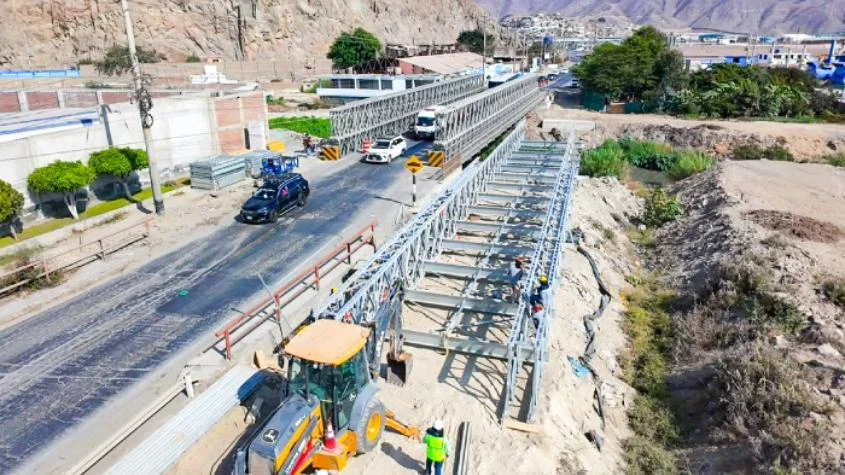
Currently, the construction site in the district of Pítipo, Ferreñafe, is a hub of activity. The technical teams have successfully concluded the primary structural foundation work. Specifically, the contractor has finalized the complex encofrado (formwork), the pouring of reinforced concrete, and the critical anchoring of the bridge abutments on both sides of the crossing. With these foundations secured, the project is entering its most visible phase: the assembly of the metallic superstructures.
According to the latest project reports, the upcoming week is slated to be a turning point, as the installation of the steel components is scheduled to begin. This stage is widely considered the most critical "milestone" in the project’s lifecycle, as it will physically unite the two sides of the valley, signaling the transition from foundation work to the final structural assembly.
Chronology and Technical Execution
The project operates under the designation of an IOARR (Inversiones de Optimización, de Ampliación Marginal, de Reposición y de Rehabilitación), specifically registered under CUI N° 2730323. The framework for this intervention was established following the declaration of emergency via Decree N° DS 039-2026-PCM, which underscored the urgency of restoring transit routes affected by infrastructure degradation or natural threats.

The execution timeline is strictly managed under a 120-day calendar schedule. With the project having been initiated to address immediate connectivity needs, the current progress of 54.37% places the construction firmly on track for a scheduled completion in September 2026. This aggressive timeline reflects the government’s commitment to mitigating the isolation of high-altitude communities that depend on the LA-111 route for daily survival and economic exchange.
Supporting Data and Financial Scope
The investment allocated for the restoration of the Mauro Bridge totals S/ 2,861,011. This budget has been meticulously partitioned to ensure that the infrastructure meets modern safety and durability standards.
Beyond the core bridge structure, the design specifications include:
- Double-lane capacity: Designed to facilitate two-way traffic, allowing for the simultaneous transit of transport trucks and local vehicles.
- Pedestrian infrastructure: Inclusion of dedicated walkways to ensure the safety of the local population who rely on walking as a primary mode of transit.
- Safety features: High-durability metallic guardrails and reinforced impact-protection walls, essential for shielding the bridge from potential environmental hazards or heavy vehicle collisions.
- Approximation slabs: Critical concrete sections at either end of the bridge designed to ensure a smooth transition for vehicles, reducing the long-term wear and tear on the bridge deck.
Implications for the Regional Economy
The implications of this infrastructure development extend far beyond the mere physical structure of the bridge. For the districts of Incahuasi and Cañaris, the Mauro Bridge is the primary gateway to markets in Chiclayo and Ferreñafe.
Economic Impact
The current state of the route often forces residents and producers to face long, arduous detours. By optimizing the transit time and reliability of the LA-111 route, the regional government is essentially lowering the "logistics tax" paid by local farmers. When the bridge is fully operational, the ease of transporting perishable goods—such as high-altitude tubers and organic produce—will significantly boost the income of local farmers, who often see their profits eroded by transport delays and damage caused by poor road conditions.

Social Connectivity
The bridge also serves as a vital corridor for social services. Ambulances, teachers, and public service providers frequently utilize this route to reach the isolated Andean communities. The completion of the Mauro Bridge ensures that even during inclement weather, these communities will not face the total isolation that has historically hindered their development.
Official Stance and Future Outlook
The Proyecto Especial Olmos Tinajones (PEOT) has maintained a transparent reporting structure, keeping stakeholders informed about the project’s evolution. By leveraging the framework of the DS 039-2026-PCM emergency decree, the regional government has been able to expedite the procurement and construction processes without sacrificing quality.
The decision to focus on the Mauro Bridge as a priority project aligns with the broader regional development plan for Lambayeque. As the construction enters the phase of metallic assembly, project engineers are monitoring weather conditions and material logistics to ensure that no delays impede the September 2026 delivery date.
Local authorities in Pítipo have expressed their satisfaction with the pace of the work, noting that the presence of the construction crews has already begun to shift the morale of the surrounding communities. The promise of a modern, safe, and durable bridge is seen as a tangible sign of progress in a region that has often felt neglected by central infrastructure planning.
Conclusion: A Milestone for Lambayeque
As the Mauro Bridge moves closer to completion, it stands as a testament to the importance of strategic infrastructure in bridging the gap between urban economic centers and rural regions. The 54.37% progress mark is not just a percentage; it is a clear indicator of a changing landscape in northern Peru.

With the metallic superstructures set to rise this week, the residents of the high-altitude districts of Incahuasi and Cañaris can look forward to a new chapter of connectivity. By September 2026, the Mauro Bridge will likely stand as a cornerstone of rural development, providing the safe, efficient, and reliable passage that the people of Lambayeque have long deserved.
The successful completion of this project will serve as a template for future infrastructure initiatives, demonstrating how targeted, well-funded, and efficiently executed projects under the IOARR framework can yield high-impact results for the most vulnerable populations in the country.