By Editorial Staff | Infrastructure & Development News
In a significant push to bolster regional economic development and improve public safety, the state of Sonora is currently undergoing a massive infrastructure overhaul. At the heart of this initiative is the modernization of the Hermosillo-Bahía de Kino highway, a vital artery that connects the state capital with one of its most prominent coastal tourism and agricultural hubs. With an initial investment of approximately 500 million pesos (roughly $3 million USD), the project stands as a testament to the state’s commitment to modernizing its logistics and transportation framework.
Currently at a 55% completion rate, the project was recently inspected by Sonora Governor Alfonso Durazo Montaño, who emphasized that the renovation is not merely a paving job, but a strategic response to a "historical demand" from the residents of Miguel Alemán and Bahía de Kino.
Main Facts: A Project of Strategic Importance
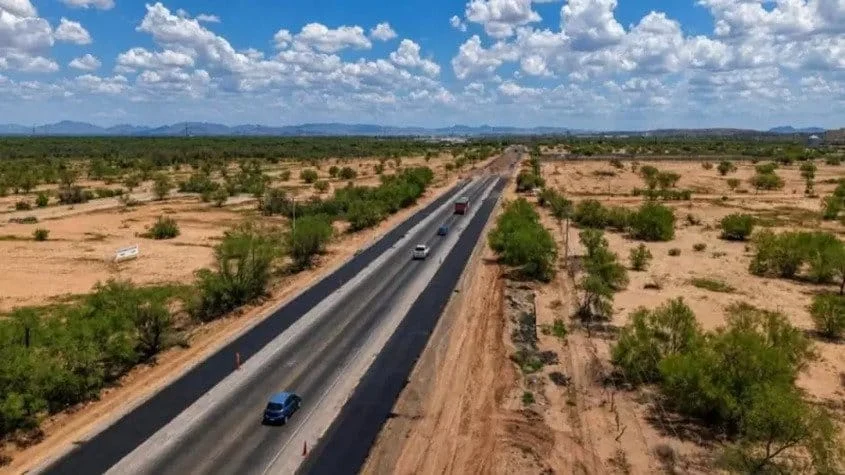
The modernization project focuses on a critical 28.5-kilometer stretch of road, specifically spanning from kilometer 9+000 to 37+500. The technical specifications of the project are ambitious: the highway is undergoing a physical expansion that will increase its width from 12 meters to 19 meters—a massive 60% increase in road surface area.
This expansion is designed to accommodate the heavy agricultural transport vehicles that frequent the area, as well as the seasonal surge in tourism traffic headed toward the beaches of the Sea of Cortez. By widening the road, the government aims to reduce accident rates, improve traffic flow, and lower logistics costs for the agricultural sector, which remains the backbone of the region’s economy.
The project is being executed in two distinct segments, both managed by local Sonoran construction firms. This choice of contractors serves a dual purpose: ensuring the high-quality standards required for regional infrastructure while stimulating the local economy by creating jobs and keeping capital within the state.

Chronology of the Development
The journey toward this modernization began with a thorough assessment of traffic density and accident statistics along the corridor. Recognizing that the old infrastructure was failing to keep pace with the region’s rapid demographic growth, the state government finalized the planning phase in late 2025.
- Early 2026: Official procurement and bidding processes were completed, selecting local construction firms to handle the two-stage execution of the project.
- Mid-2026: Heavy machinery was deployed, and initial earthworks began. The project faced logistical challenges, including managing traffic flow while ensuring safety during construction, yet progress remained steady.
- August 2026 (Present): Governor Durazo conducted a site visit, confirming that the project has achieved 55% physical progress. The work is now entering its final, most intensive phase.
- October 30, 2026: The government has established this date as the firm deadline for the completion of the modernization, citing the need to have the road fully operational before the peak tourism and harvest seasons.
Supporting Data: Why the Expansion is Essential
The necessity of this project is backed by a confluence of economic and demographic factors. To understand the scale of the undertaking, one must look at the data driving the decision:
1. Demographic Expansion in Miguel Alemán
The town of Miguel Alemán has experienced significant population growth over the last decade. As an essential service hub for the surrounding agricultural fields, the town’s residents rely on the Hermosillo-Bahía de Kino highway for daily commuting, medical services, and access to the state capital.
2. Agricultural Productivity
Sonora is a powerhouse in the Mexican agricultural industry. The stretch of highway currently under construction passes through some of the most productive land in the state. The increase in heavy-duty logistics vehicles, carrying produce from the fields to the processing plants and export hubs, created a bottleneck that necessitated a wider road to maintain safety and efficiency.
3. Tourism as an Economic Engine
Bahía de Kino is not just a local destination; it is a vital part of Sonora’s tourism brand. As the beach attracts more visitors, both domestic and international, the state government realized that the "first impression" of the journey—the road itself—needed to meet international safety and comfort standards to ensure a sustainable tourism model.
Official Responses and Strategic Vision
During his recent inspection, Governor Alfonso Durazo Montaño, accompanied by the Secretary of Infrastructure and Urban Development (SIDUR), Alejandra Castro Valencia, outlined the government’s broader vision for the region.

"We are addressing a historical debt to the people of this region," Governor Durazo stated. "The growth of our agricultural capacity and the potential of our coast cannot be stifled by inadequate infrastructure. This 500-million-peso investment is a commitment to the safety of our citizens and the competitiveness of our state."
Secretary Castro Valencia added that the project is being monitored with strict oversight to ensure that the quality of materials used meets the durability standards required for high-volume traffic. The administration has emphasized that the selection of local firms was a deliberate policy to foster regional expertise in large-scale engineering.
Implications: The Long-Term Impact
The implications of this project extend far beyond the asphalt and lane markings. The modernization of the Hermosillo-Bahía de Kino highway serves as a case study for how state governments can use infrastructure to stabilize and grow the economy.
Enhanced Public Safety
The most immediate benefit will be a reduction in traffic accidents. By increasing the road width by 60%, the design allows for safer overtaking maneuvers and provides wider shoulders for emergency stops. For the families who travel this route regularly, this equates to a safer, more reliable transit experience.
Economic Competitiveness
For the agricultural sector, the expansion means a more reliable supply chain. When transport times are reduced and vehicle wear-and-tear is minimized through better road quality, the overall cost of moving goods decreases. This makes Sonoran products more competitive in national and international markets.
Regional Integration
The project acts as a bridge between the administrative and commercial heart of Hermosillo and the coastal economic zones. Improved connectivity encourages further investment in the coastal region, potentially opening the door for new hospitality developments, increased trade, and better access to healthcare and education for residents in the coastal periphery.

Looking Forward: Beyond the October Deadline
As the October 30 deadline approaches, the pressure on the construction crews will mount. However, the government has expressed confidence that the project will be delivered on time and within budget.
This infrastructure effort is part of a wider "Sonora Modernization Plan," which aims to rehabilitate key highway corridors across the state. The Hermosillo-Bahía de Kino project is a flagship initiative in this plan, setting the standard for how the state intends to handle future infrastructure challenges.
As the region watches the progress unfold, the message from the state government remains clear: Sonora is open for business, its roads are being paved for the future, and its citizens’ quality of life is being prioritized through modern, sustainable, and robust infrastructure.
For further updates on this project, including live traffic alerts and construction notices, residents and stakeholders are encouraged to subscribe to the official government infrastructure bulletin.