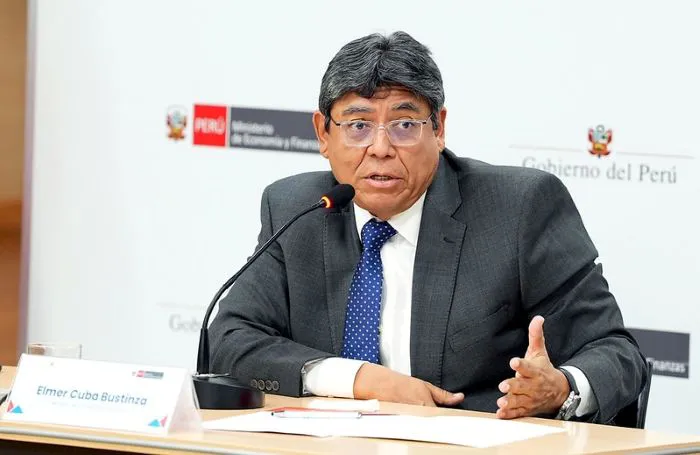
Lima, Peru – In a significant unveiling of the nation’s economic roadmap, Peru’s Minister of Economy and Finance, Elmer Cuba Bustinza, has announced the formation of four presidential commissions tasked with spearheading critical reforms. These initiatives aim to tackle pervasive issues such as labor informality, strengthen financial markets, enhance public investment, and combat tax evasion. The overarching objective, as articulated by Minister Cuba, is to elevate Peru’s productivity and foster a more equitable and socially inclusive society, all while safeguarding macroeconomic stability and public finance sustainability.
"Our obsession as a ministry will be to increase productivity," Minister Cuba declared during his inaugural press conference as the head of the Ministry of Economy and Finance (MEF). "Peru has ample room for growth, but development does not solely depend on favorable international prices; it is achieved through hard work and by raising productivity." This statement underscores a strategic shift towards endogenous growth drivers, emphasizing internal capacity building and efficiency gains as the primary engines for national progress.
The comprehensive reform agenda signals a proactive approach to long-standing challenges that have historically hindered Peru’s economic potential and equitable development. By establishing dedicated commissions composed of leading experts, the government aims to generate well-researched and actionable proposals that can be translated into tangible policy changes.
A Strategic Blueprint for National Advancement
The four presidential commissions represent a multi-pronged strategy to address key areas of economic concern:
1. Tackling Labor Informality: Fostering Productive Employment
The first commission, dedicated to confronting labor informality, will be spearheaded by Miguel Jaramillo, with Gustavo Yamada among its prominent members. This group will focus on dissecting the root causes of informality, identifying the barriers that prevent workers and businesses from entering the formal sector. Their mandate includes proposing concrete measures to incentivize formalization, thereby enabling a greater number of Peruvians to access productive employment and benefit from social protection systems.
Informality has long been a significant impediment to Peru’s economic development, limiting tax revenue, hindering productivity growth, and leaving a substantial portion of the workforce without adequate social security and labor rights. The commission’s work is expected to shed light on innovative solutions, potentially involving streamlined registration processes, targeted incentives for small and medium-sized enterprises (SMEs), and enhanced access to training and skills development programs that align with formal sector demands.
2. Strengthening Financial Markets: Fueling Investment and Growth
The second commission, tasked with bolstering Peru’s financial markets, will be co-chaired by Martín Naranjo and Miguel Palomino. This group will concentrate on both credit and capital markets, aiming to improve access to financing for households and businesses, with a particular emphasis on smaller enterprises. A robust financial sector is crucial for channeling savings into productive investments, fostering entrepreneurship, and supporting economic expansion.
The commission’s recommendations could address issues such as reducing lending costs, diversifying financial instruments, improving credit information systems, and enhancing investor confidence. Strengthening these markets is vital for ensuring that businesses have the capital they need to grow, create jobs, and innovate, while also empowering families to make crucial investments in their future.
3. Reforming Public Investment: Maximizing Societal Impact
Led by Milton von Hesse and comprising a diverse group of experts, the third commission will focus on reforming the public investment system. The primary objective is to enhance the quality and efficiency of public spending, minimizing the number of unfinished projects and ensuring that public resources translate into tangible improvements in essential services. This includes better transportation networks, enhanced security, and superior education and healthcare systems for all citizens.
This commission’s work is expected to scrutinize the entire public investment cycle, from project selection and design to execution and oversight. Recommendations may include implementing stricter project appraisal methodologies, improving inter-agency coordination, fostering greater transparency and accountability, and utilizing technology to monitor project progress and identify potential bottlenecks. The aim is to ensure that every sol invested by the government yields the maximum possible benefit for the Peruvian population.
4. Reducing Tax Evasion: Broadening the Tax Base
The fourth commission will concentrate on curbing tax evasion and non-compliance with the General Sales Tax (IGV) and Income Tax (IR). This initiative will be led by Manuel Estela, with Luis Arias Minaya, head of the Cabinet of Advisors of the Ministry of Economy and Finance, also participating. Crucially, Minister Cuba emphasized that the objective is not to increase tax rates, but rather to ensure that existing tax obligations are met.
This focus on compliance is a strategic move to broaden the tax base without imposing additional burdens on compliant taxpayers. Potential measures could include enhanced tax administration efficiency, greater use of technology for audits and data analysis, simplification of tax procedures, and targeted public awareness campaigns. A more effective tax collection system will provide the government with increased resources to fund public services and investments, contributing to fiscal sustainability.

Beyond Structural Reforms: Immediate Measures for Economic Well-being
In addition to the long-term reform agenda, Minister Cuba also outlined several immediate policy measures designed to protect the purchasing power of citizens and stabilize key economic indicators.
Phased Increase in Minimum Wage to Boost Purchasing Power
A significant announcement regarding the remuneration of the lowest-paid workers was made: the minimum vital remuneration (RMV) will be increased to S/ 1,300. However, this increase will be implemented in two phases. The first phase will involve an increment of S/ 100, followed by a subsequent increase of S/ 70. This staggered approach is intended to balance the objective of improving the purchasing power of workers earning the minimum wage with the need to moderate potential inflationary effects and minimize the impact on the operating costs of small businesses.
"We want the increase in the minimum wage to improve the purchasing power of those earning the minimum, but we will manage it in two stages to avoid impacts on inflation and the costs of small businesses," stated the Minister, highlighting a pragmatic approach to wage adjustments that considers the broader economic landscape.
Reactivating Fuel Price Stabilization Fund
To mitigate the volatility of international oil prices, the MEF is working to reactivate the Fuel Price Stabilization Fund. This fiscal mechanism will help cushion the impact of fluctuations in global crude oil prices on the final cost of fuels for consumers. A well-designed stabilization fund can prevent sudden price shocks, contributing to economic stability and predictability for both households and businesses. The Minister assured that this measure, if properly implemented, will avoid adverse fiscal effects.
Optimizing Holiday Scheduling for Economic and Social Benefit
Regarding public holidays, the government’s current stance is not to increase or decrease their number in the short term. Instead, the focus will be on strategically rescheduling non-essential holidays. Those that do not fall on December 25th (Christmas) or January 1st (New Year’s Day), or around the July 28th national celebration, will be moved to Mondays or Fridays. This initiative aims to facilitate family planning, stimulate the tourism sector by creating longer weekends, and potentially reduce the impact on overall productivity by consolidating work periods.
Ensuring Fiscal Prudence and Public Finance Sustainability
The Minister also addressed the critical issue of fiscal sustainability, outlining measures to ensure the long-term health of Peru’s public finances.
Reviewing Fiscal Consolidation Trajectory
In coordination with the Fiscal Council, the MEF is evaluating a new fiscal consolidation path for the coming years. This review may include marginal adjustments to the parameters of the fiscal rule, with a firm commitment to not jeopardizing the solvency of public finances. This evaluation is particularly important given the inclusion of unforeseen expenditures in the 2026 budget, such as the financing of military personnel pensions until December and crucial actions for the prevention and response to the El Niño phenomenon.
The MEF’s careful consideration of these fiscal adjustments underscores its commitment to responsible financial management. By proactively addressing potential fiscal pressures, the government aims to maintain investor confidence and ensure the continued provision of essential public services.
Addressing Fiscal Risks from Existing Norms
Furthermore, the MEF is actively pursuing the evaluation of four previously approved norms by the Constitutional Court that pose risks to fiscal sustainability. The Minister indicated that if the effects of these norms persist, the fiscal deficit could reach approximately 3% of GDP over the next five years, and public debt could approach 35% of GDP. This proactive stance highlights the government’s vigilance in safeguarding the nation’s financial stability against potential long-term liabilities.
A New Direction for Petroperú: Steering Towards Stability and Growth
In a significant development concerning the state-owned oil company, Petroperú, Minister Cuba announced the appointment of a new board of directors. This board, which has the government’s backing, is tasked with fundamentally altering the company’s trajectory. The shareholders, comprising the MEF and the Ministry of Energy and Mines, have selected a leadership team poised to implement critical changes.
The new board’s priorities will include strengthening corporate management, regaining Petroperú’s market share, generating positive cash flows, and improving the management of the company’s accumulated debt. This strategic realignment signals a commitment to transforming Petroperú into a more efficient, profitable, and financially sound entity, capable of contributing more effectively to Peru’s energy security and economic development.
The comprehensive suite of reforms and immediate policy adjustments announced by Minister Elmer Cuba Bustinza marks a pivotal moment for Peru’s economic policy. By focusing on productivity enhancement, social inclusion, and fiscal responsibility, the government is setting a clear course towards sustainable and equitable growth for the nation. The success of these ambitious initiatives will hinge on effective implementation, robust stakeholder engagement, and a continued commitment to sound economic principles.