December 6, 2018 — A coalition of Indigenous leaders, supported by environmental and legal advocates, has issued a clarion call for justice against the backdrop of systemic environmental degradation in the Peruvian Amazon. At the heart of the controversy lies the infamous "Lote 64" (Block 64) and the persistent, unaddressed oil spills associated with the Norperuano Pipeline.
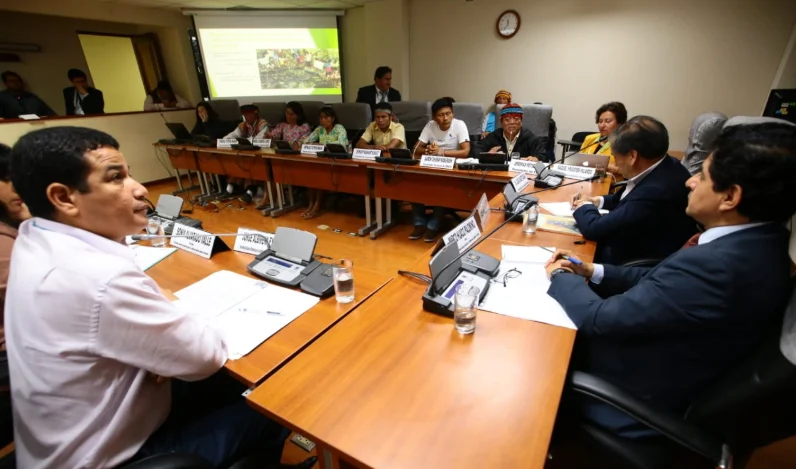
Following a high-level working session convened by the Congressional Commission for Andean, Amazonian, and Afro-Peruvian Peoples, Environment, and Ecology (CPAAAAE), the gravity of the humanitarian and environmental crisis facing the Achuar and Wampis nations has moved to the forefront of the national agenda. As the Organismo de Evaluación y Fiscalización Ambiental (OEFA) pledges to intervene in 2019, the affected communities maintain that years of corporate negligence have left their lands poisoned, their waters toxic, and their future in jeopardy.
The Core Conflict: Unremediated Passives at Lote 64
The primary grievance brought forth by the Federation of the Achuar Nationality of Peru (FENAP) concerns the legacy of operations initiated by Talismán Energy in 2012. Located in the Loreto region, the Lote 64 oil block encompasses the Situche Central sector, specifically surrounding the 2x and 3x oil wells near the community of Putuntsa.
Despite the passage of years, these sites remain hotbeds of contamination. Shiwiant Mashiant, president of the AIM basin organization under the FENAP umbrella, presented harrowing testimony to the Congressional commission. He detailed how oil spills—left untreated for over half a decade—have infiltrated the vital water sources upon which the Achuar people depend for their daily survival. These waters are the lifeblood of the community, sustaining both the residents and their livestock. The failure to remediate these areas constitutes not only a breach of environmental law but an existential threat to the Achuar’s traditional way of life.
A Chronology of Neglect
To understand the current tension, one must look at the timeline of the extractive industry’s footprint in the Peruvian Amazon:
- 2012: Initial reports of major oil spills in the Situche Central sector (Lote 64) during operations led by Talismán Energy.
- 2012–2018: The period of stagnation. Despite the presence of high-grade toxic waste, remediation efforts remained largely performative or non-existent.
- August 2018: The Wampis and Achuar nations formally escalate their demands, calling for the total annulment of the contract for Lote 64, currently under the operation of GeoPark, citing a complete lack of "social license" and a failure to consult the Indigenous populations as mandated by national and international law (ILO Convention 169).
- December 2018: The Congressional commission hosts a working session where FENAP and the Autonomous Territorial Government of the Wampis Nation (GTANW) force the state to acknowledge the crisis.
- 2019 (Projected): The OEFA commits to a cycle of fiscalization and oversight, a move critics suggest is "too little, too late" given the scale of the damage.
The Norperuano Pipeline: A Path of Toxic Legacy
The crisis is not confined to the Lote 64 exploration zone. Jeremías Petsein Peas, president of FENAP, widened the scope of the accusations to include the Norperuano Pipeline. Specifically, he highlighted the communities of Chuintar and Uwinsta, where long-standing oil spills remain unaddressed by Petroperú, the state-owned oil company.
The human cost of this infrastructure failure is becoming increasingly evident. Reports from the communities indicate a surge in chronic health issues, including gastrointestinal disorders, unexplained skin lesions, and persistent neurological symptoms like migraines. "These problems are being identified by the population themselves," Petsein Peas explained. "It is the children and the women—the most vulnerable among us—who are suffering the brunt of this exposure to hydrocarbons."
Official Responses and the "Fiscalization" Promise
The response from the Peruvian state has been characterized by a tension between bureaucratic promises and the urgent demands of the Indigenous nations.
The OEFA’s Stance
The OEFA, tasked with environmental oversight, has pledged to conduct rigorous fiscalization actions in the first quarter of 2019. While the agency frames this as a proactive step, Indigenous leaders remain skeptical. They point out that years of "oversight" have historically resulted in fines that are either unpaid or insufficient to cover the massive costs of environmental restoration.
The Ministry of Health (MINSA)
Also present at the December 2018 meeting, representatives from the Ministry of Health finally acknowledged the medical emergency. They committed to launching a comprehensive diagnostic study to assess the health of the population living in proximity to the oil-affected sites. However, for the Achuar and Wampis, a diagnosis is not a cure; they are demanding immediate medical intervention and a halt to the sources of contamination.
Broader Implications: Human Rights and Sovereignty
The conflict over Lote 64 and the Norperuano Pipeline is fundamentally about the right to self-determination. Wrays Pérez, president of the Autonomous Territorial Government of the Wampis Nation (GTANW), expressed his frustration with the state’s fiscal priorities.
"For the Amazon, there is never money to remediate these impacts," Pérez noted, highlighting the systemic exclusion of the Amazonian regions from national development and environmental protection budgets. "Petroperú knows it has a duty to remediate the Norperuano Pipeline, yet they do nothing."
The Legal Battle
The legal strategy employed by the Indigenous coalition is sophisticated. FENAP, with legal counsel from the International Institute for Law and Society (IIDS), and the GTANW, supported by Peru EQUIDAD, are challenging the very legality of the Lote 64 contract. Their core argument rests on two pillars:
- Lack of Prior Consultation: The state failed to comply with the legal requirement to obtain the free, prior, and informed consent of the Indigenous nations before leasing their ancestral lands to multinational corporations.
- Absence of Social License: GeoPark operates in a climate of total opposition from the local inhabitants. The communities have declared that their territory is not for sale and that the extractive model is incompatible with the preservation of their culture.
Scientific and Environmental Context
The contamination of the Amazonian ecosystem is not merely a localized issue; it is an ecological disaster. Hydrocarbon spills in the rainforest are notoriously difficult to clean. When oil enters the water table, it moves through complex riverine systems, poisoning fish stocks that serve as the primary source of protein for the Achuar and Wampis.
Furthermore, the "passives" mentioned by the leaders refer to sites that have been abandoned without proper environmental stabilization. These sites often contain open pits of sludge and rusted, leaking infrastructure that continues to leach heavy metals into the soil. In a region with high annual rainfall, this pollution is constantly being flushed into the wider watershed, threatening the biodiversity of the Peruvian Amazon—a critical global carbon sink.
Conclusion: A Future at Stake
As of late 2018, the situation remains a stalemate between the economic interests of the state and the fundamental rights of its Indigenous citizens. The call for the annulment of Lote 64 is not just an environmental demand; it is a declaration of sovereignty.
The Indigenous nations are asking for more than just compensation; they are asking for the restoration of their lands to a state where their children can drink from the rivers without fear. The upcoming OEFA intervention in 2019 will be a litmus test for the Peruvian government. Will it continue to prioritize the extraction of natural resources at the expense of human life, or will it finally honor its obligations to the stewards of the forest?
For the Achuar and Wampis, the answer to that question will determine whether they can continue to exist as distinct nations on their ancestral lands or if they will be forced into a slow, painful displacement caused by the chemical poisoning of their home. As the world watches, the Amazonian communities continue to organize, lobby, and resist—insisting that their lives are worth more than the oil beneath their feet.