Executive Summary
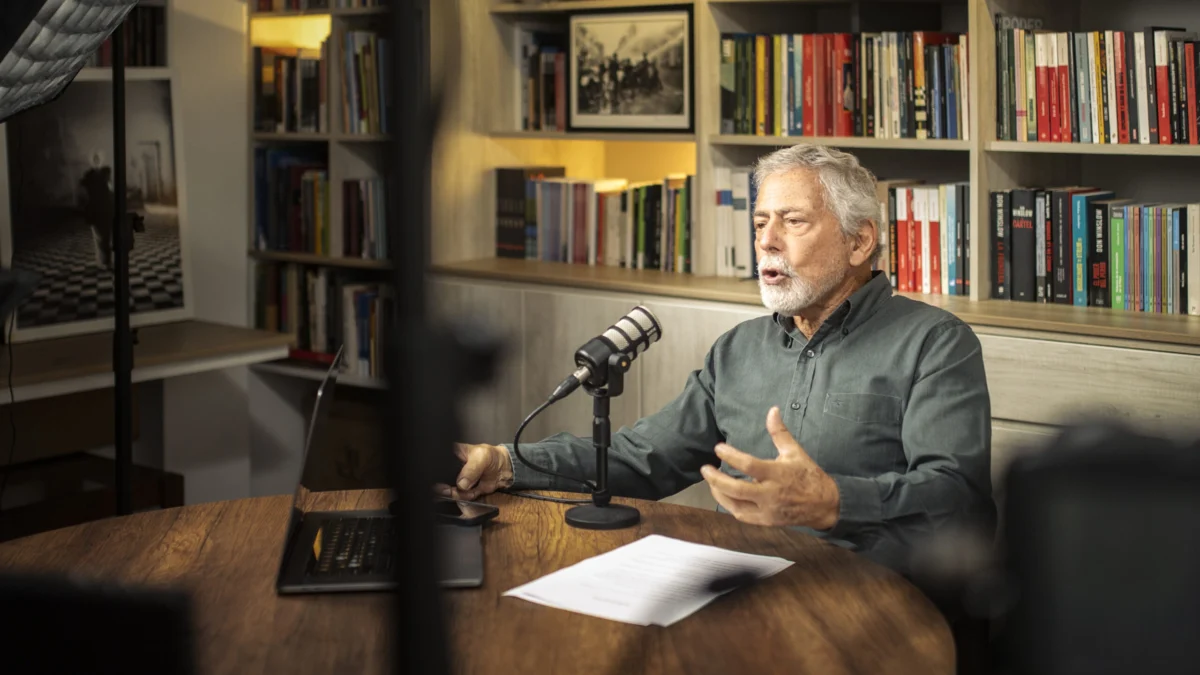
The integrity of investigative journalism in Peru is currently facing one of its most significant challenges in the post-Fujimori era. Gustavo Gorriti, the esteemed founder and director of IDL-Reporteros, is currently the target of a coordinated campaign by political factions within the Peruvian Congress and elements of the judicial system aimed at criminalizing his professional work.
In a powerful display of international solidarity, the National Press Club (NPC)—the world’s leading professional organization for journalists—has issued a formal denunciation of these proceedings. Simultaneously, high-level political figures in the United States, including Senator Chris Van Hollen, have publicly condemned the attempts to silence a journalist whose investigations have been instrumental in exposing systemic corruption across South America. This article examines the gravity of the situation, the history of IDL-Reporteros’ work, and the broader implications for the rule of law in Peru.
The Core Conflict: Criminalizing the Truth
At the heart of the current crisis is a recommendation by a congressional committee to pursue criminal charges against Gustavo Gorriti. The accusations—widely characterized by international observers as "bogus" or politically motivated—allege impropriety in the journalistic process, specifically regarding his interactions with prosecutors who utilized his reports to dismantle high-level corruption networks.
Mark Schoeff Jr., president of the National Press Club, did not mince words in his official statement issued on July 28. "The National Press Club joins journalists across Latin America and press freedom advocates worldwide to express our solidarity with Gustavo Gorriti," Schoeff stated. "This is a clear attempt to silence a journalist of recognized international prestige, who has dedicated his career to investigating and demanding that those who wield power be held accountable for their actions."
The NPC, founded in 1908, emphasized that the actions taken by the Peruvian legislative body are not merely an attack on an individual, but a direct assault on the fundamental tenets of a democratic society.
A Chronology of Confrontation
The antagonism between IDL-Reporteros and certain Peruvian political factions is not a recent development. To understand the current climate, one must look at the trajectory of Gorriti’s career and the impact of his investigative reporting:
- The Investigative Foundation: Over the past decade, IDL-Reporteros became the primary catalyst for the "Lava Jato" investigations in Peru, exposing how multinational corporations and local political elites colluded to defraud the state.
- The Backlash: As these investigations led to the imprisonment or indictment of high-ranking officials and former presidents, the political establishment began to view the press not as a watchdog, but as an existential threat.
- The Judicial Siege: In early 2024, pressure intensified as the Peruvian Congress formed committees aimed at auditing and "investigating the investigators." This led to the recent recommendation that prosecutors move forward with criminal charges against both Gorriti and the judicial officials who acted on his findings.
- The Global Response: Following the latest congressional reports in July 2026, the international community shifted from passive concern to active advocacy, with the National Press Club and various U.S. legislators demanding an immediate cessation of the legal harassment.
The Senatorial Intervention: A Diplomatic Pivot
The involvement of U.S. Senator Chris Van Hollen (D-MD) marks a significant escalation in the international response. A key voice in the Democratic Party regarding foreign affairs, Van Hollen utilized his platform on the social media network X (formerly Twitter) to send a clear message to the Peruvian government.
"Peruvian journalist Gustavo Gorriti exposed corruption at the highest levels of South America," Van Hollen wrote. "Now, those he outed are trying to silence him with bogus accusations of bribery. The new Peruvian government should reject the report recommending criminal charges against him and allow a free press to thrive."
This intervention is crucial. By framing the harassment as a test of the government’s commitment to democratic values, Van Hollen has signaled that the treatment of journalists in Peru is being closely monitored by Washington. This places the current administration under a diplomatic microscope, where their domestic actions carry direct consequences for their international standing.
Implications for the Rule of Law
The attempt to criminalize Gorriti’s work touches on several constitutional and human rights concerns that have been highlighted by the National Press Club.
The Constitutional Paradox
The NPC statement raised a poignant question: "Will it be a government committed to the rule of law and the principles enshrined in the Constitution of Peru and the American Convention on Human Rights, which Peru ratified in 1978? Or will it be one that tolerates the type of corporate cronyism that Gorriti’s investigations revealed?"
The American Convention on Human Rights, specifically Article 13, guarantees freedom of thought and expression. By targeting a journalist for the content of his reporting, the Peruvian state risks violating its own treaty obligations, potentially leading to international litigation at the Inter-American Court of Human Rights.
The Chilling Effect
The broader danger of these proceedings is the "chilling effect" they cast upon the rest of the Peruvian media. If an investigative journalist of Gorriti’s international stature can be threatened with prison time for doing his job, independent journalism across the country will be stifled. The strategy of the political elite is clear: by turning journalism into a legal liability, they hope to induce self-censorship among younger reporters who lack the resources to defend themselves in court.
Supporting Data and Historical Context
IDL-Reporteros has been the recipient of numerous international awards, including the Maria Moors Cabot Prize, which recognizes excellence in journalism in the Americas. Their work has historically focused on:
- Judicial Corruption: Uncovering the "Cuellos Blancos del Puerto" (White Collars of the Port) scandal, which revealed a network of judges and prosecutors trading favors.
- Transnational Bribery: Documenting the flow of illegal funds from Brazilian construction giant Odebrecht into the hands of Peruvian political leaders.
- Human Rights Violations: Investigating historical cases of state-sponsored violence.
The consistency of this reporting makes the current charges of "bribery" against Gorriti appear, in the eyes of his supporters, as a classic case of projection—where the accused attempt to cast their own corrupt practices onto the person who revealed them.
Official Responses and Next Steps
As of late July 2026, the Peruvian government faces a fork in the road. On one hand, they face pressure from internal factions that see the suppression of the press as a means of political survival. On the other, they face mounting pressure from the United States and global human rights organizations to uphold the democratic standards expected of a modern nation.
The National Press Club has signaled that they will continue to monitor the situation. "We stand with Gustavo," Schoeff concluded in his statement. "The international community is watching."
Looking Ahead
The coming months will be decisive. If the judiciary decides to proceed with the charges, the case will likely become a landmark legal battle for press freedom in the Southern Hemisphere. Should the charges be dropped, it would represent a victory for civil society and a potential turning point in restoring trust in the Peruvian justice system.
For now, Gustavo Gorriti remains at his post at IDL-Reporteros, continuing his work despite the shadow of legal action. His resolve, coupled with the unwavering support of organizations like the National Press Club and advocates like Senator Van Hollen, ensures that the story of corruption in Peru will not be silenced, but rather amplified on the global stage.
Conclusion
The campaign against Gustavo Gorriti is a stark reminder that democracy is not a static achievement but a constant struggle. The efforts to criminalize investigative journalism in Peru serve as a litmus test for the country’s future. As the international community continues to rally behind the principles of truth, transparency, and accountability, the message remains clear: the freedom to hold power to account is non-negotiable. The world is watching, and the integrity of the Peruvian state will be judged by its commitment to protecting those who speak truth to power.