Executive Summary: Bridging the Gap in Urban Mobility
The debate surrounding the future of Lima’s mass transit system has reached a critical juncture. Following the administration’s ambitious pledge to fast-track the execution of Metro Lines 3, 4, 5, and 6, the construction sector—led by the Peruvian Chamber of Construction (Capeco)—has issued a cautionary mandate: political will alone is insufficient. For the flagship Line 3 project to transition from a campaign promise to a functional reality, it must first be integrated into the National Infrastructure Plan.
Industry experts argue that bypassing rigorous planning protocols to expedite construction often leads to the very bottlenecks that have plagued the long-delayed Line 2. As Lima looks toward 2045, the challenge lies not just in laying tracks, but in aligning massive capital investments with comprehensive urban development strategies.
The Strategic Path: Integrating Line 3 into National Priorities
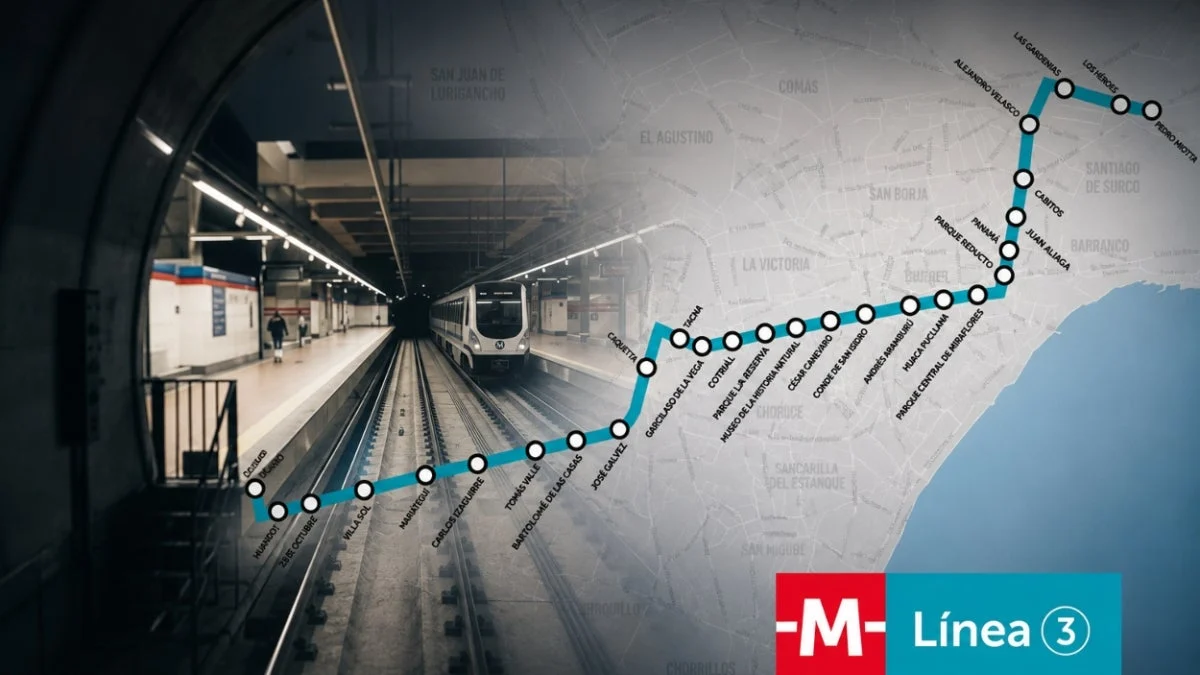
The proposed Line 3, envisioned as a subterranean spine connecting Comas in the north to San Juan de Miraflores in the south, represents a massive engineering undertaking. Its trajectory would slice through the heart of the capital, serving high-density districts including Los Olivos, San Martín de Porres, Cercado de Lima, Lince, San Isidro, Miraflores, Surquillo, and Santiago de Surco.
Despite its obvious utility, the project is currently a "ghost" within the government’s formal financial planning documents. The National Infrastructure Plan to 2031, managed by the Ministry of Economy and Finance (MEF), currently prioritizes 72 projects with a total investment value of S/144 billion. Line 3 is conspicuously absent from this list.
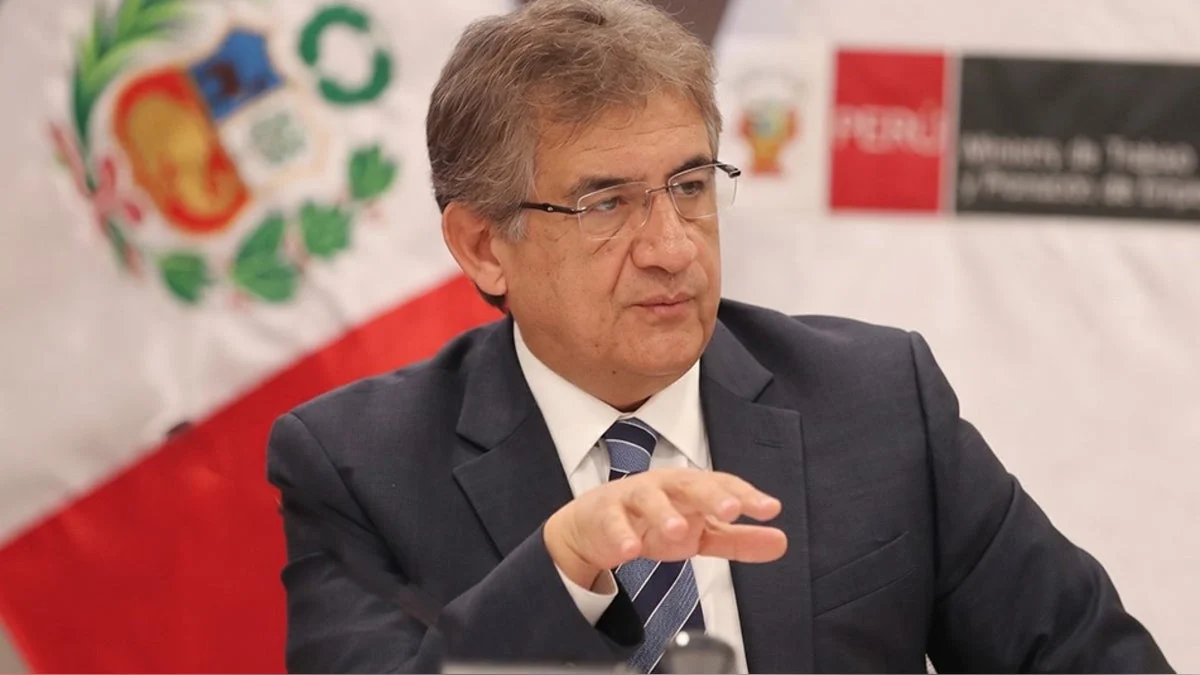
Guido Valdivia, Executive Vice President of Capeco, emphasizes that this omission is a fundamental hurdle. "The first step is its incorporation into the National Infrastructure Plan," Valdivia stated. "There are administrative, technical, and regulatory hurdles that must be resolved; these should not be insurmountable, but they require a formal framework to ensure funding and oversight."
Chronology: From Concept to Construction Reality
The history of Lima’s Metro system is one of high expectations met with chronic delays. Understanding the current climate requires a look at the trajectory of these projects:
- 2014–2016: Initial feasibility studies for the expanded Metro network are discussed, marking the shift from a single-line system to a comprehensive multi-line grid.
- 2018–2021: Construction of Line 2 progresses, though significantly behind schedule due to land acquisition issues and bureaucratic hurdles, serving as a cautionary tale for future lines.
- 2024: The Ministry of Transport and Communications (MTC) defines the future Metro lines as part of the "Strategic Portfolio" and the "Urban Mobility Plan to 2045."
- 2026 (Present): The current administration announces a priority push for Lines 3 through 6.
- 2028 (Projected): Expected completion date for the entirety of Line 2, a benchmark the industry views as the litmus test for the government’s credibility in infrastructure delivery.
Supporting Data: The Economic Weight of Infrastructure
The financial scope of these projects is staggering. The S/144 billion earmarked for the 72 prioritized projects in the current National Infrastructure Plan underscores the government’s intent to close the country’s infrastructure gap. However, adding Line 3 to this portfolio would require a recalibration of fiscal priorities.
Construction experts point out that the cost of inaction is higher than the cost of proper planning. "If you rush," Valdivia warns, "you end up with technical errors that have no reversal. A proper study phase alone takes two years, and the development of a construction-ready technical dossier can take even longer."
The "Urban Plan" Deficit
A core pillar of the industry’s critique is the lack of "Transit-Oriented Development" (TOD). Capeco argues that the government has historically treated Metro lines as isolated engineering projects rather than urban transformation tools.
- The Line 2 Lesson: Despite its massive budget, there is currently no specific urban development plan surrounding the Line 2 stations. This means the city is missing out on the opportunity to concentrate high-density housing, office space, and public services around transit hubs.
- The Opportunity for Line 3: By integrating urban zoning with the construction of the tracks, the government could attract significant private investment, effectively turning the transit line into an economic catalyst rather than just a public utility.
Official Responses: The MTC vs. The Industry Perspective
The Autoridad de Transporte Urbano para Lima y Callao (ATU) maintains that while Line 3 is not currently in the National Infrastructure Plan, it is firmly positioned within the MTC’s strategic horizon. According to the authority, the project is a fundamental component of the Lima and Callao Urban Mobility Plan to 2045.
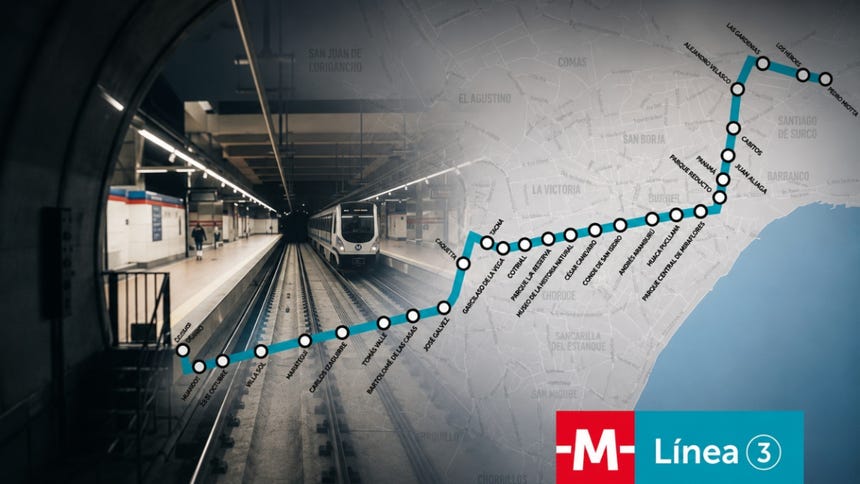
However, industry leaders remain skeptical of whether this "strategic" designation provides enough weight to protect the project from political volatility. The concern is that without the legal and budgetary certainty provided by inclusion in the National Infrastructure Plan, the project remains vulnerable to changes in ministerial priorities or sudden budget reallocations.
Implications: The Risks of Expediency
The pressure to "show results" often tempts governments to bypass the tedious but essential stages of project maturation. The construction sector has identified three primary risks if this trend continues:
1. The Risk of Technical Failure
Speeding up the technical dossier often leads to incomplete geological surveys or unmapped underground utility conflicts. In a dense, historic city like Lima, these oversights can halt construction for months or years, as seen with the tunneling challenges of Line 2.
2. The Opportunity Cost
If the government prioritizes the start of construction over the completion of existing projects, the city ends up with a series of unfinished "white elephants." The consensus among experts is that completing Line 2 by 2028 must be the primary metric of success before any shovels hit the ground for Line 3.
3. Investor Distrust
Private investment, which is essential for the operation of the future metro, relies on long-term stability. A project that lacks a clear regulatory framework or a defined urban master plan is a high-risk asset. By creating a transparent, planned pipeline, the government can lower the cost of capital and increase the number of qualified bidders for these projects.
Conclusion: A Call for Coherent Governance
The path forward for Lima’s Metro expansion is clear but arduous. The ambition shown by the current administration in highlighting Lines 3, 4, 5, and 6 is a necessary first step, but it must be tempered by a commitment to structural planning.
The integration of these lines into the National Infrastructure Plan is not a mere bureaucratic formality; it is an essential safeguard for the taxpayer and the city’s future. By aligning the construction of the rail network with a robust urban development plan—one that identifies where the city will grow, where people will live, and where services will be located—Lima can finally transition from a city of disjointed transit projects to a modern, integrated metropolis.
As Capeco has aptly summarized: "We have the vision, but we must respect the process. If we want these projects to endure, we must build them not just for the next election cycle, but for the next generation."
The upcoming years will be decisive. Whether the administration chooses to chase the headlines of early groundbreakings or the legacy of a well-executed, fully integrated transit network remains to be seen. For now, the construction sector stands ready, provided the government is willing to lay the administrative foundation before the first tunnel boring machine is lowered into the ground.