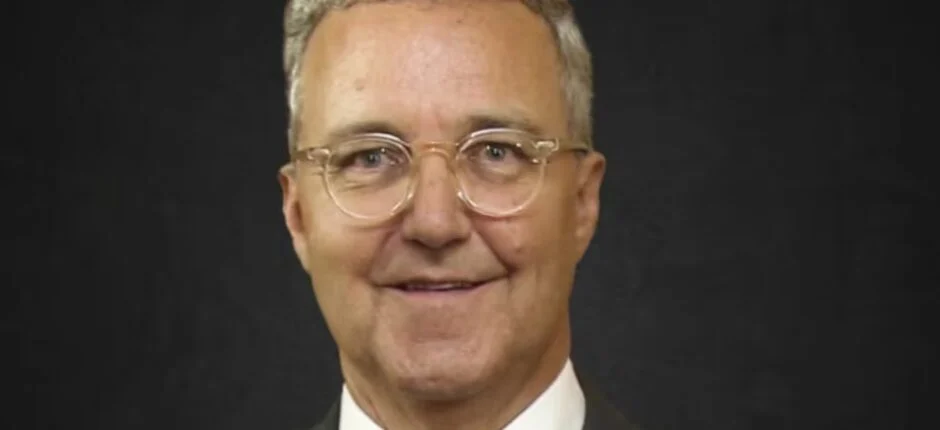
In the rarefied air of international economic forums, Julio Velarde is rarely addressed by his formal title. He is simply "The Professor." This moniker is far more than a casual academic nod; it is a testament to a career defined by a commodity in short supply within the volatile world of Latin American politics: unwavering credibility. As Peru faces a pivotal moment of political transition and economic recalibration, the decision to retain Velarde at the helm of the Central Reserve Bank of Peru (BCRP) speaks volumes—more, perhaps, than any campaign promise or partisan rhetoric could ever convey.
The Institutional Bedrock: A Legacy of Continuity
The BCRP stands as a rare beacon of institutional consistency in a nation historically prone to political turbulence. Since his appointment in 2006, during the second administration of Alan García, Velarde has shepherded the Peruvian economy through global financial crises, commodity price collapses, and a revolving door of presidents. As he nears two decades in the role, his tenure represents a masterclass in the value of administrative continuity.
Under Velarde’s stewardship, the BCRP has successfully insulated itself from the erratic swings of the executive branch. Its primary mandate—maintaining monetary stability and controlling inflation—has been treated as a sacrosanct duty rather than a political football. In a country where institutional erosion is a perennial threat, the BCRP’s autonomy is an asset whose true value is often only fully appreciated in its absence.
Chronology: Two Decades of Monetary Stewardship
To understand the weight of Velarde’s influence, one must look at the timeline of his leadership:
- 2006: Appointed as President of the BCRP. He inherits a stable macro-fiscal framework but faces the challenge of maintaining growth amidst global uncertainty.
- 2008–2009: The Global Financial Crisis. Velarde’s BCRP implements counter-cyclical policies, utilizing the country’s reserves to buffer the economy from external shocks.
- 2011–2016: The Post-Boom Era. As the "super-cycle" of commodity prices wanes, Velarde manages a "soft landing," keeping inflation within the target range despite slowing GDP growth.
- 2020: The Pandemic Shock. Faced with an unprecedented contraction, the BCRP under Velarde executes one of the most aggressive monetary easing programs in the region, including the Reactiva Perú program, which provided liquidity to keep the formal business sector afloat.
- 2021–Present: Political Instability and Inflationary Pressure. Despite shifting administrations and social unrest, Velarde remains the "safe pair of hands," acting as a guarantor of macroeconomic sanity for international investors.
Supporting Data: Why Credibility Matters
The numbers validate the confidence placed in the "Professor." Throughout his tenure, Peru has maintained one of the lowest inflation rates in the Latin American region. While neighboring countries have grappled with hyperinflation or currency collapses, the Peruvian Sol has remained remarkably resilient.
Economic analysts point to three key metrics that underscore Velarde’s effectiveness:
- Inflation Targeting: The BCRP has consistently adhered to its inflation target of 2% (with a range of +/- 1%), anchoring expectations and protecting the purchasing power of the most vulnerable.
- Foreign Exchange Reserves: Under Velarde, the BCRP has built a robust cushion of international reserves, providing a critical shield against speculative attacks and external volatility.
- Independence Indices: International financial institutions, including the IMF and the World Bank, consistently rank the BCRP as one of the most independent central banks in emerging markets. This independence is not merely a theoretical construct; it is a functional barrier that prevents political cycles from dictating monetary policy.
The Temptation of the "Clean Slate"
In the realm of politics, there is a recurring temptation for incoming administrations to assert authority by dismantling the old guard. The impulse to replace, rename, and reorganize is often mistaken for strength. However, true governance requires the wisdom to distinguish between that which requires reform and that which must be preserved at all costs.
The most resilient institutions are not those that change with every election cycle, but those that elevate technical criteria above political expediency. By retaining an individual of Velarde’s caliber, the government acknowledges that the BCRP is not merely a government department, but a pillar of the state. It sends a signal that while the executive branch may change, the "rules of the game" remain stable.
Implications: A Catalyst for Investor Confidence
This signal is particularly critical as Peru navigates a period of profound uncertainty. The nation’s path forward depends on its ability to attract private investment, stimulate employment, and foster sustainable growth. These outcomes are not driven by speeches or ideological manifestos; they are driven by the cold, hard logic of risk assessment.
Investors, both domestic and foreign, look for predictability. They look for institutions that operate with a long-term horizon. By maintaining continuity at the BCRP, the state provides a baseline of predictability that allows the private sector to plan, invest, and hire. The decision to keep Velarde acts as an insurance policy for the economy, signaling that the structural integrity of the financial system is not up for negotiation.
Official Responses and the Road Ahead
The reaction from both the financial sector and the broader political sphere has been largely positive, reflecting a consensus that Velarde is indispensable. However, as the formal transfer of power between outgoing and incoming administrations begins, the pressure mounts on the new government to demonstrate that this is not a singular, isolated act of wisdom, but the first step in a broader commitment to sound governance.
The challenges facing the new administration are immense:
- Public Safety: The rising tide of insecurity and organized crime, particularly extortion, threatens the social contract.
- Illegal Economies: The expansion of illicit mining and logging presents a direct threat to the rule of law and the formal economy.
- Investment Reactivation: With private investment stalling, the government must move beyond rhetoric to create an environment where businesses can flourish without being crippled by bureaucracy or corruption.
Conclusion: The Real Exam
The retention of Julio Velarde is a promising opening act, but it is not the play itself. The "real exam" for any administration is not passed through a single high-profile appointment. It is passed through five years of coherent, disciplined decision-making.
The stability provided by the BCRP is the foundation, but the government must now build the house upon it. For Peru, the next few years will define whether this period of continuity becomes a permanent feature of its political culture or merely a brief pause in a cycle of instability. As the country moves forward, it must remember that credibility is earned in drops and lost in buckets. By backing the "Professor," the administration has taken a necessary step—but it is only by matching that institutional integrity with equal rigor in the executive and legislative branches that Peru will secure the future its citizens deserve.