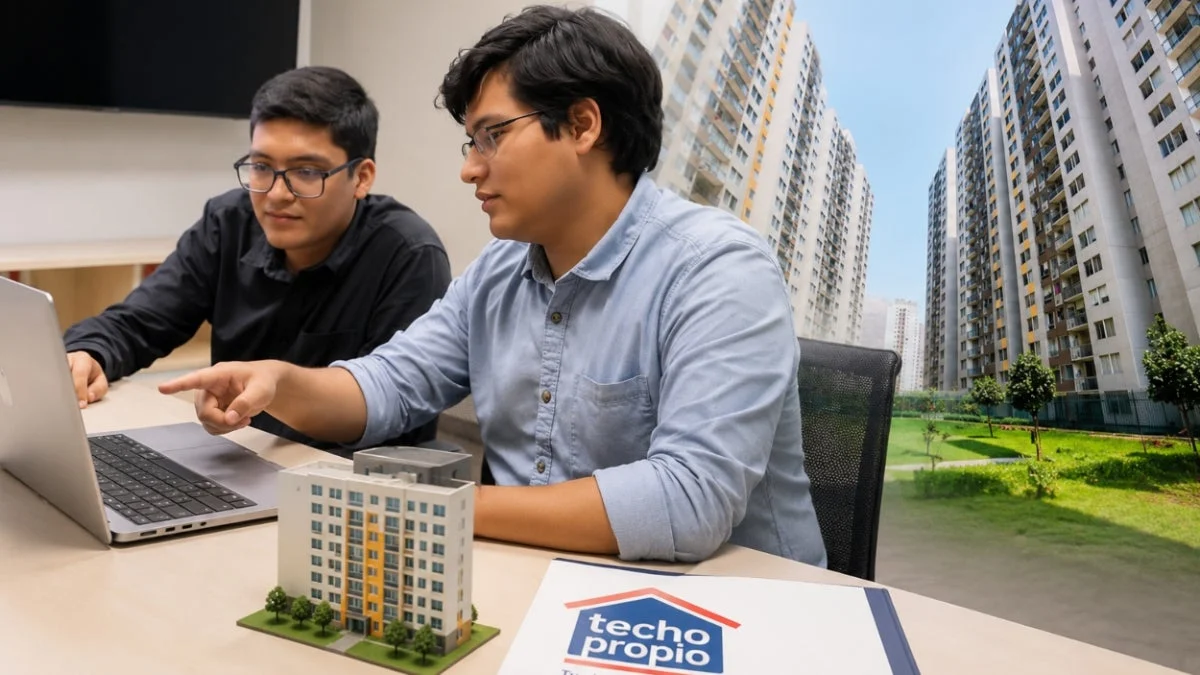
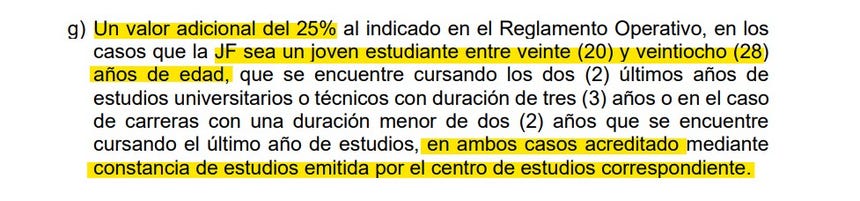
In a strategic move to address the growing housing deficit while simultaneously incentivizing academic completion among young adults, the Peruvian Ministry of Housing, Construction, and Sanitation has unveiled a groundbreaking proposal. Under the updated regulatory framework for the Techo Propio (Own Roof) program, young students who serve as heads of their households will be eligible for a significant 25% increase in the Bono Familiar Habitacional (BFH), with subsidies reaching as high as S/ 72,875.
This policy shift, currently undergoing a period of public consultation, represents a paradigm shift in how the state approaches social welfare, specifically targeting the intersection of education, youth employment, and urban development.
Main Facts: Who Qualifies and What is the Offer?
The core of this initiative is a targeted financial boost for young individuals navigating the challenging transition from academic life to the professional workforce. Specifically, the government aims to support individuals between the ages of 20 and 28 who are currently enrolled in higher education—either university or technical programs—and are in the final stages of their academic journey.
To qualify for the enhanced subsidy, the applicant must meet three primary criteria:
- Age Requirement: Be between 20 and 28 years old.
- Academic Status: Provide proof of enrollment in the final two years of a university or technical degree program (or the final year for shorter-duration programs).
- Head of Household Status: Serve as the head of a family group, defined as the individual who provides the primary economic sustenance and legal representation for the household.
It is crucial to clarify a common misconception regarding the "head of family" status. The Ministry has emphasized that one does not need to be married or have children to qualify. A head of household can be any individual over the age of 18 who supports a family unit, which could consist of siblings, elderly parents, or a partner. This inclusivity ensures that non-traditional households are not excluded from the opportunity to achieve homeownership.
Chronology of the Policy Evolution
The Techo Propio program has long been the backbone of Peru’s social housing strategy. However, the government identified a "youth gap" in recent years, where young, high-potential individuals were being priced out of the market despite their upward trajectory in their professional studies.
- Early 2026: The Ministry of Housing conducted an internal review of the Techo Propio fund’s efficacy. Data suggested that while the program helped many, young students—often the most vulnerable to economic volatility—were struggling to bridge the gap between their savings and the market price of Social Interest Housing (VIS).
- Mid-2026: Drafting of the new regulatory framework began, focusing on the "Student Bonus" concept.
- July 2026: The Ministry officially released the proposed regulation for public consultation. This period allows stakeholders, urban planners, and the public to review the terms before the final ministerial decree is signed into law.
- Future Outlook: Once the consultation concludes, the government aims to fast-track the implementation, with the goal of activating these bonuses by the final quarter of 2026.
Supporting Data: Understanding the Subsidy Tiers
The financial structure of the Techo Propio bonus is tiered based on the nature of the property being acquired. The government categorizes properties into "Prioritized" Social Interest Housing (VIS) and "Regular" VIS. Prioritized properties are typically smaller or located in high-need areas, attracting higher state support.
| Property Type | Max Value (S/) | Standard BFH (S/) | Student Bonus (S/ + 25%) |
|---|---|---|---|
| VIS Prioritized (Single Lot) | 60,000 | 58,300 | 72,875 |
| VIS Prioritized (Multi-family/Quinta) | 70,000 | 53,350 | 66,687.50 |
| VIS Regular (Single Lot) | 109,100 | 52,250 | 65,312.50 |
| VIS Regular (Multi-family/Quinta) | 136,000 | 47,850 | 59,812.50 |
This tiered approach ensures that the subsidy is proportional to the market value of the home while heavily incentivizing the purchase of more affordable, high-density housing solutions.
Official Responses and Strategic Intent
Minister of Housing, Wilder Sifuentes, has been a vocal proponent of this expansion. During a recent press conference, Sifuentes highlighted that this is not merely a handout, but a strategic investment in the nation’s human capital.
"We are targeting the youth who are balancing the rigors of academic study with the weight of family responsibility," Sifuentes stated. "By providing this 25% increase, we are not just helping them buy a roof; we are providing the stability required for them to graduate, enter the workforce with confidence, and avoid the precariousness of the rental market."
The Ministry has also clarified that the BFH is a non-repayable grant. Unlike bank loans or government-backed credit lines, the BFH does not need to be returned to the state. This is a critical distinction, as it provides a "down payment" foundation that allows the beneficiary to then seek a mortgage for the remainder of the property value, thereby leveraging private capital to complete the home purchase.
Socioeconomic Implications: More Than Just Housing
The implications of this policy extend far beyond the construction sector.
1. Retention in Higher Education
One of the primary drivers of student dropout rates in Peru is financial instability. By easing the burden of housing, the government hopes to create a "stability effect" where students are more likely to complete their degrees because their primary living expenses are secured.
2. Formalization of the Housing Market
By incentivizing the purchase of formal housing units (VIS projects), the state is actively discouraging the growth of informal, often dangerous, self-constructed settlements. This fosters safer, planned urban environments with access to basic services like water, electricity, and sewage.
3. Economic Multiplier Effect
The construction of these housing units stimulates the broader economy. Every unit built under Techo Propio creates jobs in architecture, engineering, masonry, and real estate services. By increasing the demand for these units among the youth demographic, the government is ensuring a steady pipeline of projects for developers.
4. Long-term Wealth Creation
For many young families, this will be their first major asset. Promoting early homeownership is a proven method for building intergenerational wealth, providing a financial safety net that can be leveraged for future investments or entrepreneurial endeavors.
Addressing Concerns: Ensuring Compliance
While the news has been met with enthusiasm, the government is also implementing strict oversight to prevent misuse. The new regulations include clauses to ensure that properties purchased under this program remain the primary residence of the beneficiaries. If a property is found to be used for rental purposes or sold prematurely, the beneficiaries face the risk of having to return the bonus funds, along with accrued interest.
This "no-rental" clause is designed to ensure that the housing stock remains dedicated to the families for whom it was intended, preventing speculative real estate practices from undermining the social goals of the program.
Conclusion: A Step Toward the Future
The proposal to boost the Techo Propio subsidy for students is a bold recognition of the realities facing the modern Peruvian youth. By acknowledging that the path to success is often hindered by the simple inability to secure a stable place to live, the Ministry of Housing is crafting a policy that is as much about human development as it is about infrastructure.
As the proposal moves through the consultation phase, the focus will now shift to the execution. For thousands of students currently juggling textbooks and family budgets, this policy offers a glimmer of hope: a path to a home, a career, and a stable future in a country that is finally investing in their potential.