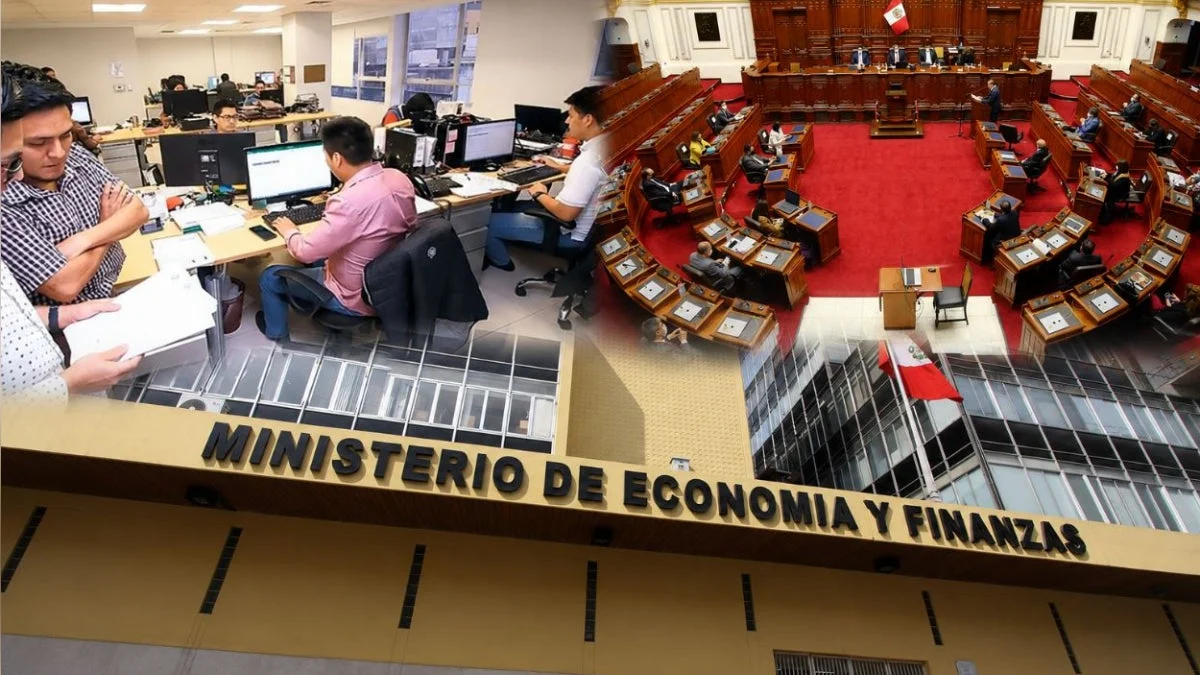
In a significant legislative move that impacts more than 350,000 public servants, the Peruvian Congress has officially approved a supplemental budget credit that paves the way for workers under the Administrative Service Contract (CAS) regime to receive gratifications for Fiestas Patrias and Christmas, as well as Compensación por Tiempo de Servicios (CTS). However, the road to these benefits is far from straightforward. Under the newly enacted framework, the Ministry of Economy and Finance (MEF) retains significant authority to determine the pace of implementation, ensuring that the rollout remains subject to strict fiscal discipline and available budgetary resources.
Main Facts: A Landmark Decision with Conditions
The legislation, embedded within a larger supplemental budget act exceeding S/ 9 billion, marks a turning point for a segment of the public workforce that has long campaigned for benefits parity. Under Legislative Decree 1057, CAS workers have historically been excluded from the standard benefits enjoyed by other public sector employees.
The approved text stipulates that the executive branch, through the MEF, will define the procedural roadmap annually. This includes the methodology for calculations, specific eligibility requirements, and the conditions under which these payments will be disbursed. A critical floor has been set: in no instance shall the gratifications for Fiestas Patrias or Christmas be lower than S/ 300.
While the policy is a major victory for labor advocates, the language of the law explicitly links the execution of these payments to the health of the national treasury. The implementation is conditioned on the availability of resources, the preservation of fiscal equilibrium, and adherence to multiannual budget programming and macro-fiscal rules.
Chronology of a Contentious Debate
The legislative path to this outcome was marked by intense friction between the executive and legislative branches.
- The Initial Proposal: The MEF originally proposed a structured, five-year gradual implementation plan for these benefits. This proposal was designed to mitigate the immediate fiscal shock of covering over 350,000 workers.
- Congressional Intervention: During the review process, the Congressional Budget Committee initially moved to strip the MEF’s specific implementation framework from the bill, leading to a period of uncertainty regarding how the law would actually be funded and applied.
- The Final Compromise: Following weeks of debate and intense negotiation, the final text was approved on July 14. This compromise restored a degree of control to the MEF, empowering the ministry to issue Supreme Decrees annually to regulate the payment, thereby ensuring that the executive retains the tools necessary to manage the fiscal impact.
Supporting Data and Financial Realities
The sheer scale of this policy shift is reflected in the numbers. Providing full benefits to the current CAS workforce is estimated to require an annual investment of approximately S/ 3,500 million. During recent hearings before the Budget Committee, Economy Minister Rodolfo Acuña warned that the current supplemental budget, while expansive, did not inherently allocate the specific S/ 3,500 million necessary to immediately fulfill these obligations.
The Gradual Implementation Model
The MEF has consistently advocated for a phased approach to prevent an unsustainable spike in public spending. The proposed model—which continues to serve as the likely blueprint for the forthcoming Supreme Decrees—suggests a five-year window for full implementation. This approach aims to:
- Avoid Fiscal Volatility: By spreading the costs, the state can incorporate the expenditure into the Multiannual Budget Framework.
- Ensure Compliance: By adjusting the percentages annually, the government can calibrate payments based on tax revenue performance and the overall economic climate.
Regarding the CTS, the law clarifies that the calculation of time served will be retroactive, considering the period laboring since the start of the current CAS contract. The Ministry is currently tasked with defining the rules for proportional and "trunco" (partial) payments, ensuring that workers who conclude their contracts before a full cycle receive their fair share.
Official Responses and Institutional Perspectives
The official position of the Ministry of Economy and Finance remains one of "cautious support." While the Ministry acknowledges the social necessity of improving working conditions for CAS personnel, it has repeatedly cautioned against "inconsistencies" in the initial legislative drafts. A formal report published by the MEF indicated that the original, unrefined version of the law lacked the technical precision required for immediate, large-scale implementation, potentially leading to administrative gridlock across government agencies.
On the other hand, legislative proponents argue that the bill is a matter of fundamental labor rights. By setting the S/ 300 floor and creating the legal pathway for these benefits, Congress has effectively forced the issue onto the government’s agenda, ending decades of administrative limbo for the CAS workforce.
Implications: A Decentralized Financial Burden
The implementation strategy introduces distinct challenges for different levels of government, creating a complex web of financial responsibility:
National and Regional Governments
For the central government and regional administrations, the financial burden for the 2026 fiscal year is expected to be managed through the resources specifically authorized by this new norm. The government has prioritized these funds within the broader budget expansion, signaling a commitment to beginning the phased payment structure.
Local Governments
Local municipalities face a more difficult reality. The law mandates that local governments must assume the costs of these benefits using their existing institutional budgets. They are explicitly barred from requesting additional resources from the National Treasury to cover these payouts. To assist in this, the law grants local governments an exceptional waiver from certain constraints found in the 2026 Budget Law, allowing them flexibility to reallocate funds for this specific purpose.
Entities Outside the Treasury
Public entities that do not rely on the National Treasury for funding but fall under the scope of this law are also granted a one-time exemption from the limitations stipulated in Legislative Decree 1440 (the National Public Budget System). This is intended to facilitate the immediate legal ability to finance the new benefits without violating the rigid procedural constraints that usually govern their financial management.
Conclusion: A Work in Progress
The approval of gratifications and CTS for CAS workers is undeniably a landmark development in Peruvian labor law. However, it is an incomplete victory in the eyes of many. The final authority rests with the MEF, and the actual disbursement of funds will be a dynamic process, contingent upon the state’s ability to maintain its macro-fiscal stability.
For the 350,000+ workers currently under the CAS regime, the next few months will be critical as the MEF prepares the first round of Supreme Decrees. These documents will translate the legislative intent into concrete numbers and dates. As it stands, the implementation is not just a policy decision but a delicate balancing act—one that attempts to reconcile the moral imperative of labor equity with the cold, hard requirements of national fiscal responsibility. The coming fiscal years will reveal whether this phased approach provides the relief intended or if further adjustments will be required to ensure that the benefits reach the workers in a meaningful and timely manner.