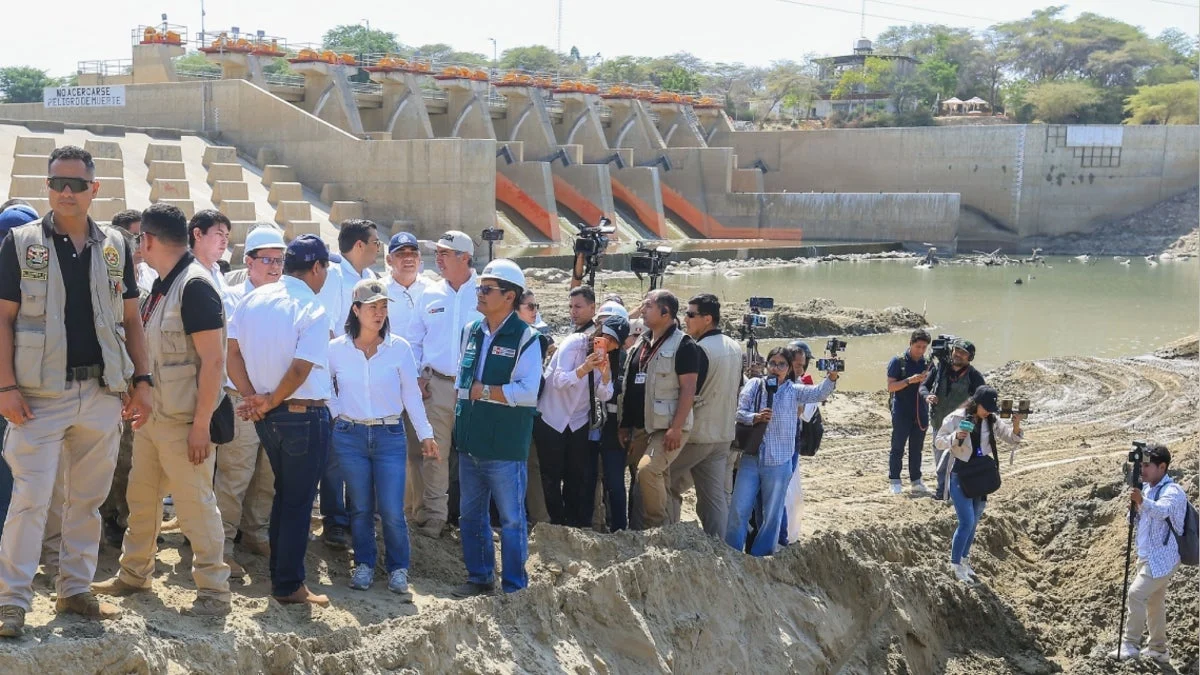
In a decisive move to mitigate the potentially catastrophic effects of the El Niño phenomenon, the administration of President Keiko Fujimori has enacted a landmark Decree of Urgencia. This legislative shift empowers the private sector to bypass traditional bureaucratic bottlenecks, allowing companies to directly finance and execute critical emergency infrastructure and maintenance projects—such as riverbed cleaning and desilting—in exchange for tax credits.
This policy, often referred to as a "Services by Taxes" modality, represents a significant evolution of the established Obras por Impuestos (OxI) framework. By incentivizing corporate participation, the government aims to bridge the gap between resource availability and the urgent, time-sensitive demands of climate disaster prevention.
The Core Mechanism: Bridging the Efficiency Gap
At its heart, the new regulation allows private enterprises to front the necessary capital for essential emergency services. Once these projects are completed and verified, the companies receive certificates equivalent to their investment, which can then be applied against their future Income Tax liabilities.
This approach is designed to circumvent the slow, often cumbersome nature of traditional public procurement. Under standard government contracting, administrative processes can drag on for months, leaving vulnerable regions exposed to flooding and mudslides as the climate crisis intensifies. By shifting the execution to private actors who possess the logistical capacity, machinery, and management expertise, the government expects a drastic reduction in project lead times.
Chronology: From Industry Demand to Executive Action
The path to this decree was not instantaneous; it was the result of sustained dialogue between the private sector and the executive branch.
- Early 2026 (Preliminary Warnings): Meteorological forecasts began signaling an unusually intense El Niño season, putting pressure on the government to secure funds for preventative infrastructure.
- Mid-2026 (Advocacy Phase): The Confederation of National Business Institutions (Confiep), led by Jorge Zapata, publicly called for the government to "activate a mechanism for services by taxes." The business community emphasized that private entities were prepared to take responsibility for specific river segments and drainage basins.
- August 2026 (Policy Design): The Ministry of Economy and Finance (MEF) and the administration began drafting the emergency decree, focusing on how to adapt the existing Obras por Impuestos law to meet immediate disaster-response needs.
- September 2026 (Formal Enactment): The official Decree of Urgencia was signed, authorizing the "Services by Taxes" model specifically for emergency interventions, including IOARR (Investments of Optimization, Marginal Expansion, Rehabilitation, and Replacement) projects.
Supporting Data: Why Speed is the Priority
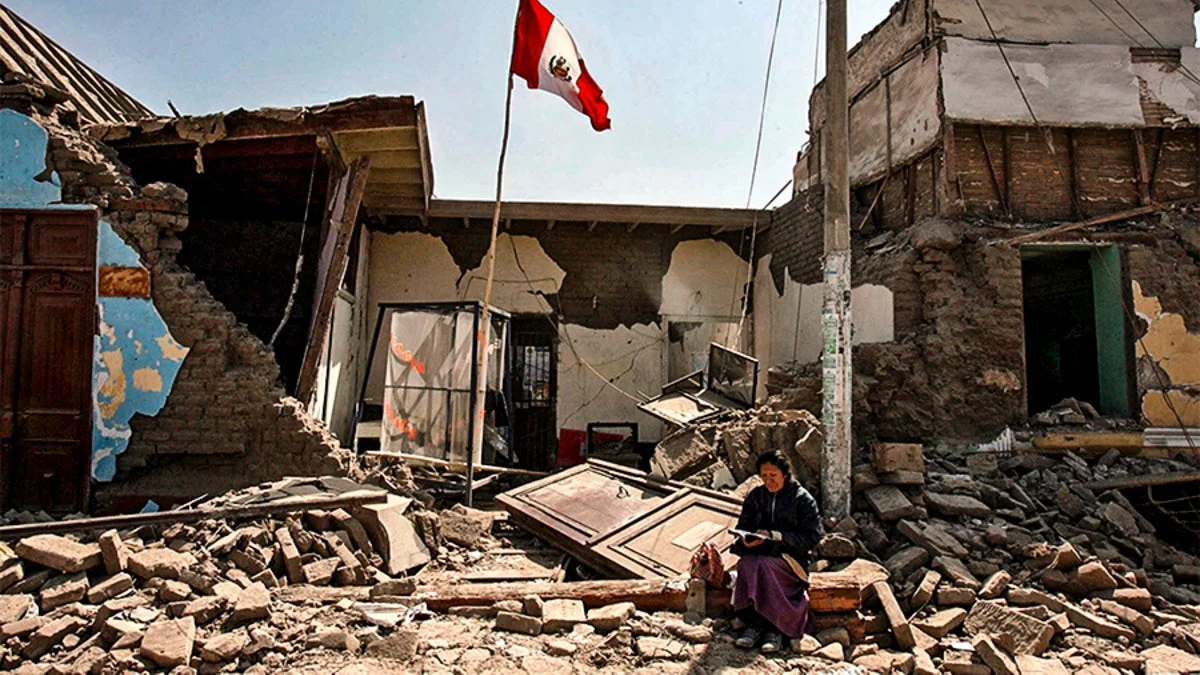
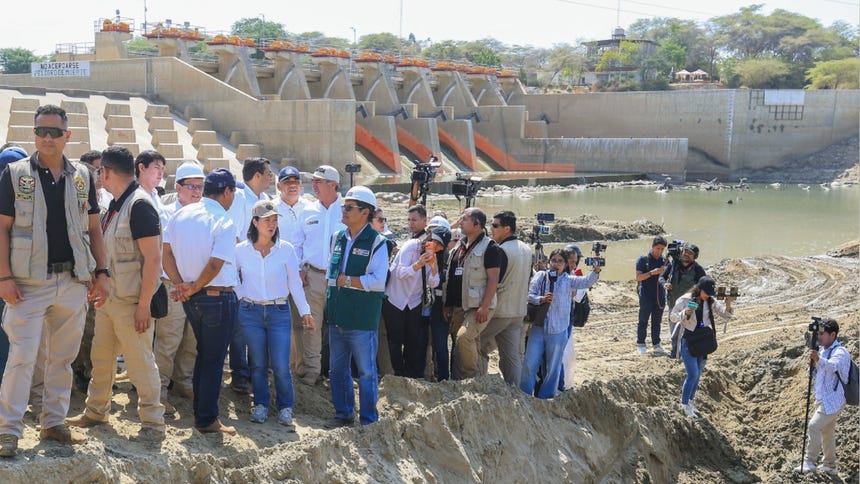
The urgency behind this policy is rooted in the physical reality of the threat. The El Niño phenomenon in Peru historically results in torrential rains, which turn dry riverbeds and neglected quebradas (gorges) into dangerous torrents.
The Logistical Challenge
Unlike building a school or a hospital—which follows a predictable architectural cycle—preventing flood damage requires high-intensity, short-duration logistics:
- Heavy Machinery: Moving thousands of cubic meters of sediment requires specialized excavators and dump trucks.
- Rapid Deployment: The "window of opportunity" between the declaration of emergency and the onset of the rainy season is often less than 90 days.
- Scale: With over 890 districts currently in a state of emergency, the state’s internal capacity to manage hundreds of simultaneous, localized contracts is severely strained.
Luis Del Carpio, Executive Director of ProInversión, noted that the new modality aims to reduce the entire administrative lifecycle—from the expression of interest to the signing of the investment contract—to approximately 30 days. This "30-day target" is unprecedented in the context of Peruvian public works.
Official Responses and Stakeholder Perspectives
The Private Sector: A Proactive Stance
Jorge Zapata, president of Confiep, has been the primary champion of this policy. For the business sector, this is not just a matter of social responsibility, but of protecting the broader economy. "We need the sector to enter the field, grab segments of the rivers, and execute the cleaning of the channels," Zapata stated. The business community views this as a vital step in ensuring that the supply chains and local economies remain operational even during severe climate events.
The Government: A New Approach to Public Spending
The administration’s decision reflects a pragmatic shift in fiscal policy. By allowing tax credits instead of direct cash disbursements, the government effectively offloads the risk of project management to the private sector. The Minister of Economy has emphasized that this is a temporary, "emergency-only" measure. The goal is not to privatize public services, but to utilize private capital as a "force multiplier" during the peak of the crisis.
The Role of Oversight: The Contraloría
One of the most controversial aspects of the decree is the elimination of the informe previo (prior report) from the Comptroller General (Contraloría). Critics might worry about corruption or lack of oversight, but the government has been quick to clarify:
- Concurrent Control: The Contraloría will maintain its right to perform audits while the work is being done, not before.
- Ex-post Audits: The final assessment of the works remains under the full jurisdiction of the oversight body.
- Rationale: The removal of the prior report is strictly to save time. In a state of emergency, a three-month waiting period for an audit report can be the difference between a functional river bank and a flooded city.
Broader Implications: A Model for Future Governance?
The implementation of "Services by Taxes" for emergency management carries profound implications for the future of public-private partnerships (PPPs) in Peru.
Decentralization of Crisis Management
By allowing private firms to take charge of specific river segments, the policy effectively decentralizes the response. Local municipalities, which often lack the technical expertise to manage large-scale desilting projects, can now partner with sophisticated private contractors, with the central government effectively guaranteeing the payment through the tax credit mechanism.
The "New Normal" in Fiscal Policy
If successful, this model could be applied to other areas of public administration where the state struggles with operational efficiency. For instance, the maintenance of rural road networks or the rehabilitation of irrigation canals could eventually be folded into similar, expedited frameworks.
Risks and Challenges
While the potential benefits are high, the implementation will face significant challenges:
- Standardization: The government must quickly establish clear technical specifications for what constitutes a "clean" riverbed, so private firms have a clear target for their investment.
- Transparency: Without the "gatekeeper" function of the prior Comptroller report, the government will need to implement digital tracking systems to ensure that tax certificates are only issued for works that meet rigorous engineering standards.
- Political Will: The success of this initiative relies on the continued cooperation between the current government and the private sector. Should political tensions flare, the administrative machinery could slow down, jeopardizing the 30-day timeline.
Conclusion
The decision by the government to open the door to private-sector-led emergency interventions marks a pivot toward a more agile, modern state. Faced with the inevitable pressure of the El Niño phenomenon, the administration has chosen to trade traditional, rigid procurement for a flexible model that prizes speed and efficiency.
Whether this mechanism can effectively shield Peru from the worst of the coming climate impacts remains to be seen. However, by empowering companies to act as partners in disaster mitigation, Peru is testing a bold, market-driven solution to a problem that has historically plagued the nation’s infrastructure. The coming months will be the ultimate test for both the administrative speed of this new decree and the logistical capability of the Peruvian private sector to deliver under pressure.