By International Infrastructure Correspondent
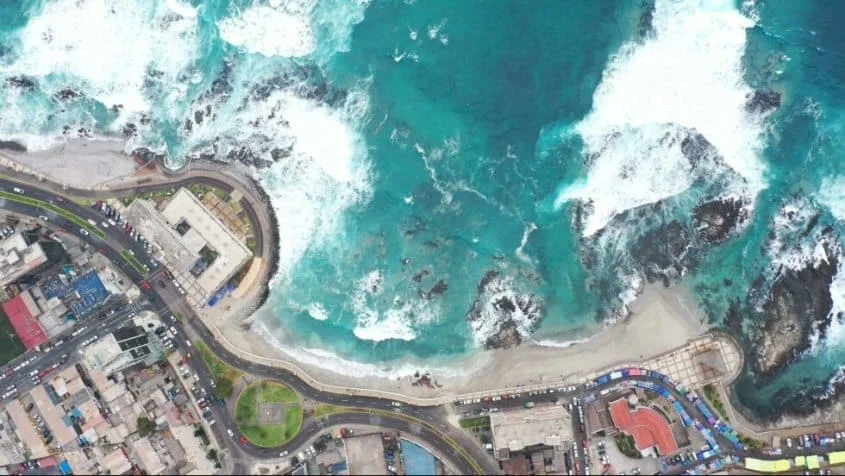
In a significant milestone for urban resilience and community development, the Chilean Ministry of Public Works (MOP) has officially inaugurated a state-of-the-art coastal protection wall at Playa Bellavista in Iquique. The project, which serves as both a critical defensive barrier and a public space revitalization effort, marks a pivotal response to the environmental challenges faced by the city following the catastrophic seismic and meteorological events of late 2024.
The inauguration ceremony was led by the Undersecretary of Public Works, Nicolás Balmaceda, alongside regional authorities and representatives from the historic El Morro neighborhood. This infrastructure project, spearheaded by the MOP’s Directorate of Port Works, represents a sophisticated engineering approach to climate change adaptation, balancing the need for structural stability with the restoration of valuable recreational land for the citizenry.
Main Facts: A Dual-Purpose Infrastructure
The Playa Bellavista protection project is not merely a concrete wall; it is a multi-functional piece of critical infrastructure designed to safeguard one of Iquique’s most vital arteries. The project’s core components include:
- Engineering Reinforcement: A new, high-density reinforced concrete containment wall designed to withstand extreme wave energy and seismic activity.
- Strategic Relocation: The structure has been set back 15 meters eastward from the original footprint. This design shift significantly reduces the wall’s direct exposure to wave impact while simultaneously expanding the accessible shoreline.
- Space Reclamation: The realignment has successfully recovered approximately 800 square meters of beach area, creating a renewed public space for recreation, sports, and community gathering.
- Urban Connectivity: The project acts as a protective shield for Avenida Arturo Prat, a primary transit corridor essential for the economic and logistical flow of the city.
Chronology: From Disaster to Restoration
The necessity for this project emerged from a series of environmental crises that tested the limits of Iquique’s existing coastal infrastructure.

December 2024: The Catalyst
In December 2024, the Iquique coastline was subjected to a dual environmental assault. A significant seismic event, coupled with an intense series of "marejadas" (high-energy swell events), severely compromised the structural integrity of the previous coastline defenses. The impact was immediate and destructive: large sections of the coastal path suffered severe erosion, and critical infrastructure, including the foundation of Avenida Arturo Prat, developed dangerous socavones (sinkholes/cavities).
January – March 2025: Damage Assessment and Emergency Planning
Following the initial impact, the Directorate of Port Works launched an emergency assessment. Engineering teams identified that the legacy structures were insufficient to handle the increased frequency and intensity of climate-driven ocean swells. The decision was made to shift from simple repair to a complete structural overhaul.
April 2025 – June 2026: The Construction Phase
The construction process involved complex maritime engineering. The old, deteriorated wall was systematically demolished to make way for the new reinforced structure. This phase required precise coordination to ensure that traffic on the adjacent Avenida Arturo Prat remained functional while protecting workers from the volatile marine environment.
July 2026: Inauguration
The project was completed and officially handed over to the community, marking the successful restoration of one of the city’s most cherished recreational hubs.
Supporting Data and Technical Specifications
The success of the Playa Bellavista wall is rooted in modern coastal engineering standards. Unlike traditional "hard" engineering, which often exacerbates erosion in adjacent areas, this project utilized a set-back design that allows for more natural sediment distribution.

- Materiality: The use of specialized marine-grade concrete provides high resistance to chloride penetration, essential for longevity in the highly corrosive saltwater environment of Northern Chile.
- Resilience Metrics: The design parameters were calculated based on the 2024 seismic data, ensuring that the new wall possesses the ductility required to move during tectonic shifts without catastrophic failure.
- Public Utility: The recovery of 800 square meters of beach represents a permanent expansion of the public domain. This area has been integrated into the existing urban fabric with improved access, catering to universal design standards to ensure the beach is accessible to individuals with mobility challenges.
Official Responses and Stakeholder Perspectives
The Ministry’s Vision
Undersecretary Nicolás Balmaceda emphasized that the project is a blueprint for the future of Chilean infrastructure. "This is a concerted effort by many stakeholders, beginning with the residents of El Morro, who were the loudest advocates for this intervention," Balmaceda stated during the ribbon-cutting ceremony. "We are not just building a wall; we are building resilience. By moving the structure back, we are providing a buffer against the future uncertainties of climate change while simultaneously gifting the citizens a space for identity, sport, and community connection."
Balmaceda further underscored the ministry’s philosophy: "Infrastructure reaches its true purpose when the community makes it their own. It must protect, it must connect, and it must improve the daily quality of life."
The Municipal Perspective
Iquique Mayor Mauricio Soria expressed his gratitude toward the national government, highlighting the collaborative nature of the effort. "For the people of El Morro, this was a deeply felt necessity. We have recovered a beach that was slipping away, and we have done so with a high-level construction that ensures safety for years to come," Soria noted. He emphasized that the project aligns with the city’s broader master plan for coastal development, which aims to integrate safety and beauty into the urban landscape.
Implications for the Future
The completion of the Playa Bellavista project has profound implications for urban planning in coastal cities across South America.
1. Adaptation to Climate Change
The project serves as a practical demonstration of "managed retreat" in a micro-scale urban setting. By moving the protective line back, the city has acknowledged that the ocean is dynamic and that infrastructure must be adaptive rather than static. This model is expected to be replicated in other vulnerable zones along the Chilean coast.

2. Economic and Social Value
The restoration of the beach is not merely an environmental victory; it is an economic driver. By reclaiming 800 square meters of public space, the project encourages tourism, local commerce, and community social cohesion. The "El Morro" district, which has long prided itself on its identity, now has a modernized interface with the sea that preserves its historical heritage while modernizing its utility.
3. A Model for Public-Private Synergy
The project successfully combined the oversight of the MOP with the technical execution of private engineering firms. This synergy ensures that public funds are utilized with maximum efficiency, leveraging private sector innovation to meet the high standards required for maritime defense.
4. Setting a New Standard for Safety
The integration of universal accessibility into the new coastal design ensures that the benefit is shared by all demographics. This inclusive approach is becoming a mandatory requirement for all new MOP projects, moving away from utilitarian infrastructure to "human-centric" design.
Conclusion
The Playa Bellavista coastal protection wall stands as a testament to what can be achieved when governmental foresight, engineering expertise, and community engagement align. As Iquique continues to grow, the lessons learned from the crises of 2024 have been transformed into a permanent asset. The city is now better protected, its citizens are reconnected with their shoreline, and the infrastructure reflects a forward-looking approach to the environmental challenges of the 21st century.
This project is not just an end-point to a recovery process; it is a foundation for future development. As the Ministry of Public Works looks toward the next phase of its national infrastructure plan, the success at Playa Bellavista will undoubtedly serve as a benchmark for projects across the country—proving that infrastructure can be both a shield for the city and a vibrant heart for its people.