By Political Analysis Desk
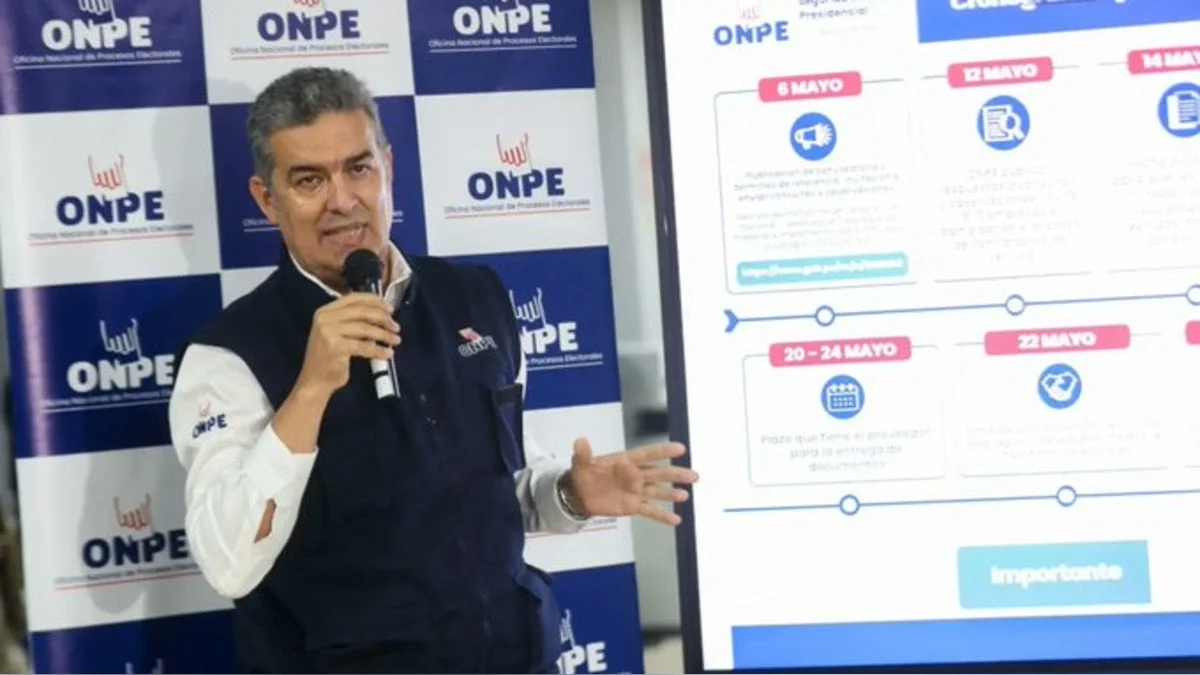
As Peru stands on the precipice of its presidential run-off election, the atmosphere is defined by a rigorous pursuit of transparency and operational stability. Following the controversies that marred the first round of voting on April 12, the National Office of Electoral Processes (ONPE) has undertaken a comprehensive restructuring to restore public confidence. Bernardo Pachas, the interim head of the ONPE, has signaled that the institution has spared no effort in mitigating the risks that previously compromised the logistical deployment of electoral materials.
In an exclusive interview, Pachas detailed the extensive measures taken to ensure that the upcoming electoral jornada proceeds without the irregularities that plagued the initial contest in Lima. The stakes are immense, as the country prepares to define its political future in a climate where every vote—and every logistical detail—is under intense public and institutional scrutiny.
The Path to Reform: Correcting Past Failures
The current electoral process arrives after a period of significant institutional turbulence. The exit of former ONPE chief Piero Corvetto created a leadership vacuum that necessitated a swift, strategic response. According to Pachas, the organization has not merely changed personnel; it has re-engineered its core operational departments to prevent a repeat of the logistical failures that occurred during the April 12 election.
A Structural Overhaul
The interim leadership has focused on two primary pillars of the institution: the Management of Electoral Management (GGE) and the Management of Electoral Operations (GOECOR).
- GGE (Gerencia de Gestión Electoral): This department, responsible for the integrity of electoral material and its distribution, has been completely reconformed. By refreshing the leadership and operational protocols within this division, the ONPE aims to eliminate the bottlenecks that caused delays in the first round.
- GOECOR (Gerencia de Operaciones): As the backbone of the organization, this division manages the 126 Decentralized Offices of Electoral Processes (ODPE) distributed throughout the country. Pachas confirmed that the team has been restructured to improve communication between regional hubs and the central office, ensuring that local issues are escalated and addressed in real-time.
Logistics and the Shift to AFE
Perhaps the most significant challenge facing the interim administration was the selection of a new logistics provider for the deployment and retrieval of sensitive electoral materials. After the contract with GALAGA SAC was terminated following the initial irregularities, the ONPE faced a race against the clock.
The Selection of AFE
To meet the legal deadlines required for a national election, the ONPE engaged a new provider, the consortium AFE. Pachas emphasized that this selection was conducted under the framework of the Budget and Procurement Laws, which allowed for streamlined processes to ensure the material would reach every corner of the country.
"We had to prioritize the public interest," Pachas noted. "Without trucks, without a contract, and without a selection process, the election would simply not be viable. We had to act decisively to ensure that the electoral cronogram was honored."
The Transparency Controversy: Data Ownership vs. Public Oversight
A friction point arose regarding the tracking of vehicles. While the ONPE provided physical access and digital monitoring screens at their Lurín facility for the National Jury of Elections (JNE) and the Comptroller General, a limitation emerged regarding the proprietary software of the transport provider.
AFE, citing cybersecurity policies, refused to grant the ONPE access to the administrative usernames and passwords for their vehicle-tracking software. Pachas explained that while the ONPE does not own the private software, they have provided all route information and printed logs to oversight bodies. Furthermore, the ONPE has invited the Comptroller’s office to monitor the operations live at the Lurín facility, where dedicated personnel are tracking the movement of trucks to their final destinations.
Chronology of the Electoral Transition
To understand the current state of the ONPE, one must look at the timeline of events that led to this moment:
- April 12: First round of the general elections; widespread reports of logistical delays and irregularities in the Lima region.
- Post-April 12: Resignation of Piero Corvetto as head of the ONPE.
- Late April – May: Appointment of Bernardo Pachas as interim head. Immediate commencement of structural audits.
- June (Early): Termination of contract with GALAGA SAC and expedited selection of AFE to manage the logistics for the run-off.
- Mid-June: Implementation of the "Lurín Live" monitoring center to increase oversight by the JNE and the Comptroller.
- July 3: Scheduled announcement of the permanent head of the ONPE by the National Board of Justice (JNJ).
- Mid-July (Projected): Final proclamation of election results by the JNE.
Official Responses and Financial Oversight
The Comptroller General’s office raised alerts regarding the costs associated with the new contract with AFE. The interim ONPE leadership acknowledges these alerts but defends the decision based on the "principle of necessity."
"The Comptroller alerted us that the amount for the AFE contract was high," Pachas admitted. "However, we were in a position where we had to secure the deployment of materials at all costs. We performed all necessary internal management tasks to ensure the funding was available. The cost of failing to deliver materials to the polling stations would have been far greater than the premium paid for this urgent contract."
The transparency of this process remains the institution’s primary defense. By inviting oversight bodies into their facilities and providing detailed reports, the ONPE hopes to insulate the results of the second round from claims of administrative incompetence.
Implications for the Future: The July 3rd Transition
The current administration is acutely aware of its temporary nature. Pachas has made it clear that his mandate ends as soon as the new head of the ONPE is appointed.
The Handover Process
On July 3, the National Board of Justice (JNJ) is expected to name the permanent head of the ONPE. Pachas has confirmed that a transition commission is being formed to ensure that every document, operational log, and personnel file is transferred in accordance with the law.
"We are civil servants in positions of trust," Pachas stated. "My role is to manage this transition, ensure the second round of voting is executed flawlessly, and provide a clear, organized handoff to the incoming leadership. My resignation will be on the table as soon as the new chief is sworn in."
Impact on Election Results
The implications for the country are clear: the stability of the election results depends on the effectiveness of these final weeks. Pachas expressed a hope that the number of "observed acts" (disputed ballots) will be minimal. He acknowledged that the process of resolving disputed ballots involves a back-and-forth between the ODPE and the Special Electoral Juries, which can cause significant delays.
"The math is simple, but the human error factor is always present," Pachas said. "Our goal is to minimize that. The JNE has estimated that the final proclamation will take place around the middle of July. Our work is to ensure that the electoral material reaches its destination, the citizens can cast their votes, and the results are tabulated with absolute accuracy."
Conclusion
As the nation prepares to head to the polls, the ONPE faces the ultimate test of its institutional resilience. Under the leadership of Bernardo Pachas, the office has attempted to pivot from the reactive crisis management of April to a proactive stance of transparency and administrative rigor.
Whether these measures will suffice to restore full public trust remains to be seen. However, the commitment to providing oversight to the JNE and the Comptroller, combined with a clear timeline for the appointment of a permanent, stable leadership, provides a framework that the country hopes will lead to a peaceful and undisputed democratic transition. The eyes of the nation remain fixed on the polling stations, waiting for the results that will define the next chapter of Peruvian history.