The pursuit of membership in the Organization for Economic Cooperation and Development (OECD) is not merely a diplomatic aspiration for Peru; it is a fundamental pillar of the country’s long-term economic strategy. As the nation aligns its domestic policies with global "best practices," the tangible benefits are already manifesting in the form of significant fiscal savings, streamlined bureaucracy, and a more competitive investment climate.
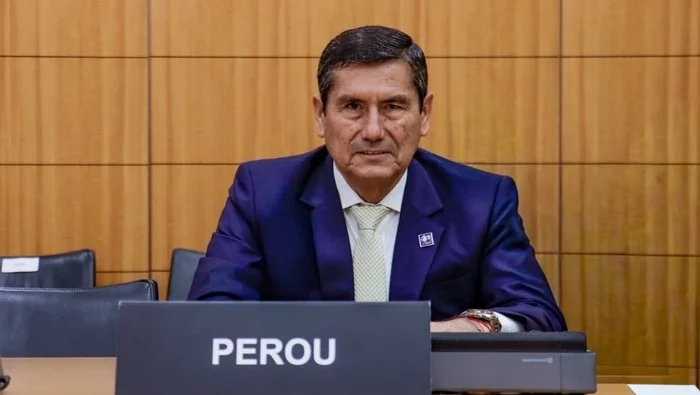
During his third day of high-level meetings in Paris, Peru’s President of the Council of Ministers, Luis Arroyo, provided a compelling update on the nation’s progress. Speaking at the OECD Ministerial Council Meeting during the session titled "Improving Regulatory Frameworks for Competition and Competitiveness," Arroyo highlighted a remarkable achievement: between 2017 and 2025, the adoption of OECD-recommended regulatory policies has resulted in a staggering S/ 409 million in savings for the Peruvian economy.
The Strategic Value of Regulatory Reform
For the Peruvian administration, regulatory quality is viewed as a strategic asset. By removing unnecessary administrative burdens and simplifying complex procedures, the government is actively reducing the "hidden taxes" that stifle productivity.
"This success was made possible through the systematic elimination and simplification of red tape and the prevention of unnecessary administrative burdens, which has had a direct, positive impact on the country’s competitiveness and overall productivity," Prime Minister Arroyo noted during his address in Paris.
The core of this strategy lies in moving away from reactive policymaking toward a structured, evidence-based approach. By integrating OECD methodologies, Peru is ensuring that its regulations serve as facilitators of growth rather than barriers to entry.
A Chronology of Transformation: A Decade of Reform
The current successes are the culmination of a decade-long commitment to institutionalizing regulatory improvement. Since 2016, Peru has systematically worked to transform its legal and administrative landscape.
- 2016–2017: Initial diagnostic phase. Peru begins active engagement with the OECD’s Regulatory Policy Committee, identifying key sectors where excessive bureaucracy hindered economic growth.
- 2018–2020: Implementation of the "Quality Regulation" mandate. The government begins pilot programs to evaluate the impact of new regulations before they are enacted.
- 2021–2022: Expansion of digital transformation. Efforts to digitize administrative procedures across regional and local governments gain momentum, reducing the need for in-person interactions.
- 2023–2024: Institutionalizing participation. The government formalizes public consultation mechanisms, ensuring that citizens and private stakeholders have a direct voice in the legislative process.
- 2025: Launch of the "Observatorio Peruano de Mejora Regulatoria." This tool marks a new era of transparency, allowing for real-time monitoring of regulatory quality and government accountability.
Data-Driven Governance: The Numbers Behind the Policy
The effectiveness of these reforms is best reflected in the data. The transition from a closed, centralized regulatory system to a transparent, consultative one has yielded impressive metrics:
Citizen Participation and Public Trust
Transparency is a cornerstone of the OECD’s requirements. Between 2023 and 2025, the Peruvian government implemented a robust public consultation process. During this period, the administration received over 9,000 specific comments from more than 1,600 individual citizens and stakeholders. Notably, 37% of these external contributions were incorporated into the final normative projects, demonstrating a genuine government responsiveness that strengthens institutional trust.
Subnational Standardization
One of the most persistent challenges in Peru has been the disparity in regulatory procedures between the capital and the provinces. To address this, the central government embarked on an ambitious standardization program. Currently, over 71% of municipalities and 85% of regional governments have adopted standardized regulatory frameworks. This has provided a level of predictability that was previously absent, allowing businesses to operate with the same set of rules regardless of their location within the country.
The Role of the Regulatory Observatory
The 2025 launch of the Observatorio Peruano de Mejora Regulatoria represents a significant leap forward in monitoring capabilities. This tool allows policymakers and the public to track the lifecycle of regulations, ensuring that new rules are not only necessary but also cost-effective and easy to comply with. It serves as a dashboard for accountability, preventing the "regulatory creep" that historically plagued various Peruvian sectors.
Official Responses and Ministerial Vision
Prime Minister Luis Arroyo emphasized that the OECD process is not just about fulfilling requirements; it is about building a modern state that can compete in the global arena. "For Peru, regulatory improvement has a strategic value: it strengthens competitiveness, generates institutional confidence, and improves conditions to attract investments," he stated.
According to the Prime Minister, the government’s vision is clear: quality regulation protects competition, stimulates innovation, and ultimately benefits the individual citizen by lowering the cost of living and the cost of doing business. By aligning with OECD standards, Peru is signaling to international markets that it is a mature, stable, and transparent environment for capital and development.
Implications for the Peruvian Economy
The implications of this ongoing reform process are profound and multifaceted.
1. Attracting Foreign Direct Investment (FDI)
Investors favor jurisdictions with predictable, transparent, and stable regulatory environments. By adhering to OECD standards, Peru is actively reducing the "country risk" associated with arbitrary rule-making. The simplification of administrative procedures makes Peru a more attractive destination for global companies looking to establish or expand operations in Latin America.
2. Boosting Local SME Productivity
Small and Medium Enterprises (SMEs) are the backbone of the Peruvian economy but are often the hardest hit by excessive bureaucracy. The elimination of redundant paperwork and the standardization of municipal procedures significantly lower the barrier to entry for entrepreneurs. This promotes formalization, which in turn broadens the tax base and provides SMEs with better access to credit and support services.
3. Institutionalizing Anti-Corruption Efforts
Complex regulations are often breeding grounds for corruption, as they create opportunities for discretionary interpretation by public officials. By simplifying and standardizing processes, the government is effectively closing these loopholes. The Observatorio Peruano de Mejora Regulatoria adds an extra layer of oversight, ensuring that the legislative process remains transparent and resistant to special-interest capture.
4. A Pathway to Sustainable Development
The OECD framework encourages the integration of social and environmental considerations into regulatory impact assessments. As Peru continues its accession, the government is better positioned to design regulations that balance economic growth with environmental protection and social equity, ensuring that the benefits of the current economic trajectory are sustainable in the long term.
Conclusion: The Path Ahead
The road to full OECD membership is complex, requiring rigorous adherence to international standards across multiple policy areas. However, as Prime Minister Luis Arroyo’s recent report demonstrates, the journey itself is generating significant dividends. The S/ 409 million in savings is merely a starting point—a indicator of the potential efficiency gains available to a state that prioritizes regulatory quality.
As Peru continues to refine its legislative processes, enhance public participation, and leverage digital tools like the Regulatory Observatory, it is setting a new benchmark for governance in the Andean region. The alignment with the OECD is more than a policy shift; it is a fundamental modernization of the state’s relationship with its citizens and the private sector. By fostering a culture of transparency, efficiency, and competition, Peru is not only preparing for formal membership in the "club of developed nations"—it is already building the foundations of a more prosperous and equitable future.