The integrity of democratic processes hinges not only on the transparency of the vote count but on the unimpeachable reputation of the entities tasked with verifying those systems. Recent investigative findings have cast a long shadow over the 2026 Peruvian General Elections, as it has been revealed that M&T Corporation del Perú SAC (M&T International)—the firm responsible for the critical IT audit of the Office of National Processes (ONPE)—carries a history of disciplinary action by the state’s own procurement watchdog.
The revelation, brought to light by the investigative program Cuarto Poder, has ignited a fierce debate regarding the vetting processes employed by the ONPE. With the nation preparing for a high-stakes electoral cycle, the discovery that the auditor of the electoral IT systems was previously sanctioned for "submitting inaccurate information" to the government has raised fundamental questions about institutional oversight and the reliability of the upcoming results.
The Core of the Controversy: A Legacy of Non-Compliance
At the heart of the dispute is M&T International, a company that positions itself as a leader in cybersecurity, digital governance, and Artificial Intelligence. However, records from the Supervisory Agency of State Contracting (OSCE) indicate a turbulent history with public sector transparency.
In 2016, the OSCE’s tribunal imposed a severe penalty on M&T International: an 11-month disqualification from contracting with the Peruvian State. The sanction was predicated on the firm’s failure to provide truthful documentation during a procurement process. For an organization whose primary business is the verification of technical accuracy and data integrity, such a blemish is not merely a historical footnote; it is a point of critical failure in the eyes of ethics watchdogs and political analysts.
The audit conducted by M&T International for the 2026 cycle spans the most sensitive pillars of the Peruvian electoral infrastructure:
- STAE (Technological Solution for Scrutiny Support): The backbone of the ballot counting process.
- Electoral Computing System: The digital machinery that aggregates nationwide data.
- Web-based Results Presentation System: The public-facing portal that disseminates the final tally to the citizenry.
By auditing these specific systems, M&T International holds the "keys to the kingdom" of electoral verification. If the auditor’s own past is marked by a lack of transparency, the public’s confidence in the electoral outcome is inherently compromised.
A Chronology of Procurement and Oversight
The selection of M&T International was not a seamless process, a fact that has further fueled suspicions regarding the ONPE’s procurement rigors.
2016: The OSCE Sanction
The 11-month ineligibility order was the climax of an investigation into the firm’s conduct during a previous state contract. The OSCE found that the company had provided "inaccurate information," a legal euphemism for misrepresentation. While the company served its time, the shadow of this event remained etched in the state registry.
The 2026 Selection Process
The journey to the 2026 contract was characterized by friction. According to Cuarto Poder, M&T International did not win the contract on its first attempt. The firm was initially disqualified during the first round of bidding due to a failure to meet mandatory "personnel experience qualification" requirements.
It was only after a series of subsequent bidding rounds—eventually culminating in a fourth attempt—that the firm was declared the winner. This pattern of disqualification followed by eventual success raises questions about the tightening of standards or, conversely, the lowering of barriers to entry to ensure a specific outcome.
The Extension: Adenda for the Second Round
The complexity of the situation increased when Elisa Cabrera, Deputy Manager of Information Systems at the ONPE, confirmed that the contract with M&T International would be extended via an adenda (addendum) to cover the second round of the presidential election. This decision signals that the ONPE is fully committed to the firm, despite the resurfacing of its 2016 disciplinary record.
Official Responses: Between Injustice and Institutional Defense
The response from the parties involved highlights a stark disconnect between public perception and institutional justification.
The Perspective of M&T International
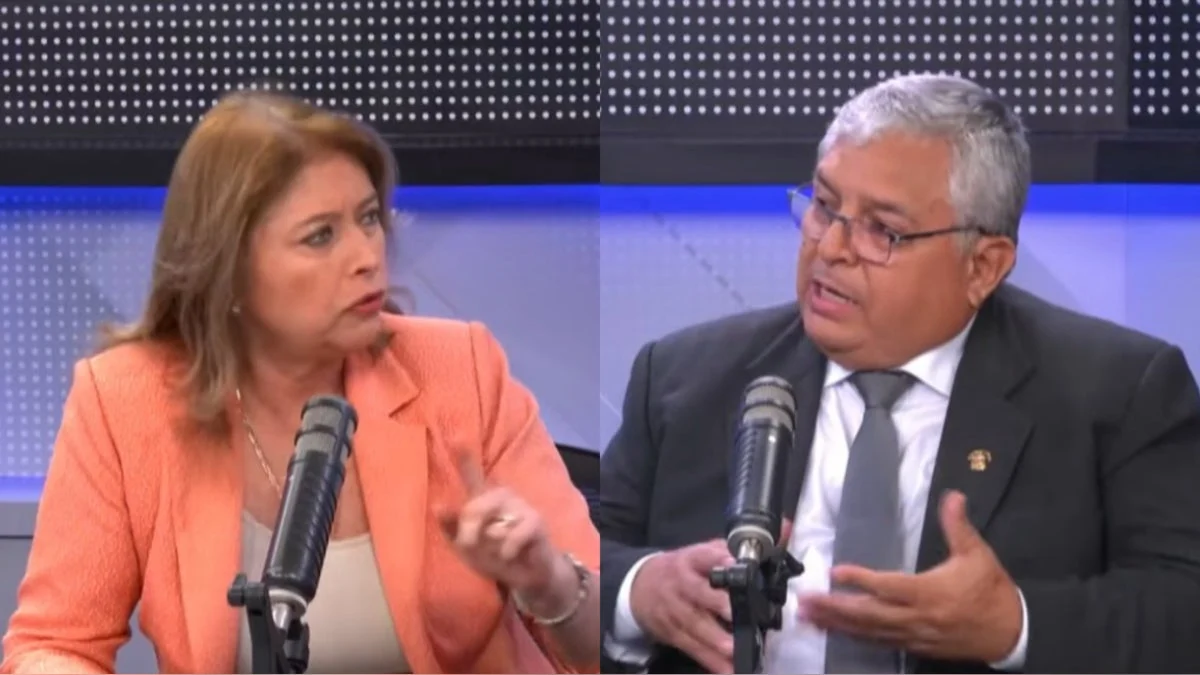
Eric Morán Añasco, representing M&T International, has adopted a defensive posture. While he does not deny the existence of the 2016 OSCE resolution—an impossibility given the public nature of the records—he vehemently disputes the spirit of the sanction. Morán Añasco characterized the 11-month suspension as a profound "injustice."
His narrative suggests that the firm was a victim of bureaucratic rigidity rather than a perpetrator of fraud. However, in the realm of cybersecurity and electoral auditing, "bureaucratic technicalities" often serve as a screen for deeper operational failures. By branding the sanction an injustice, the firm seeks to decouple its past performance from its current technical capabilities, yet it fails to address how such a company is deemed the most suitable candidate to audit the most sensitive systems in the country.
The ONPE’s Position
The ONPE has maintained a stance of institutional continuity. By confirming that M&T International is the chosen auditor and justifying the contract extension through the adenda process, the electoral body is essentially vouching for the firm’s current competence. Their argument relies on the premise that the company has evolved since 2016 and that its technical proposals for the 2026 election met all necessary benchmarks. However, the ONPE has yet to provide a comprehensive explanation as to why a firm with a documented history of misrepresentation was allowed to participate in the bidding process in the first place, or why it was favored over competitors with cleaner records.
Implications for the 2026 Elections
The implications of this controversy are far-reaching and touch upon the fragile state of Peruvian democracy.
Erosion of Public Trust
Elections are a social contract. When the auditors of that contract are viewed with suspicion, the entire democratic edifice begins to wobble. In an era of rampant disinformation, any perceived vulnerability in the electoral chain is exploited by political factions to delegitimize results. If the 2026 election results are close, M&T International’s background will undoubtedly become a rallying point for those seeking to challenge the tally.
The Question of "Technical Capability" vs. "Integrity"
There is a dangerous tendency in government contracting to prioritize "technical capability"—the ability to perform a task—over "institutional integrity"—the commitment to honest and transparent behavior. M&T International may indeed possess the software expertise to conduct an audit. However, the audit itself is a matter of trust. An auditor’s value is derived from their credibility. By selecting a firm with a tainted history, the ONPE has inadvertently shifted the focus from the security of the election to the integrity of the process itself.
The Role of Independent Oversight
The fact that a journalistic investigation was required to bring this information to light suggests a weakness in the vetting protocols of the ONPE. If the agency’s internal controls had functioned optimally, the 2016 sanction should have been an immediate "red flag" during the pre-qualification phase. This failure of due diligence necessitates a broader review of how electoral service providers are selected.
Conclusion: A Call for Transparency
As Peru edges closer to the 2026 General Elections, the pressure on the ONPE to guarantee a clean, indisputable process will only intensify. The controversy surrounding M&T International is a reminder that technical prowess is insufficient if it is not matched by an unblemished commitment to the truth.
For the ONPE, the path forward requires more than just an adenda to a contract. It requires full transparency. The electoral authority must release the full technical evaluation that led to the selection of M&T International, explain the criteria that overruled the 2016 sanction, and perhaps consider an additional layer of independent oversight to monitor the auditor itself.
In the eyes of the electorate, the question is no longer just about who wins the presidency, but whether the digital mechanisms protecting their voice are in safe and honest hands. Until the ONPE addresses these concerns with the gravity they deserve, the shadow cast by M&T International will continue to hang over the 2026 ballot box, threatening to undermine the democratic mandate of whoever ultimately takes office.