Executive Summary: The Ongoing Battle for Liberty
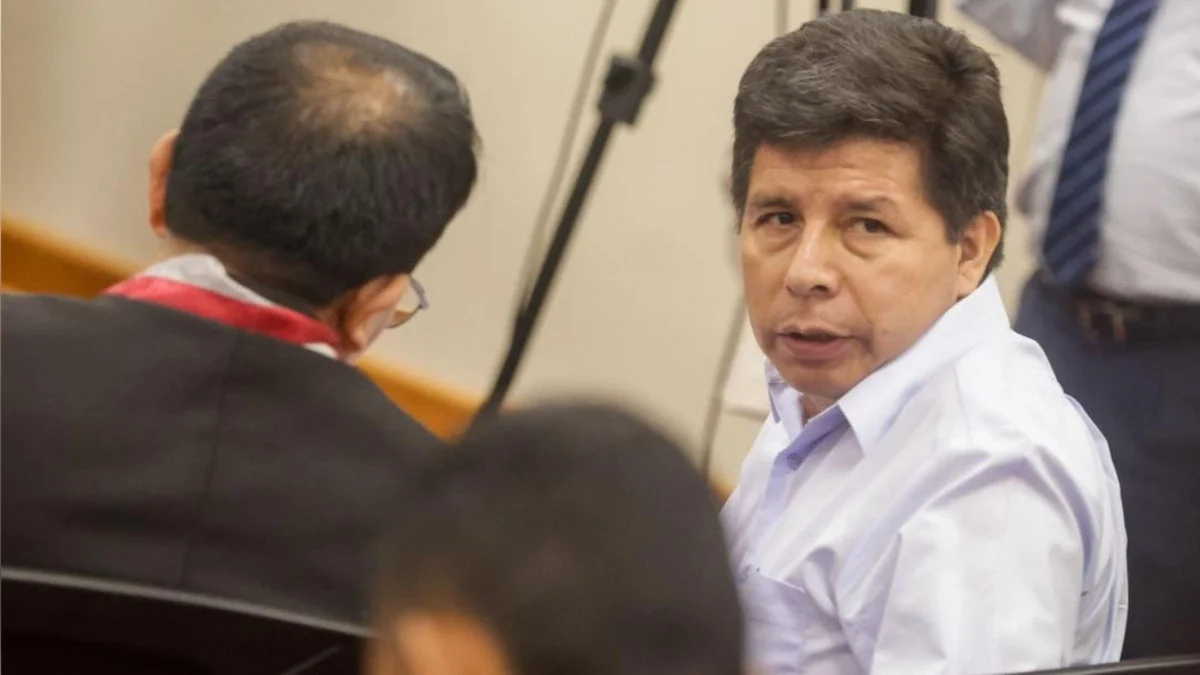
The legal defense of former Peruvian President Pedro Castillo, led by his attorney Walter Ayala, has confirmed that it is preparing a second, distinct petition for a presidential pardon (indulto). This announcement follows the recent decision by the Commission of Presidential Pardons (Comisión de Gracias Presidenciales) under the Ministry of Justice (Minjus) to declare a previous request, filed in February, inadmissible. The legal team seeks to navigate the complex administrative and constitutional hurdles that have effectively blocked the former leader’s path to freedom thus far.
As the political and legal landscape surrounding the former head of state remains highly polarized, the attempt to secure a pardon—a discretionary act of mercy granted by the executive branch—highlights the ongoing clash between administrative procedure, judicial process, and constitutional theory.
1. The Core Legal Challenge: A Reset in Strategy
Walter Ayala, speaking to RPP, emphasized that the legal team is waiting for the official notification detailing the specific grounds for the inadmissibility of the February petition. According to Ayala, understanding these technical deficiencies is critical to determining whether the defects can be cured or if a completely new legal framework must be constructed.
"I have not received any official notification from the Ministry of Justice’s Pardon Commission. It has been made public that it was declared inadmissible, but I do not know the specific legal foundations, nor do I know if the resolution allows for a simple correction or requires a total reformulation," Ayala stated.
The defense maintains that the rejection of the first request is not a definitive closure of the administrative path. By "replanting the legal strategy," Ayala aims to present arguments that are substantively different from those previously rejected, hoping to satisfy the rigid bureaucratic requirements set by the Ministry of Justice.
2. Chronology of the Pardon Request
To understand the current impasse, it is necessary to examine the timeline of the administrative process:
- February 2024: The defense team of Pedro Castillo submits the initial request for a presidential pardon to the Ministry of Justice, citing various grounds for the former president’s release.
- April 30, 2024: The Commission of Presidential Pardons holds an ordinary session where, after reviewing the documentation, it determines that the request fails to meet the minimum regulatory requirements.
- May 2024 (First Week): The Ministry of Justice formally announces the inadmissibility of the request, clarifying that the file lacked essential documentation required by law to proceed with an evaluation.
- Present Day: Walter Ayala announces the preparation of a secondary, more robust request, pending the official receipt of the commission’s technical feedback.
The government has remained firm in its stance that there are currently no pending requests for pardons or humanitarian benefits regarding the former president, underscoring that every submission must strictly adhere to the established administrative statutes.
3. Supporting Data and Regulatory Hurdles
The Ministry of Justice has emphasized that the "inadmissibility" of a request is not necessarily a judgment on the merits of the case, but rather a failure to comply with formal requirements. In Peru, the process for requesting a presidential pardon is highly formalized. It requires a comprehensive file that includes, among other things:
- Identity Verification: Proper legal standing of the applicant.
- Procedural Status: Clear documentation of the legal status of the prisoner’s criminal case.
- Justification: Evidence supporting the humanitarian or exceptional grounds for the pardon.
- Regulatory Compliance: Strict adherence to the supreme decrees governing the Commission of Presidential Pardons.
The Ministry’s recent statement clarified that the file submitted in February was incomplete. This highlights a common friction point in high-profile legal cases: the conflict between the defense’s political messaging and the technical, often tedious, requirements of administrative law.
4. Expert Analysis: The Constitutional Barrier
While the defense remains optimistic, legal experts point to a fundamental, perhaps insurmountable, obstacle: the state of Castillo’s judicial proceedings.
The Problem of "Firm" Sentences
Constitutional lawyer Aníbal Quiroga has been vocal regarding the viability of this initiative. In an interview with RPP, Quiroga explained that the core issue is the constitutional and procedural requirement that a pardon be granted only to those who have a "firm" or "final" criminal conviction.
"Castillo has not finished his legal process; he is only halfway through," Quiroga noted. "He has a conviction that was made effective in the first instance, but it is currently under appeal. Therefore, he does not have a final, firm conviction. This legal reality makes him ineligible to qualify for a presidential pardon under current constitutional interpretations."
Political vs. Legal Dimensions
The debate also touches upon the "political" nature of the pardon. Some commentators, including high-ranking judicial figures, have suggested that the push for a pardon is less about legal merit and more about political posturing. By repeatedly filing these requests, the defense maintains a narrative of "persecution" in the public eye, even if the requests are technically doomed to fail in the judicial and administrative arenas.
5. Implications for the Judicial Landscape
The persistence of the defense team in filing these requests carries several significant implications for the Peruvian justice system:
Increased Scrutiny on the Ministry of Justice
Every time the Ministry of Justice rejects a petition, it must provide a detailed explanation to avoid accusations of bias or political interference. This puts the Commission of Presidential Pardons under a microscope, forcing them to ensure their administrative decisions are bulletproof against judicial review.
Erosion of Public Trust
The constant cycle of "submission-rejection-announcement of new submission" contributes to a perception of a chaotic legal system. For the general public, the spectacle of a former president seeking a pardon—while still embroiled in complex trials regarding the December 2022 autogolpe (self-coup)—serves to polarize public opinion further. Supporters see a man fighting for his freedom; critics see a man refusing to accept the consequences of his actions.
Future Precedents
If the defense were to eventually succeed in bypassing the "final conviction" requirement, it would set a massive, potentially controversial precedent for the use of executive clemency in Peru. Conversely, if the government maintains its strict interpretation, it reinforces the principle that presidential power—while broad—must still function within the constraints of the rule of law.
6. Conclusion: The Path Forward
As Walter Ayala prepares his new, "fundamentally different" strategy, the legal reality for Pedro Castillo remains unchanged. The former president remains in detention, facing serious allegations of rebellion and conspiracy.
The defense is currently caught in a dual challenge: they must navigate the technical failures of their paperwork while simultaneously trying to influence a public and legal atmosphere that, for now, views a presidential pardon as a premature and constitutionally questionable remedy.
For the administration of President Dina Boluarte, the situation requires a delicate balance. Granting a pardon would undoubtedly trigger a massive political backlash and accusations of executive overreach, while refusing to process the petitions according to the law would expose the government to further legal challenges.
Ultimately, the resolution of this matter will not be found in the halls of the Commission of Presidential Pardons alone, but in the final, binding decisions of the judicial branch. Until the criminal trials reach their definitive conclusion, the quest for a pardon appears to be a long, uphill struggle against both the law and the procedural requirements of the Peruvian state. As the defense awaits the official notification, the country remains watching, waiting to see if this new strategy will provide a breakthrough or simply another administrative dead-end.