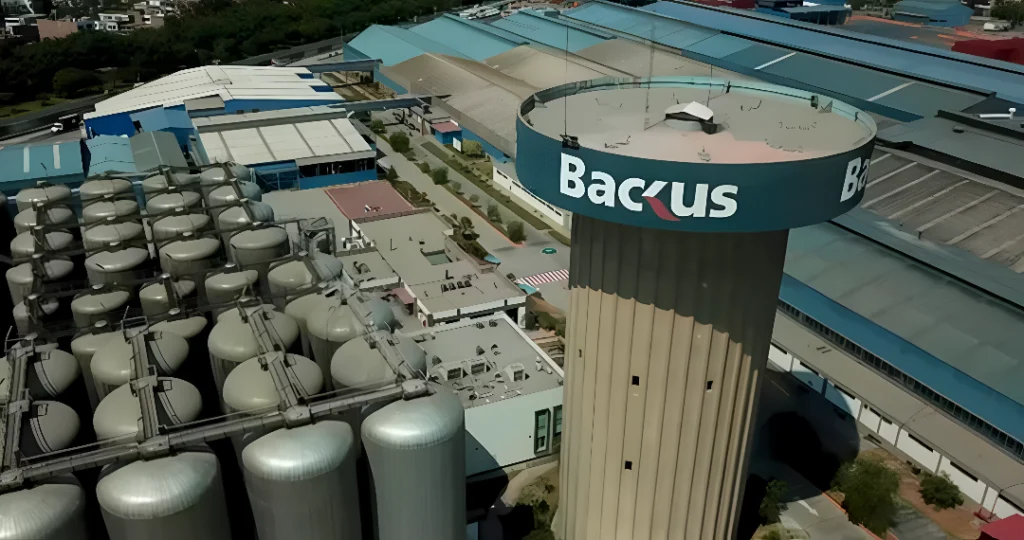
Unión de Cervecerías Peruanas Backus y Johnston S.A.A., the undisputed titan of the Peruvian beverage industry, has kicked off the 2026 fiscal year with a formidable display of financial resilience and operational efficiency. The company’s latest quarterly report paints a picture of a business that is not only navigating the complexities of the current economic climate but is actively leveraging its structural advantages to deliver impressive returns for its stakeholders.
Driven by a combination of robust sales volume, strategic portfolio management, and a powerful synergistic effect from its extensive network of subsidiaries, Backus has set a high bar for the remainder of the year. Despite external pressures and internal capital movements, the brewer’s fundamental business model remains as potent as ever.
Main Facts: A Strong Start to 2026
The numbers for the first quarter (Q1) of 2026 are unequivocal. Backus reported a net profit of S/ 916.9 million, a staggering 27.6% increase compared to the same period in 2025. This growth is not merely a result of inflationary pricing, but a reflection of a genuine expansion in both income streams and operational cash flow.
Key performance highlights include:
- Revenue Growth: Ordinary revenue climbed to S/ 1,814.7 million, an 8.04% increase over the S/ 1,679.7 million recorded in Q1 2025.
- Operational Efficiency: Gross profit reached S/ 1,245.7 million, up 7.85% year-over-year, demonstrating the company’s ability to manage production costs even as market demand surges.
- Operating Margin Expansion: The company achieved a 62.2% increase in operating profit, rising to S/ 120.3 million from S/ 74.1 million in the previous year.
- Subsidiary Contribution: Earnings from subsidiaries and associates contributed a massive S/ 827.7 million, cementing their role as the primary engine of the group’s bottom-line success.
Chronology of the Quarter: Navigating Growth and Liquidity
The first three months of 2026 were defined by a deliberate balancing act between operational expansion and capital allocation.
January: Setting the Strategy
The company began the year by focusing on its core categories: beer, soft drinks, water, and its digital marketplace services. These segments, which account for over 98% of the company’s total revenue, benefited from sustained demand across the Peruvian territory.
February: Managing Costs and Efficiencies
As production ramped up to meet the high volume of sales, the company saw its cost of sales increase by 8.4% to S/ 568.9 million. However, management showcased their operational prowess by simultaneously reducing selling and distribution expenses by 3.8% (a saving of S/ 33.8 million). This counter-cyclical management of costs was instrumental in shielding the company’s operating margins.
March: Capital Allocation and Governance
The end of the quarter was marked by the Annual General Meeting, where shareholders approved the distribution of S/ 204.5 million in dividends corresponding to the 2025 fiscal year. Simultaneously, the company executed significant internal financing maneuvers, providing loans to related entities totaling S/ 909.7 million, which recalibrated the company’s liquidity position as it looked toward the second quarter.
Supporting Data: The Anatomy of Success
To understand how Backus achieved such a dramatic 62.2% growth in operating profit, one must look at the interplay between its administrative expenses and its distribution strategy.
The Margin Tug-of-War
While selling and distribution costs were optimized, administrative expenses saw a notable 48% jump, rising from S/ 180.2 million to S/ 266.8 million. While the company has not explicitly detailed the drivers behind this surge, industry analysts suggest it likely relates to investments in digital transformation and the administrative overhead required to manage the company’s vast logistics network, which includes five major production plants in Lima, Arequipa, Cusco, Motupe, and Huarochirí, plus a malt plant in Ñaña.
Subsidiary Power
The contribution of subsidiaries cannot be overstated. With 25% growth in earnings from these entities, it is clear that Backus’s ecosystem—comprising 12 direct companies involved in brewing, logistics, and supply chain activities—provides a safety net that protects the parent company from market volatility. This vertical integration allows the group to capture value at every stage of the product lifecycle, from malting to last-mile delivery.
Liquidity and Asset Structure
A point of interest for investors is the shift in liquidity. The company’s liquidity ratio improved from 0.99 at the end of 2025 to 1.11 by the end of March 2026. However, cash on hand dropped significantly from S/ 923.1 million to S/ 507.6 million. This is not a sign of distress, but rather a reallocation of capital. By shifting cash into accounts receivable from related parties (which rose to S/ 2,366 million), Backus is essentially acting as an internal bank for its subsidiary network, ensuring that the entire group has the liquidity needed to pursue growth opportunities.
Official Responses and Strategic Outlook
Backus management has maintained a focus on conservative debt management, a hallmark of their long-term strategy. The company’s financial debt is remarkably low, standing at just S/ 19.1 million. This debt is composed of fixed-rate leases with major banking institutions (Scotiabank, BCP, and BBVA), all denominated in local currency.
This "debt-light" strategy is a deliberate hedge against global economic volatility. By keeping the majority of its liabilities in fixed-rate local currency, the company effectively insulates itself from exchange rate fluctuations and interest rate hikes that have plagued other sectors of the economy.
The company’s ability to generate S/ 149.2 million in net operating cash flow—more than triple the S/ 46.5 million generated in the same period last year—serves as a testament to the health of the business. It confirms that the company is not just making "paper profits" but is generating tangible cash that can be reinvested into the business or returned to shareholders.
Implications: What This Means for the Future
The implications of this Q1 report are threefold for the Peruvian market and the broader beverage industry.
1. Market Dominance as a Barrier to Entry
Backus’s control over the entire value chain—from production plants to the digital marketplace—creates a formidable moat. As the company continues to invest in its own infrastructure, it becomes increasingly difficult for competitors to match the economies of scale and distribution reach that Backus currently enjoys.
2. The Role of the Ecosystem
The significant profit contribution from subsidiaries highlights that Backus is no longer just a "beer company." It is a diversified logistics and manufacturing conglomerate. The 25% growth in this area suggests that the company’s decision to own its supply chain and related services is paying dividends, quite literally.
3. Investor Confidence
For shareholders, the combination of a 27.6% increase in net profit and the ongoing distribution of dividends is a clear indicator of stability. The company’s ability to maintain a low debt profile while simultaneously funding the needs of its sister companies shows a level of financial maturity that is rare in emerging markets.
Future Challenges
Despite the stellar results, the company faces potential headwinds. The 48% increase in administrative costs is a metric to watch in the coming quarters. If this trend continues without a corresponding increase in revenue, it could squeeze margins. Additionally, the reduction in cash liquidity, while strategic, leaves the company slightly more exposed if an unexpected, immediate liquidity need were to arise in the short term.
However, given the current trajectory and the firm’s historical ability to adapt, the outlook remains overwhelmingly positive. Backus is not just a participant in the Peruvian economy; it is a barometer for it. Its strong performance in Q1 2026 suggests that consumer demand in Peru remains resilient, and that the company is perfectly positioned to capture the growth that lies ahead in the remainder of the fiscal year.
In summary, Backus has proven once again that a disciplined approach to operations, combined with a robust and integrated corporate structure, is the most effective way to navigate the challenges of the modern business environment. Whether through its dominant retail presence or its sophisticated financial management, the company remains the benchmark for corporate success in the Andean region.