In the high-stakes arena of national politics, the integrity of the electoral process serves as the bedrock of democracy. However, this foundation is frequently challenged by political actors who, often without sufficient evidence, cast doubt on the mechanisms of vote counting and result transmission. A recent case involving presidential candidate Rafael López Aliaga of the Renovación Popular party highlights the dangers of misinformation during an election cycle. During a televised interview, López Aliaga alleged that the electoral process had been compromised, specifically pointing to an "atypical" ballot count in Huánuco as evidence of systemic fraud.
After a thorough investigation, the AmaLlulla verification network has determined that these claims are false. By analyzing the original documentation and cross-referencing it with the official results provided by the National Office of Electoral Processes (ONPE), investigators discovered that the evidence presented by the candidate was not only misleading but had been digitally altered to support a false narrative.
The Allegation: A Case of "Atypical" Ballots?
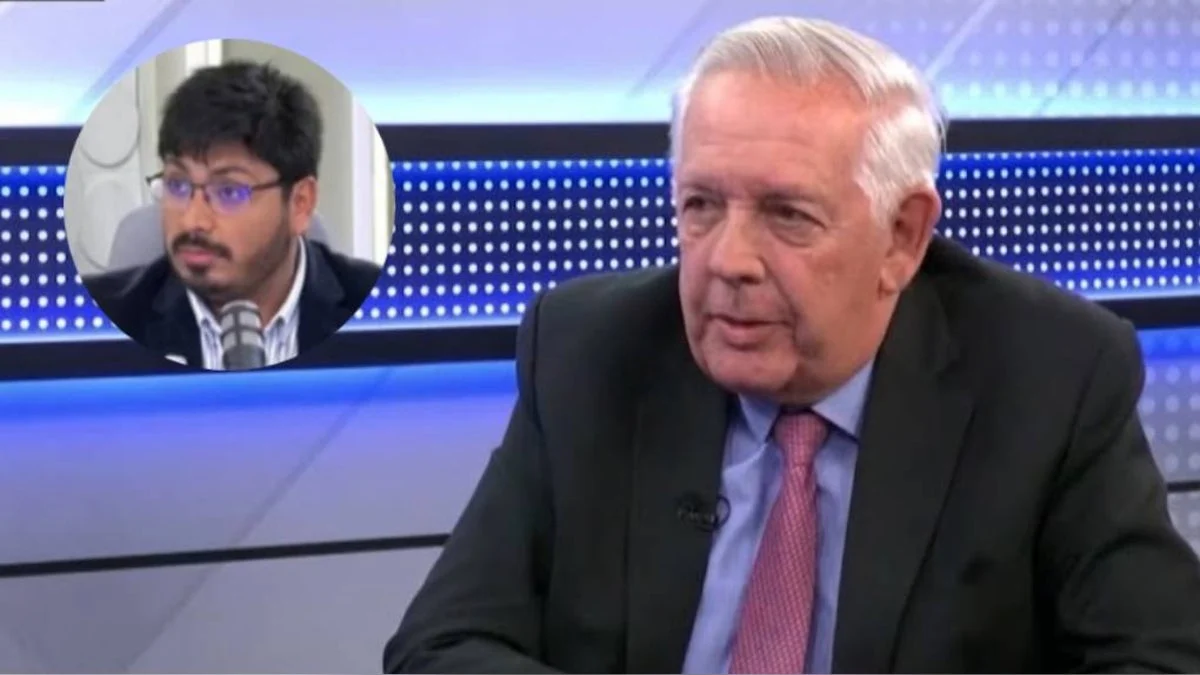
During an appearance on the television program Sin Rodeos on Panamericana TV, Rafael López Aliaga sought to substantiate his claims regarding potential electoral fraud. The candidate presented a series of documents to the audience, arguing that discrepancies between the number of votes for the presidency and those for legislative positions indicated a deliberate attempt to manipulate the outcome.
López Aliaga’s primary exhibit was the ballot from polling station No. 020379, located at the Divino Maestro educational institution in the Huánuco region. The candidate specifically highlighted this act, asserting that it only recorded a single vote for his presidential candidacy.
"When you input digital information, the origin is one thing and the destination is another," López Aliaga stated during the interview. "These errors happen when the crime is poorly executed. Every crime leaves a trail." He proceeded to point at the document, claiming, "This is called an atypical ballot. It shows that Rafael López Aliaga, Renovación Popular, has one vote for president. However, he has 27 for senator."

The implication was clear: the candidate was suggesting that the digital transmission of votes had been tampered with, intentionally suppressing his presidential support while allowing his party’s legislative results to remain accurate.
Chronology of the Investigation
The investigation by the AmaLlulla network began immediately following the broadcast. To determine the veracity of the candidate’s claims, the team followed a systematic verification process:
- Direct Retrieval of Source Material: The first step was to locate the physical ballot in question (No. 020379) from the ONPE’s official digital archive.
- Comparative Analysis: The team compared the official scan of the ballot with the screenshot displayed by López Aliaga during the live broadcast.
- Cross-Verification with Digital Data: The investigators cross-referenced the physical ballot’s contents with the numerical data uploaded to the ONPE’s official results portal to identify any inconsistencies.
- Attempted Dialogue: The final phase involved reaching out to the Renovación Popular press office to provide the candidate an opportunity to explain the discrepancy between his presentation and the official document.
Supporting Data: Exposing the Digital Alteration
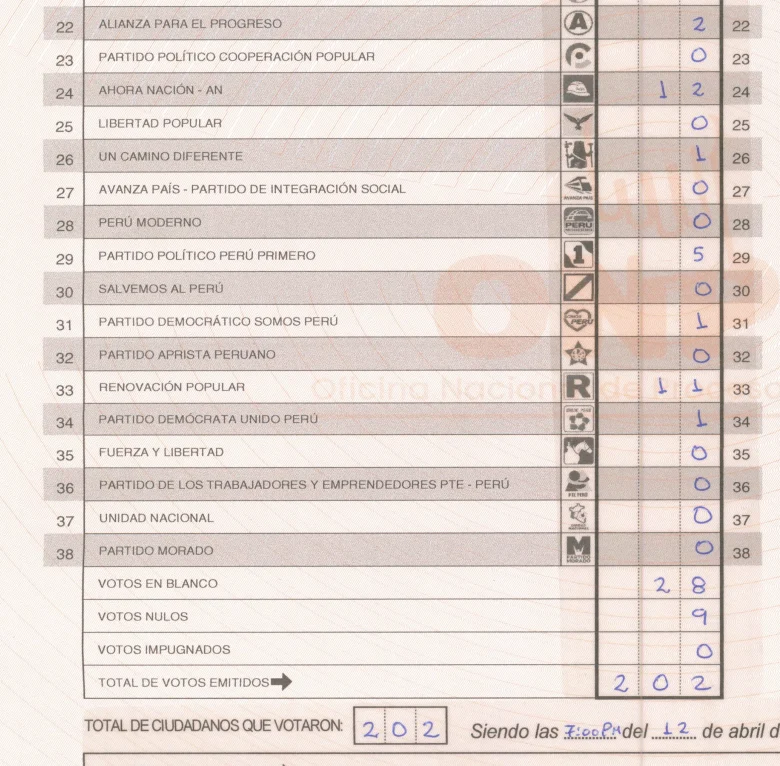
The forensic examination of the evidence provided by López Aliaga revealed a critical discrepancy. The official scan of the ballot from the Divino Maestro polling station, which is publicly available on the ONPE portal, clearly shows that Renovación Popular received 11 votes for the presidency—not one, as the candidate claimed.
The error in the candidate’s narrative became apparent when comparing the two documents side-by-side. The image shown on Sin Rodeos featured a red circle superposed over the ballot. This digital manipulation effectively obscured the first digit of the number "11," leaving only the second "1" visible. This simple, albeit deceptive, edit was enough to make the ballot appear as if it had only registered a single vote for the candidate.
Further examination of the same ballot showed that the candidate’s party performed as follows in other categories:

- Senators (Single Electoral District): 27 votes.
- Senators (Multiple Electoral District): 32 votes.
- Deputies: 93 votes.
The consistency of these numbers across the official record refutes the claim that the presidential vote count was an anomaly or the result of a "poorly executed crime." The official ONPE website displays the number 11 in the presidential column, matching the handwritten total on the physical document.
Official Responses and Lack of Clarification
In the interest of balanced and fair journalism, the AmaLlulla network sought comment from the Renovación Popular campaign. Cristian Salazar, the coordinator of press for the party, was contacted to provide an explanation for why the candidate presented an altered document during a national broadcast.
Despite multiple attempts to receive a statement or a clarification regarding the "red circle" and the discrepancy in the numbers, no response was received from the campaign by the time this report was finalized. The lack of response leaves the public with a stark contrast between the candidate’s public rhetoric and the verified facts of the electoral process.
The Broader Implications for Democracy
The implications of such misinformation are significant. By broadcasting claims of fraud—supported by tampered evidence—to a national audience, political actors do more than just voice a grievance; they erode public trust in democratic institutions.
Erosion of Institutional Credibility
When a presidential candidate questions the veracity of the electoral body, they are, in effect, questioning the will of the citizenry. In the Peruvian context, where electoral processes have occasionally been the subject of intense scrutiny, such claims can lead to social polarization, civil unrest, and a general loss of faith in the peaceful transition of power.

The Responsibility of the Media
This case also raises critical questions about the responsibility of media outlets. While it is the role of the press to provide a platform for political candidates, it is equally important to provide real-time fact-checking when demonstrably false information is presented as fact. The use of digital manipulation to "prove" a conspiracy theory should be a red flag for producers and journalists, requiring immediate intervention to ensure that viewers are not misled by visual trickery.
The Rise of Digital Fact-Checking
The involvement of the AmaLlulla network and the use of AI-assisted tools like Quispe Chequea highlight the growing importance of rapid, technology-driven verification. In an age where digital images can be easily manipulated, the role of investigative journalism is to act as a safeguard against the spread of disinformation.
Conclusion
The investigation into the claims made by Rafael López Aliaga serves as a cautionary tale for both politicians and the public. The "atypical" ballot that the candidate cited as evidence of electoral manipulation was, in reality, a standard ballot that had been subjected to digital alteration.
By superimposing a red circle over the number 11, the candidate created a visual falsehood that contradicted the reality of the official electoral record. When held up against the scrutiny of the actual document and the data provided by the ONPE, the narrative of a "poorly executed crime" collapses entirely.
For the health of any democracy, it is essential that electoral debates be conducted on the basis of facts, not manufactured evidence. While candidates are entitled to question results and seek transparency, they have an ethical obligation to ensure that the information they present to the public is accurate. In this instance, that obligation was ignored, and the resulting misinformation has been effectively debunked.

As the country looks toward future elections, this case remains a clear example of the need for vigilant, evidence-based journalism to ensure that the truth remains the primary currency of political discourse.