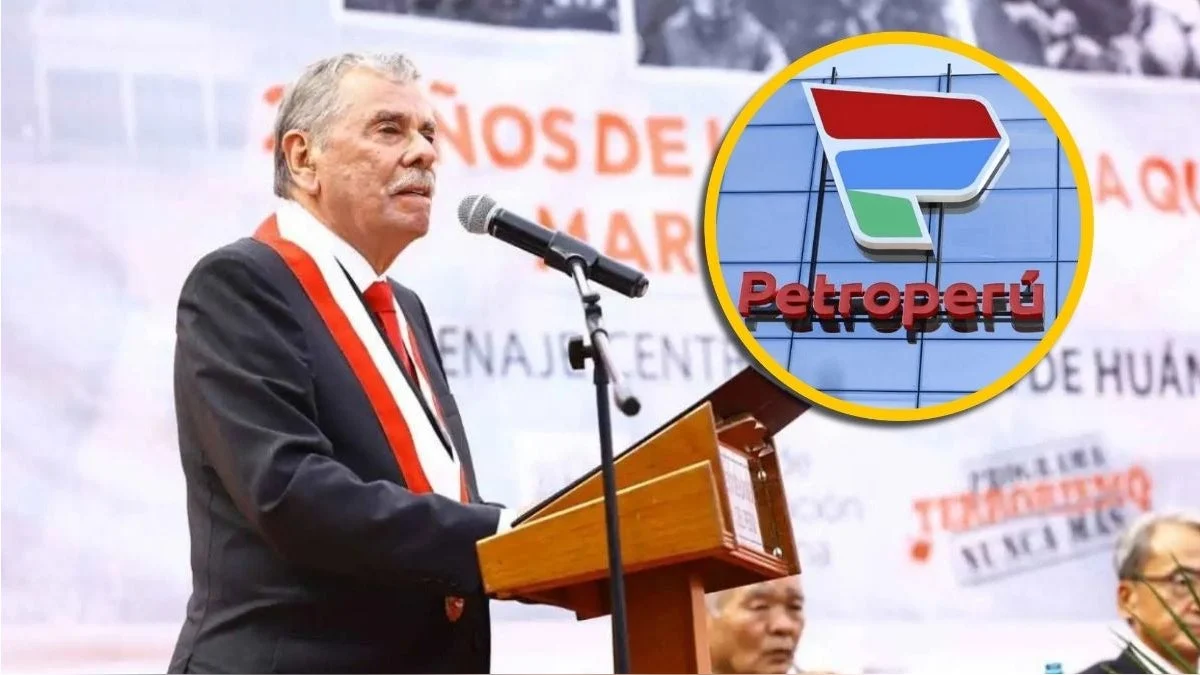
The perpetual financial instability of Petroperú, the state-owned oil company, has once again thrust the Peruvian government into a high-stakes confrontation with legislative leaders. As the administration moves to authorize a massive financial guarantee to ensure the company’s operational survival, the political landscape remains deeply polarized. At the center of this storm is Fernando Rospigliosi, a prominent legislator and current figure of influence within Congress, who has characterized the latest government support as a reckless expenditure of taxpayer funds on an entity he describes as "functionally bankrupt."
The Core Conflict: A Multi-Billion Dollar Lifeline
The Peruvian government recently unveiled a new financial framework designed to prevent a collapse in fuel supply. This move authorizes the Ministry of Energy and Mines (MINEM) to provide financial guarantees of up to US$2 billion. The administration maintains that this is not a traditional "bailout," but rather a necessary measure to ensure that Petroperú—the primary provider of fuel for the country’s remote regions, particularly the Amazon—does not trigger an inflationary catastrophe caused by fuel shortages.
However, critics in the legislative branch see this differently. Fernando Rospigliosi has emerged as a vocal opponent, arguing that successive governments have essentially thrown "billions of dollars" into a "bottomless pit." According to Rospigliosi, the recurring nature of these injections serves only to sustain a state enterprise that has failed to reform itself, despite prior promises of restructuring.
Chronology of a Financial Spiral
To understand the current impasse, one must look at the recent history of Petroperú’s fiscal management:
- The December Decree: In late 2023, the previous administration issued a decree aimed at the structural reorganization of Petroperú. The mandate was intended to streamline operations and return the company to profitability.
- Failed Reform: According to congressional reports, the reforms mandated in December were largely ignored or failed to materialize. The company’s financial "hole" continued to widen throughout early 2024.
- Leadership Turbulence: The instability of the company’s executive board has been a constant theme. Notably, the recent removal of Roger Arévalo from his position as president of the board signaled deep-seated governance issues.
- The Current Emergency: Facing a liquidity crunch that threatened to halt fuel imports, the current administration acted this week to approve the US$2 billion backing, aiming to stabilize the company’s supply chain.
Supporting Data and Economic Implications
The debate over Petroperú is not merely political; it is grounded in significant economic metrics. The company has historically been plagued by the high costs of the Talara Refinery modernization project, coupled with operational inefficiencies and the volatility of global oil prices.
The "Bottomless Pit" Argument
Rospigliosi’s criticism centers on the concept of the "opportunity cost" of public funds. By diverting billions of dollars in state guarantees to a struggling oil firm, the government is arguably stripping resources from other vital sectors such as public health, education, and infrastructure. Critics point to the fact that Petroperú has required consistent capital injections to stay afloat, suggesting that the company is no longer a strategic asset but a fiscal burden.
The Risk of Inflation
Conversely, the Ministry of Economy and Finance (MEF) argues that the consequences of not supporting Petroperú would be worse. If the company were to stop operations, the resulting supply chain disruptions would likely cause fuel prices to spike across the country. In a nation where transport costs are heavily tied to fuel prices, a surge in energy costs would inevitably lead to food price inflation and a broader economic slowdown, particularly in the isolated jungle regions that rely almost exclusively on the state provider.
Political Rhetoric: "Maquillaje" and "Disguise"
A significant portion of the recent legislative debate has focused on the mechanism of the financial support. The government has proposed the creation of a "Special Purpose Vehicle" (SPV)—effectively a trust that would allow Petroperú to attract funding from national and international financial entities.
Rospigliosi has sharply criticized this approach, describing it as a form of "makeup" or "disguise." He argues that the government is simply dressing up a subsidy to make it look like a market-based financial transaction.
"They edulcorate it, they put makeup on it, and eventually, they end up handing over money," Rospigliosi stated during a recent press briefing. When asked if he viewed the SPV as a definitive "disguise," he stopped short of confirming it as a legal term, but he doubled down on the sentiment: "It is an attempt to bypass the scrutiny that should accompany the use of public funds. We are not talking about theories; we are talking about a company that is broken and is being funded irregularly."
Official Responses and Governance Challenges
The government’s position remains firm: the survival of Petroperú is a matter of national security. Officials have emphasized that the US$2 billion is a guarantee, not a direct cash transfer, designed to lower the company’s borrowing costs in the private market.
However, the lack of trust in the company’s governance remains a major hurdle. The legislature has signaled that it will exercise its oversight powers to ensure that if these funds are authorized, they are tied to rigorous transparency benchmarks.
The Path Forward
The central question remains: can Petroperú be saved, or is it fundamentally unfixable?
- Restructuring: Legislative leaders are demanding an independent audit and a total overhaul of the board of directors.
- Private Participation: There is increasing pressure to introduce private capital into the state entity, which would dilute state control and theoretically bring more fiscal discipline to the company’s decision-making process.
- Fiscal Responsibility: The Ministry of Economy is walking a tightrope, trying to avoid a short-term crisis (fuel shortages) while facing long-term pressure to end the cycle of state-funded bailouts.
Implications for the Future of Energy Policy
The ongoing battle over Petroperú highlights a wider debate in Latin American politics: the role of the state in the energy sector. For proponents of a strong state presence, Petroperú is a strategic bastion that protects the country from the whims of international oil giants. For fiscal conservatives and market-oriented politicians like Rospigliosi, Petroperú represents the failures of state-led industrial policy—a symbol of inefficiency that drains the national treasury.
As the government moves forward with its plan to provide the US$2 billion in financial backing, the eyes of the international markets will be on Lima. The success or failure of this maneuver will likely define the remaining tenure of the current administration.
If the fuel supply stabilizes and the company begins to show signs of fiscal improvement, the government may be vindicated. However, if the funds are consumed without structural change—as Rospigliosi warns—it will likely set the stage for a constitutional confrontation between the Executive and Legislative branches.
Ultimately, the Petroperú saga is a microcosm of the broader challenges facing Peru: the need to balance immediate social and economic stability with the long-term necessity of fiscal prudence and institutional integrity. The coming months will be critical in determining whether Petroperú can emerge from this crisis as a viable entity or if it will remain a permanent fixture of political contention in the Andean nation.