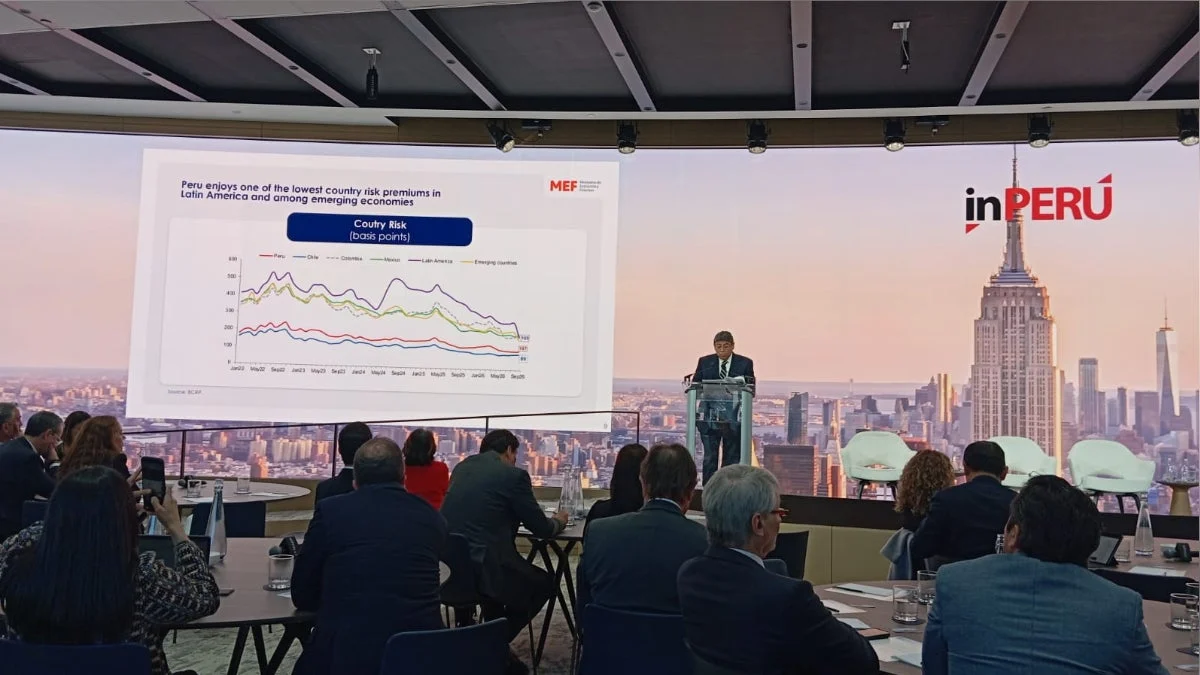
In a high-stakes effort to revitalize its economic landscape, the Peruvian government has unveiled an ambitious investment roadmap targeting $55 billion in projects through 2030. During a strategic presentation at the JP Morgan headquarters in New York—part of the "inPerú 2026" roadshow—Minister of Economy and Finance Elmer Cuba issued a direct call to global investors, positioning Peru as a stable and fertile ground for long-term capital deployment.
The strategy centers on the expansion of Public-Private Partnerships (APPs), a mechanism the administration believes is essential to bridging the country’s persistent infrastructure gap and catalyzing sustainable growth across key sectors.
Main Facts: A Blueprint for National Development
The core of the government’s proposal rests on a massive pipeline of projects spanning the 2026–2030 period. The Ministry of Economy and Finance (MEF) has identified critical sectors that will serve as the engine for this economic transition:
- Transport and Logistics: Modernizing port facilities, airport infrastructure, and road networks to enhance domestic connectivity and export efficiency.
- Energy Transition: Exploiting Peru’s comparative advantage in renewable energy sources, including solar, wind, and green hydrogen, to meet rising global demand.
- Water and Sanitation: Scaling up essential services to reach underserved populations, thereby improving public health and economic inclusivity.
- Social Infrastructure: Investing in schools, hospitals, and urban development projects that promise to raise the national standard of living.
Minister Cuba emphasized that these projects are not merely construction endeavors but are designed to function as "productivity multipliers." By enhancing the efficiency of the national supply chain, the government aims to boost the overall competitiveness of the Peruvian economy, allowing it to integrate more deeply into global value chains.
Chronology: The Road to the 2026 Strategy
The path to this announcement has been marked by a series of legislative and fiscal maneuvers intended to signal to the global market that Peru remains a reliable destination for capital.
- Early 2024: The administration initiated a comprehensive review of its national investment portfolio, identifying bottlenecks in the APP process that had historically delayed project execution.
- Mid-2024: Legislative efforts were directed toward streamlining regulatory frameworks for large-scale infrastructure projects. While some legislative requests faced pushback in Congress, the executive branch moved forward with executive decrees aimed at expediting project approvals.
- Q3-Q4 2024: The "inPerú 2026" initiative was solidified, serving as a platform to coordinate roadshows in major financial hubs, including New York, London, and Tokyo.
- Current Date: The presentation at JP Morgan represents the culmination of this groundwork, moving the strategy from a domestic policy goal to an international marketing imperative.
- 2026–2030 Outlook: This period represents the implementation phase, where the government intends to shift from the design and bidding stages to active project deployment.
Supporting Data: Why Peru?
During his presentation to global asset managers and investors, Minister Cuba articulated five fundamental pillars that underpin Peru’s value proposition in a volatile global economy:
1. Macroeconomic Stability
Peru has maintained one of the most disciplined fiscal frameworks in Latin America. With a low debt-to-GDP ratio and a long-standing commitment to inflation targeting, the country offers a predictable environment for long-term investors.
2. Legal Security
The government has reaffirmed its commitment to the sanctity of contracts. By strengthening the arbitration and regulatory oversight mechanisms, the administration seeks to mitigate the perceived risks that have historically deterred foreign direct investment (FDI).
3. Open Trade Policy
Peru boasts an extensive network of Free Trade Agreements (FTAs), providing investors with preferential access to major markets in North America, Europe, and Asia. This integration allows firms to use Peru as a regional hub for manufacturing and service delivery.
4. Natural Resource Abundance
Beyond traditional mining—where Peru remains a global leader in copper and silver production—the country is diversifying into critical minerals required for the global energy transition, further positioning it as a strategic partner for industrialized nations.
5. Economic Diversification
The shift away from total reliance on commodity exports is reflected in the growing services, tourism, and agribusiness sectors. The current investment plan specifically targets these areas to ensure a more resilient economic structure.
Official Responses and Political Context
The reception to the government’s announcement has been cautiously optimistic. While the international investment community values the clarity of the $55 billion target, domestic political observers have noted the challenges inherent in such an ambitious timeline.
Minister Cuba acknowledged the complexities of the domestic political environment, particularly the relationship between the executive and legislative branches. Following the Congress’s decision to approve only a portion of the legislative powers requested by the government, the Ministry of Economy has had to adapt its implementation strategy.
"We are navigating a dynamic political landscape," Cuba noted during a press briefing in New York. "However, the appetite for growth and the necessity of these projects transcend partisan politics. The business community understands that infrastructure development is a state policy that benefits all citizens."
Industry leaders, represented by various chambers of commerce and private sector associations, have echoed the need for "regulatory consistency." They argue that while the government’s goals are laudable, the success of the $55 billion initiative hinges on the transparency of the bidding processes and the efficiency of the bureaucracy in granting permits.
Implications: The Long-Term Economic Outlook
The implications of successfully executing this $55 billion roadmap are profound. For the Peruvian economy, it signifies a transition from an extractive-led model to one driven by infrastructure-enabled productivity.
Implications for Investors
For international capital, Peru offers a rare combination of high-yield opportunities in emerging markets with a mature regulatory framework. The shift toward APPs reduces the fiscal burden on the Peruvian state while offering private partners long-term, stable returns backed by the demand for essential services.
Implications for the Peruvian Citizen
For the general population, the promise lies in the closing of the "infrastructure gap." Improved water systems, reliable energy, and modern transport networks are expected to reduce the cost of living and provide better access to jobs. The government’s focus on "social infrastructure" suggests a move toward addressing the grievances of marginalized regions that have historically felt left behind by national economic growth.
Risks and Challenges
Despite the optimism, the government must address several headwinds. Global interest rate volatility could increase the cost of financing for these projects. Furthermore, local social conflicts, which have at times hampered mining and infrastructure projects in the past, remain a risk factor. The administration’s ability to manage social license and environmental standards will be as critical as its financial management.
Conclusion
The message from the Peruvian government in New York was clear: Peru is open for business, but it is a "new" Peru—one that is focused on structural, long-term development through high-value partnerships. By setting a $55 billion target, the government has placed a firm marker on the map of global investment. Whether this ambitious plan can be converted into tangible projects will depend on the continued alignment of fiscal policy, legal stability, and the ability of the state to execute its vision in the face of both global uncertainty and domestic political friction.
As the country approaches the 2026 horizon, the success of this strategy will likely define the economic legacy of the current administration and set the pace for Peru’s integration into the global economy for the next decade. The invitation to global investors is an invitation to be part of that transformation—a call that, if answered, could rewrite the trajectory of one of Latin America’s most promising economies.