Overview: A Procedural Faux Pas in the Bicameral System
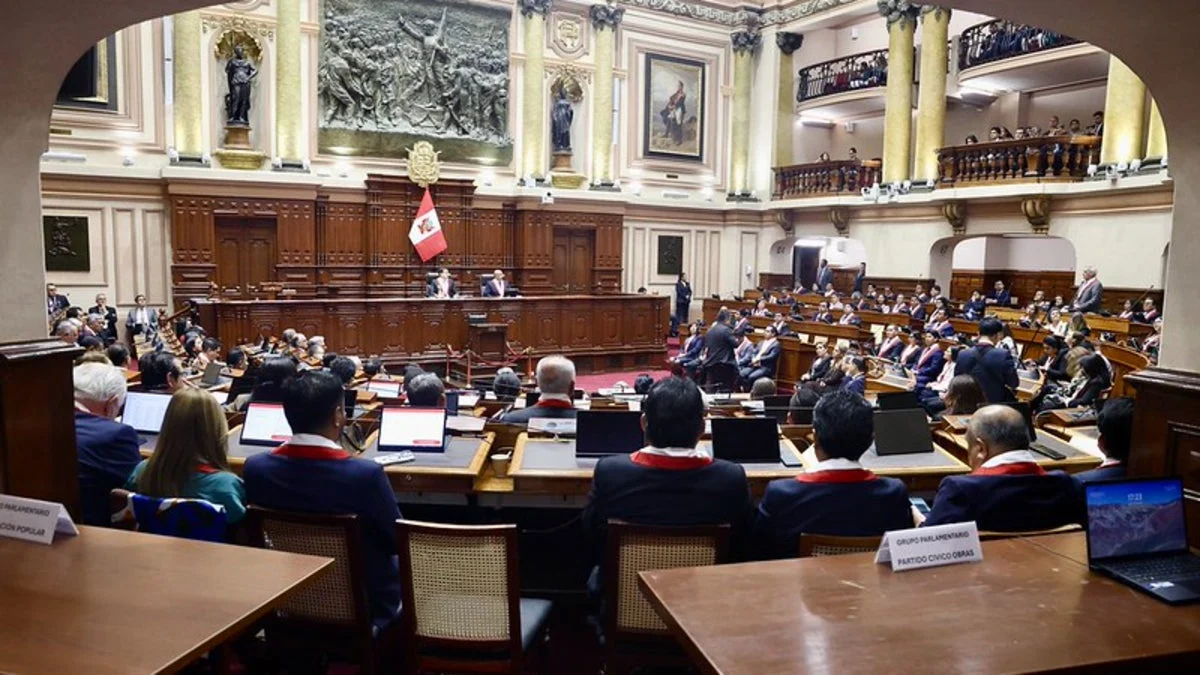
The Peruvian legislative landscape faced a moment of intense scrutiny this week following the discovery of a significant formal error in the publication of Law 32743, the statute delegating legislative powers to the Executive branch. The controversy centers on the autographed document—the final version of the law sent to the Executive for promulgation—which incorrectly attributed the legislative act solely to the Senate, rather than the broader, bicameral Congress of the Republic.
Miguel Ángel Torres, the President of the Senate, issued an official statement acknowledging what he termed a "material error" in the header of the document. The admission came after a chorus of constitutional experts, including former high-ranking congressional officials, warned that the document’s drafting failed to reflect the consensus of both chambers, potentially undermining the integrity of the newly re-established bicameral system.
The error sparked a firestorm of debate regarding administrative rigor, the institutional hierarchy of the new parliamentary structure, and the necessity of ensuring that every piece of legislation accurately reflects its origin as a product of the full Congress.
Chronology of the Dispute
The Initial Promulgation
The tension began shortly after the Plenary of the Senate approved the delegation of legislative powers to the Executive. The mandate, aimed at addressing urgent issues regarding citizen security and the El Niño climate phenomenon, was intended to empower the Executive to act swiftly. However, when the autographed document was released, legal analysts quickly identified that the header cited only the "Senate," rather than the "Congress of the Republic."
Expert Intervention
By mid-week, legal heavyweights such as former Official Mayor of Congress, César Delgado-Guembes, and attorney Natale Amprimo, began raising alarms. They argued that the error was not merely clerical but symbolic of a misunderstanding of the bicameral process. Delgado-Guembes was particularly vocal, pointing out that in a bicameral regime, a law is the result of the synergy between the Chamber of Deputies and the Senate. Presenting it as a product of the Senate alone, he argued, was a violation of the constitutional mandate.
The Institutional Response
Faced with mounting pressure and requests from fellow lawmakers—such as Óscar Reto, who formally requested a correction regarding the omission of specific signatures—Miguel Ángel Torres took to social media and official channels to clarify his position. On October 24, 2026, Torres issued a formal "Fe de Erratas" (Correction of Errors), promising an immediate rectification of the document to ensure it bore the correct institutional title.
Supporting Data and Legal Perspectives
The Argument for Constitutional Precision
The criticism levied by experts is grounded in the foundational principles of the Peruvian Constitution. According to legal scholars, the transition to a bicameral system requires a strict adherence to nomenclature to prevent institutional confusion.
César Delgado-Guembes noted: "In the epigraph, it must state that the ‘Congress of the Republic’ has passed the following law. It is not that the Senate has passed the following law. The legislative act is an integrated process."
The omission of the Chamber of Deputies’ role in the signature line was viewed as a slight to the lower house, which plays a critical role in the legislative cycle. Natale Amprimo echoed this sentiment, emphasizing that the law belongs to the institution, not the chamber. He explained that while the Senate President holds the procedural authority under the current regulations to sign and remit the autographed document (Article 37, inciso f), the document must explicitly be issued under the banner of the President of the Congress of the Republic.
The "Material Error" Defense
In his defense, Miguel Ángel Torres categorized the mistake as a "material error" in the header. He maintained that the legislative process itself—the debates, the votes, and the consensus—was handled in strict accordance with the Constitution and the internal regulations of the Senate.
"Correcting what corresponds is also a duty and a sign of respect to those we represent, to transparency, and to institutionalism," Torres stated in his official communiqué. He reiterated that the legislative intent was always to fulfill the government’s request for powers to combat rising insecurity and environmental risks.
Official Responses and Political Repercussions
The Position of the Senate Leadership
The office of the Senate President has sought to minimize the political fallout, framing the incident as a purely technical administrative oversight. By issuing the Fe de Erratas, Torres aimed to quell concerns that the Senate was attempting to consolidate power or ignore the Chamber of Deputies.
The statement emphasized that the priority remains the country’s urgent needs. However, the incident has highlighted the "teething problems" that often accompany major institutional shifts, such as the return to a two-chamber legislative model. The internal pressure from figures like Óscar Reto suggests that there is a heightened level of vigilance among lawmakers regarding the visibility and influence of their respective chambers.
Public and Professional Reception
The legal community has largely accepted the correction but remains wary of further errors. The incident has served as a wake-up call for the legislative administration, which must now ensure that its legal department is meticulously reviewing all outgoing documentation.
For the general public, the dispute may seem esoteric, but it touches on the fundamental credibility of the legislative process. If the laws themselves are incorrectly attributed, it opens the door to potential future legal challenges or judicial review by the Constitutional Court.
Implications for the Future of Bicameralism
Institutional Integrity and Oversight
The primary implication of this event is the reinforcement of the need for internal oversight within the Congress. As the bicameral system matures, the bureaucracy responsible for drafting and finalizing laws must adapt to the new legal reality. The error in Law 32743 demonstrates that institutional culture often lags behind legal reform; the administrative staff must transition from a unicameral mindset to a bicameral one.
The Role of Transparency
Torres’s decision to openly acknowledge the mistake and issue a correction is being viewed by some political analysts as a necessary act of transparency. By addressing the error quickly rather than allowing it to fester, the Senate leadership has attempted to maintain the moral high ground. However, the opposition will likely use this incident to criticize the administrative efficiency of the current leadership.
Future Legislative Procedures
Looking forward, this event is likely to lead to stricter protocols for the review of autographed laws before they are dispatched to the Executive branch. It is expected that the Secretariat of the Congress will implement a "double-check" system where documentation is reviewed by representatives from both the Chamber of Deputies and the Senate to ensure that all signatories and headers are accurate and reflective of the bicameral nature of the state.
Conclusion
The "material error" in the delegation of powers law is a reminder that in a democracy, form is often as important as substance. While the content of the law—the delegation of powers—remains the core focus of the Executive, the process through which that law is born must be beyond reproach.
Miguel Ángel Torres’s prompt correction has largely mitigated the risk of a constitutional crisis, but the episode serves as a cautionary tale for the newly restructured Peruvian Congress. As the nation grapples with complex issues of security and climate change, the legislature must prove that it can handle the procedural complexities of a bicameral system with the precision that the public demands. The correction of Law 32743 is not just an administrative fix; it is an assertion of the collaborative spirit upon which the current legislative framework is built.
As the dust settles, the focus now shifts back to the substance of the delegated powers and whether the government can effectively utilize them to provide the solutions the citizens of Peru are desperately awaiting. The legislative branch, meanwhile, will continue its work, presumably with a much closer eye on the details of every document that leaves its chambers.