Executive Summary: A Landmark Legal Challenge
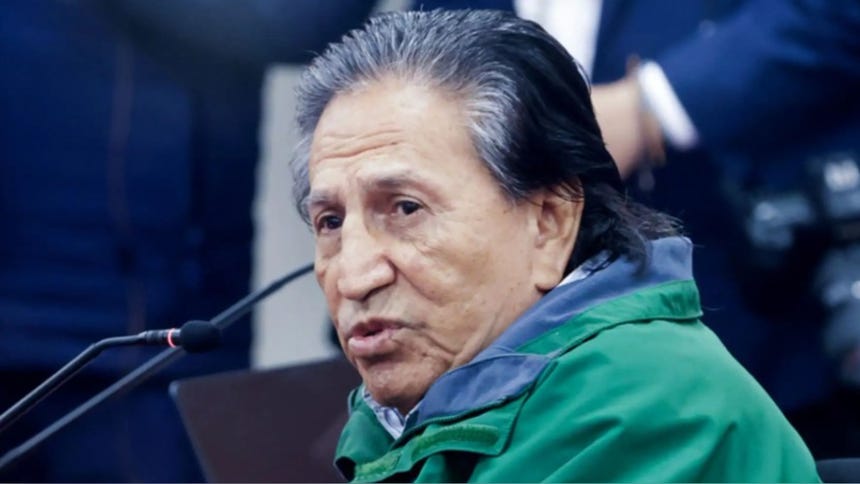
The legal saga surrounding former Peruvian President Alejandro Toledo has entered a pivotal new phase. His defense team has formally petitioned the judiciary to invoke the recently enacted Law 32181, which permits individuals over the age of 80 to serve prison sentences under house arrest on humanitarian grounds. This request places the Supreme Court of Peru at the center of a complex debate regarding the intersection of human rights, geriatric care within the penal system, and the administration of justice for high-profile corruption cases.
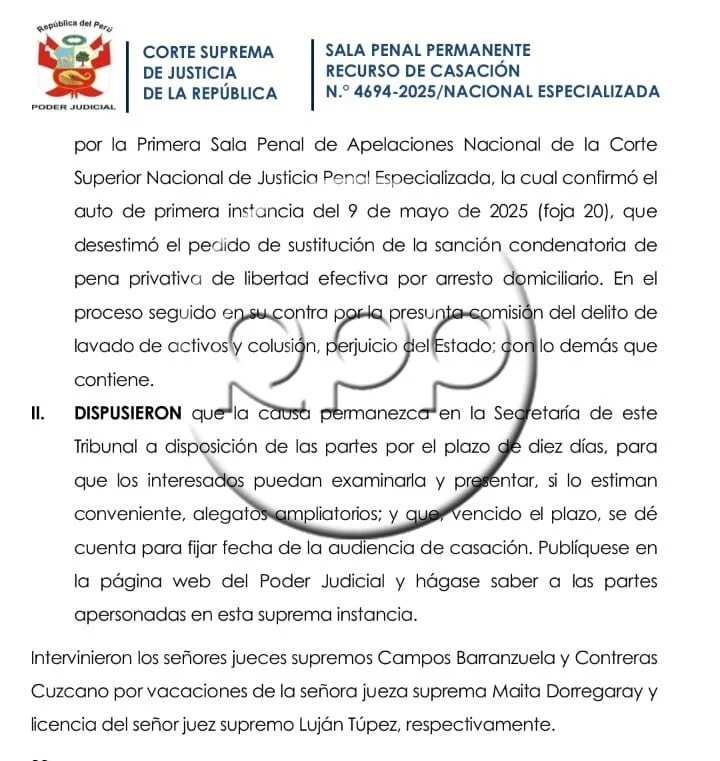
The Sala Penal Permanente of the Supreme Court has officially admitted the cassation appeal filed by Toledo’s defense, marking a significant procedural victory for the former leader. The court’s decision effectively suspends the status quo, as it now seeks to establish a binding judicial precedent regarding whether a final, irrevocable sentence is a prerequisite for octogenarians to access house arrest, or if the humanitarian nature of the law allows for immediate application during the appeal process.
The Chronology of a High-Stakes Case
To understand the current legal maneuvering, one must examine the timeline of the proceedings against the former president, who is currently incarcerated at the Barbadillo prison facility in the Ate district of Lima.
- October 21, 2024: The Second National Collegiate Penal Court issues a landmark sentence of 20 years and six months against Alejandro Toledo. He is found guilty of collusion and money laundering related to the Interoceanic Highway (Tramos 2 and 3), a case deeply intertwined with the massive Odebrecht corruption scandal.
- May 9, 2025: Judge Richard Concepción Carhuancho denies the defense’s initial request to substitute the prison sentence for house arrest.
- September 2, 2025: The First National Penal Court of Appeals confirms the lower court’s decision, maintaining the imprisonment of the former president.
- September 3, 2025: A separate blow is dealt to Toledo as the Ninth Liquidation Penal Court of Lima sentences him to an additional 13 years and four months for money laundering in the "Ecoteva" case.
- October 2026 (Present): The Supreme Court of Peru agrees to review the cassation appeal concerning the application of Law 32181, seeking to determine if the interpretation of the Penal Code’s Article 22 was legally flawed in previous rulings.
Supporting Data and Legal Arguments
The core of the current legal battle rests on the interpretation of Article 22 of the Peruvian Penal Code in light of the new Law 32181. Toledo’s defense team argues that the age of the defendant—a factor of inherent vulnerability—should take precedence over the traditional rigid application of punitive measures.
The Judicial Query
The Sala Penal Permanente, presided over by Supreme Court Justice Víctor Prado Saldarriaga, has identified two critical points that necessitate a formal development of judicial doctrine:
- Defective Motivation: The court will evaluate whether the First Penal Court of Appeals failed to properly address the defense’s grievances regarding the interpretation of Article 22, which governs the responsibility of individuals over 80 years of age.
- Fundamental Rights: The court must determine if the previous denial of house arrest violated the fundamental right to personal liberty and the principle of legality, particularly concerning how the third paragraph of the aforementioned article is applied to those awaiting final sentencing.
The court has granted all parties a ten-day period to review the case file and submit supplementary arguments. Once this period concludes, the court will schedule a virtual hearing to issue a final ruling that will likely define the parameters for elderly inmates in the Peruvian penal system for years to come.
Official Responses and Judicial Stance
The judiciary’s decision to hear this case is not an indication of a verdict, but rather an admission that the lower courts’ previous interpretations have created legal ambiguity. By agreeing to hear the cassation, the Supreme Court acknowledges that there is a conflict between the literal application of the Penal Code and the constitutional guarantees afforded to citizens of advanced age.
The Office of the Attorney General and the specialized prosecutors handling the Odebrecht cases have historically maintained a firm stance against leniency, arguing that the gravity of the crimes—which involved the systemic looting of public funds—precludes the granting of house arrest. They argue that the "humanitarian" label should not be used as a loophole for high-profile figures convicted of corruption.
Conversely, legal experts point out that the judiciary is under pressure to harmonize national law with international human rights standards. The "humanitarian" provision in Law 32181 is designed to prevent the prison system from becoming a death chamber for individuals whose health has significantly deteriorated due to age.
Implications for the Peruvian Justice System
The outcome of this case carries profound implications that extend far beyond the personal fate of Alejandro Toledo.
1. Precedent for Future Corruption Trials
If the Supreme Court rules in favor of Toledo, it could set a precedent that makes it significantly easier for elderly defendants in major corruption cases to transition to house arrest. This would undoubtedly trigger a wave of similar petitions from other high-profile inmates currently incarcerated in the Barbadillo facility and elsewhere.
2. The Intersection of Policy and Populism
The application of Law 32181 is a litmus test for the independence of the Peruvian judiciary. There is a palpable tension between the public’s desire to see justice served for the crimes committed against the state and the state’s duty to uphold the humane treatment of all citizens. A decision that favors house arrest will likely be met with public outcry, while a decision that keeps him behind bars may draw criticism from human rights organizations regarding the standard of care for aging prisoners.
3. The "Odebrecht Legacy"
The Interoceanic Highway case remains one of the most significant indictments in Peru’s modern history. Because the case involves international construction giants and systemic bribery, the physical location of the convict is not just a matter of prison administration, but a symbol of the effectiveness of the nation’s anti-corruption reforms. The debate over whether Toledo should serve his time in a cell or at home highlights the ongoing struggle of the Peruvian state to finalize the accountability process for the "Lava Jato" era.
Conclusion: A Defining Moment
As the legal community awaits the virtual hearing, the case of Alejandro Toledo stands as a collision between the absolute nature of criminal sentencing and the evolving legal protections for the elderly. The Supreme Court’s impending decision will not only resolve a specific request for a change in custodial conditions but will also provide a definitive interpretation of Law 32181.
For now, the former president remains in Barbadillo, waiting for the judiciary to decide whether his status as an octogenarian warrants a shift from the prison environment to the confines of a residence. Regardless of the ruling, the case has already solidified its place in the annals of Peruvian legal history as a pivotal struggle over the limits of punitive power and the definition of humanitarian justice in a democracy.
The next few days will be critical, as the filing of supplementary arguments will set the stage for a final decision that will reverberate through the halls of the Palace of Justice and across the national political landscape.