AI Boom Fuels Surge in Critical Mineral Demand, Latin America Poised for Strategic Advantage
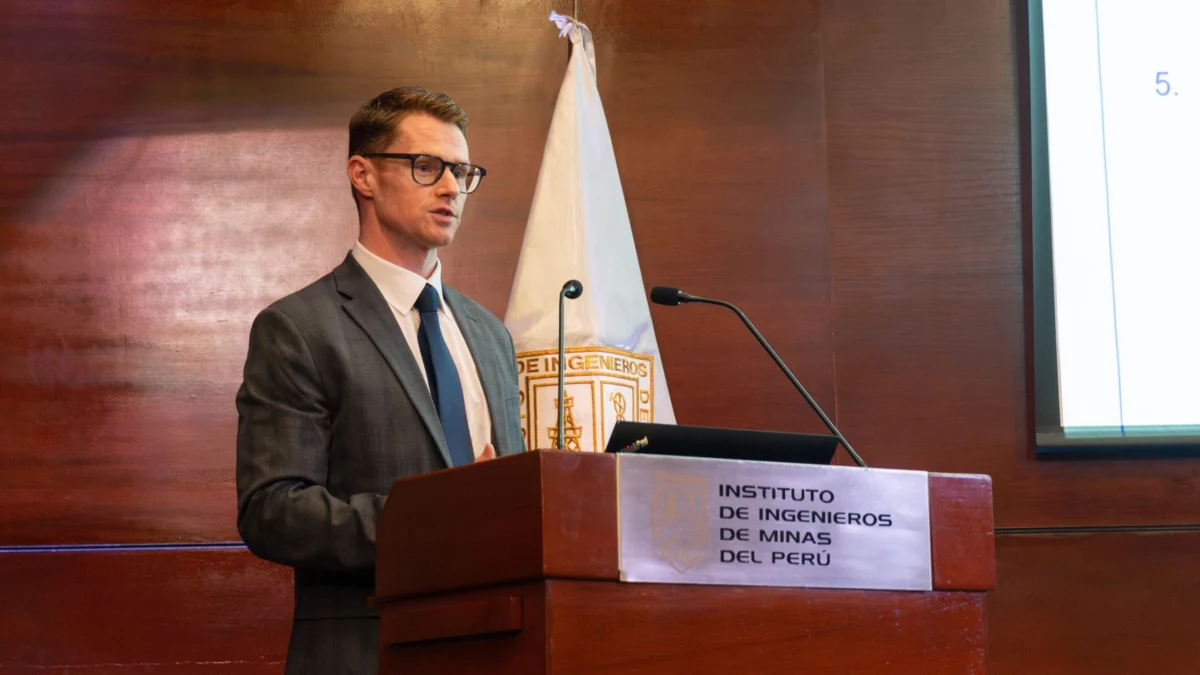
LIMA, PERU – The relentless expansion of artificial intelligence (AI) is set to drive substantial investment in the coming years, creating significant new opportunities for nations rich in critical minerals. This surge is directly linked to the escalating need for the foundational infrastructure, vast data centers, and sophisticated technological equipment that underpin AI’s burgeoning capabilities. This perspective was shared by Peter Martin, Vice President and Head of Economics at Wood Mackenzie, a leading global energy and natural resources consultancy, during a recent influential conference.
Martin’s insights, delivered at the "Global Economy Approaching a Tipping Point" conference, hosted by the prestigious Peruvian Institute of Mining Engineers (IIMP), provided a comprehensive analysis of the transformative trends reshaping the global economy. He emphasized that the current investment cycle, intrinsically tied to AI development, is likely to persist for at least the next two to three years. This sustained momentum is primarily attributed to the significant capital still being allocated towards building the essential infrastructure required for the development and widespread deployment of AI technologies.
The AI Infrastructure Imperative: A Catalyst for Mineral Demand
"I am very confident that in the next two to three years, we will see more AI," Martin stated during his presentation, underscoring that a substantial portion of the current impetus is concentrated on the physical construction of the necessary infrastructure. This expansion, he clarified, extends far beyond the realm of software development or the creation of AI models themselves. The proliferation of data centers and other AI-centric facilities necessitates a considerable investment in physical infrastructure, a robust and consistent energy supply, and, crucially, a vast array of raw materials.
Within this context, Wood Mackenzie identifies a significant opportunity for producers of critical minerals. The escalating growth of this new technological infrastructure will invariably lead to increased demand for the metals and minerals essential for its construction and ongoing operation. "There is a tremendous opportunity here," Martin affirmed. "The development of artificial intelligence will require a large number of minerals to facilitate the process."

This projection is particularly significant as the world grapples with evolving geopolitical landscapes and the urgent need to secure resilient supply chains. The insatiable appetite of AI for computing power, advanced semiconductors, and sophisticated hardware directly translates into a heightened demand for elements such as copper, lithium, cobalt, nickel, rare earth elements, and other vital raw materials. These minerals are the building blocks of the high-performance computing chips, advanced batteries, and specialized electronic components that power the AI revolution.
Latin America’s Emerging Role in the Global Supply Chain
Martin further elaborated on how this global trend could prove exceptionally beneficial for Latin America, given the region’s abundant mineral resources. During his address at the IIMP, he highlighted that both the expansion of AI and the increasing global focus on energy security are creating new resource demands worldwide. In this evolving scenario, countries possessing substantial reserves of metals and minerals are poised to assume increasingly strategic positions within international supply chains.
This regional advantage is amplified by the ongoing economic decoupling between major global powers like the United States and China. This strategic realignment is fundamentally altering global trade flows and compelling major economies to seek out more diversified sources of supply. According to Martin, this new paradigm can position Latin America as a pivotal supplier of resources for various economic blocs, precisely at a time when global supply chains are undergoing a significant period of reevaluation and restructuring.
The region’s potential is further bolstered by its existing mining expertise and the growing emphasis on responsible and sustainable resource extraction. As nations worldwide seek to de-risk their supply chains and reduce reliance on single sources, Latin American countries with established mining sectors and a commitment to environmental, social, and governance (ESG) principles are likely to attract significant interest and investment. The demand for minerals like copper, crucial for electrification and data center infrastructure, and lithium, essential for energy storage solutions that power AI-driven technologies, places countries like Chile and Peru at the forefront of this new global demand.

Navigating the Challenges: The Productivity Imperative
Despite the highly promising outlook for AI-related investments in the near term, Wood Mackenzie also sounded a note of caution regarding the challenges that this burgeoning industry will face over a longer horizon. Martin explained that looking ahead to a five-year period and beyond, the substantial investments currently being poured into AI-related infrastructure will need to demonstrably translate into tangible improvements in productivity and concrete economic outcomes. These results will be critical to justifying the considerable levels of capital that have been committed.
Therefore, while Wood Mackenzie anticipates that the investment momentum will continue in the coming years, the long-term sustainability of this trend will ultimately hinge on AI’s capacity to generate demonstrable and quantifiable benefits for the broader economy. The initial phase is characterized by building the physical and computational foundations. The subsequent phase, however, will be defined by the ability of AI to deliver on its promise of increased efficiency, innovation, and economic growth across various sectors.
This necessitates a strategic approach from both technology developers and resource-rich nations. For AI companies, the focus must shift from pure development to effective implementation and integration that yields measurable results. For countries supplying the critical minerals, the emphasis will need to be on fostering an environment that supports not only extraction but also value-added processing and the development of related industries. This could include investing in research and development, promoting technological innovation within the mining sector, and building the necessary logistical and industrial infrastructure to support a more integrated role in global value chains.
The "tipping point" that the conference alluded to suggests a critical juncture where the global economy is transitioning towards a new era driven by technological advancements. AI is undoubtedly at the vanguard of this transformation. However, its ultimate impact will be contingent on the ability of the underlying infrastructure, including the supply of critical minerals, to keep pace with the rapid advancements and to deliver on the promise of widespread economic prosperity. The journey from investment in infrastructure to demonstrable productivity gains is a complex one, requiring careful planning, sustained innovation, and a collaborative approach from all stakeholders involved. The coming years will be crucial in determining whether the current AI investment boom translates into a sustainable engine of global economic growth, with Latin America playing a potentially vital role in supplying the foundational resources for this new technological frontier.