By International Business Correspondent
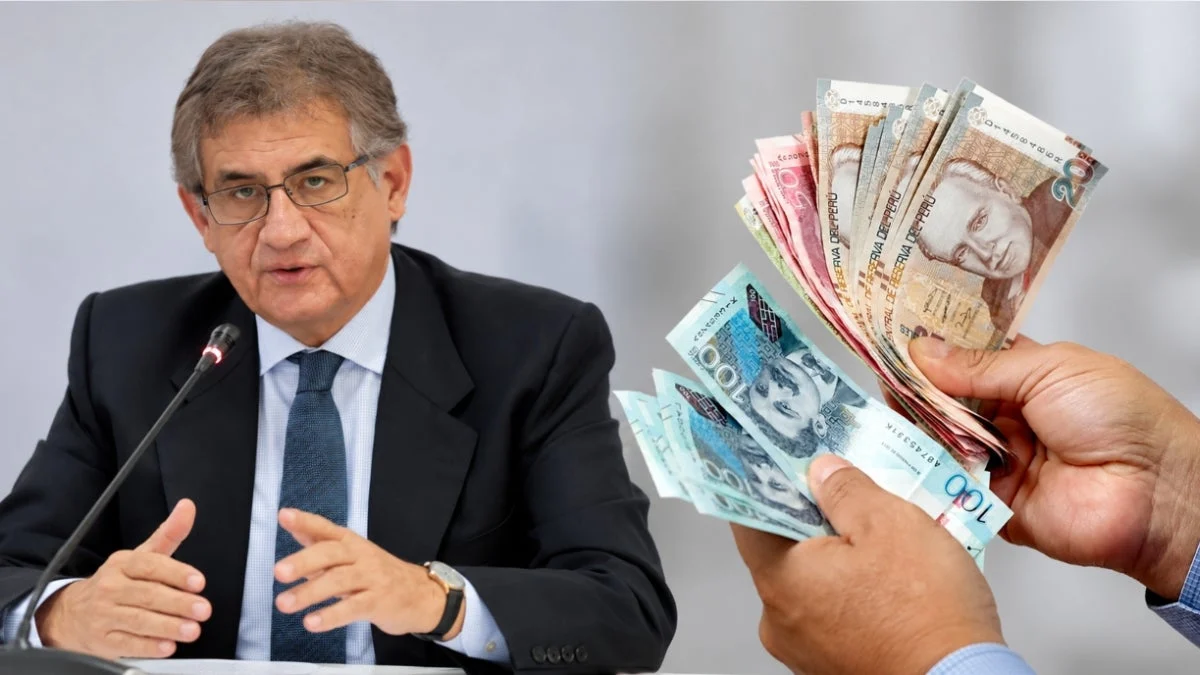
The administration of President Keiko Fujimori is facing mounting pressure as the specter of a prolonged climate crisis threatens to derail the government’s fiscal roadmap. Minister of Labor, Juan Sheput, has officially signaled that the government may be forced to reconsider the second phase of the planned increase in the Minimum Vital Wage (Remuneración Mínima Vital – RMV), citing the potential for the El Niño phenomenon (FEN) to persist throughout the entirety of 2027.
The administration, which had previously positioned the wage hike as a cornerstone of its social policy, is now caught in a delicate balancing act between fulfilling campaign promises and maintaining macroeconomic stability in the face of what could be a catastrophic climate event.
The Core Conflict: Economic Policy vs. Climate Reality
The central issue revolves around the government’s commitment to elevate the minimum wage to S/1,300. As of October, the first phase of this initiative was successfully implemented, raising the base salary by S/100 to a total of S/1,230. This initial increase was hailed as a significant milestone in supporting the purchasing power of the most vulnerable sectors of the Peruvian workforce.
However, the second phase—intended to bridge the gap to S/1,300—is now subject to intense internal debate. Minister Sheput’s recent statements to the media have injected a note of caution, suggesting that the original timeline, which hinged on the "post-Niño" recovery period, may no longer be realistic if the climate phenomenon continues to disrupt supply chains, agricultural output, and infrastructure throughout the next calendar year.
"The commitment was framed within a specific context: the period following the dissipation of the El Niño phenomenon," Minister Sheput stated during an interview. "We are now facing the reality that the event could potentially last the entire duration of 2027. This changes the parameters, and while we remain committed to supporting workers, any modification or delay must be a collective decision by the Council of Ministers."
Chronology: A Path to the S/1,300 Goal
To understand the current impasse, it is necessary to review the sequence of events that brought the government to this juncture:
- September 2026: The government officially signs the decree for the first phase of the wage increase, boosting the minimum wage from S/1,130 to S/1,230.
- October 1, 2026: The new salary floor takes effect, providing immediate relief to thousands of formal sector employees.
- Late 2026: The Ministry of Economy and Finance (MEF) begins monitoring indicators of the El Niño phenomenon, noting that weather patterns are showing signs of increased intensity and duration.
- Early 2027: Minister of Economy Elmer Cuba clarifies that the second increment (S/70) is slated for the first semester of 2027, ideally around April or May, once the climate phenomenon has subsided.
- Present Day: Internal assessments suggest that the climate outlook has worsened, leading to the current public discourse regarding the potential postponement of the final increment.
Supporting Data: Why El Niño Matters for Wages
The connection between the climate and the minimum wage is not merely political; it is deeply rooted in the structural vulnerabilities of the Peruvian economy. El Niño brings intense rainfall, flooding, and thermal anomalies that disproportionately affect the agricultural and logistics sectors—the primary employers of minimum-wage earners.
The Impact on Inflation and Supply
When El Niño strikes, the destruction of critical infrastructure and the loss of crops lead to supply shocks. These shocks invariably translate into food inflation. If the government raises the minimum wage during a period of high inflation caused by supply constraints, it risks creating a wage-price spiral, further eroding the real value of the salary increase.
The Fiscal Burden
The Ministry of Economy, led by Elmer Cuba, has already allocated significant resources to mitigate the damage caused by the climate phenomenon. This includes a S/2,500 million package of social bonuses designed to support families in high-risk zones. The fiscal space to accommodate both massive social spending and a mandate for private sector salary hikes is rapidly shrinking, forcing the administration to choose between direct cash transfers to the unemployed/vulnerable and the systemic increase of the formal wage floor.
Official Responses: The View from the Cabinet
The government’s position remains nuanced, attempting to reassure workers while signaling fiscal prudence to international investors.
Minister Juan Sheput (Labor)
Minister Sheput has emphasized that he is not unilaterally canceling the increase. Instead, he is shifting the burden of the decision to the broader Council of Ministers. By doing so, he is involving the Ministry of Economy and the Presidency, ensuring that any decision to pause the increase is viewed as a strategic economic move rather than a betrayal of labor unions. "The Council of Ministers must weigh the social necessity of a higher wage against the inflationary risks posed by a prolonged Niño," he noted.
Minister Elmer Cuba (Economy and Finance)
Minister Cuba has remained focused on the technical requirements. He has noted that for the S/1,300 goal to be reached, a new supreme decree must be drafted and approved. His silence on the delay suggests that the Ministry of Economy is currently running complex simulations to determine if the economy can absorb an additional wage increase without triggering layoffs in the small and medium-sized enterprise (SME) sector, which is the most sensitive to labor cost fluctuations.
Implications: The Social and Economic Ripple Effect
The decision regarding the 2027 wage hike will have profound consequences for the Fujimori administration.
The Impact on the Labor Market
If the government moves forward with the hike regardless of the climate, it risks mass layoffs or an increase in the already high level of informality. Small businesses, struggling with the dual costs of climate-induced supply chain disruptions and higher payrolls, may be forced to shed staff to remain solvent.
The Political Cost
Conversely, failing to deliver the S/1,300 wage floor could alienate the administration’s working-class base. Labor unions have already begun to express their apprehension, suggesting that if the government can find resources for bonuses, it should prioritize the structural increase of the minimum wage as a more permanent solution to poverty.
The Macroeconomic Perspective
Economists are closely watching how this plays out. A delay in the wage hike could be viewed by rating agencies as a sign of fiscal discipline—a necessary measure during an emergency. However, if perceived as a lack of commitment to social welfare, it could lead to social unrest. The administration is essentially trying to navigate a "perfect storm," where both the weather and the economic indicators are testing the limits of their policymaking capacity.
Conclusion: A Decision on the Horizon
As 2027 approaches, the residents of Peru and the business community are waiting for a definitive statement from the Council of Ministers. The government is currently caught between the urgent need to protect the purchasing power of its citizens and the harsh reality of an economy struggling under the weight of climate change.
The final decision will likely be contingent on the data gathered during the first quarter of 2027. If the climate forecasts remain dire, a postponement of the second phase of the minimum wage increase appears increasingly probable. However, such a move will require a sophisticated communication strategy to explain to the public that the delay is a measure intended to prevent a broader economic collapse that would, in the long run, hurt the very workers the government seeks to support.
For now, the commitment to S/1,300 remains a policy in limbo—a symbol of the government’s ambitions, temporarily held hostage by the unpredictable forces of nature. The coming months will be decisive, not only for the salary of the Peruvian worker but for the political stability of the current administration.