The promise of a swift and efficient reconstruction following the devastating 2017 "Coastal El Niño" phenomenon has unraveled into a cautionary tale of bureaucratic mismanagement and financial strain. A comprehensive audit by the Comptroller General of the Republic (CGR) has exposed a staggering reality: critical infrastructure projects, once heralded as the crown jewel of the government’s reconstruction efforts, have ballooned in cost by over 140% and suffered delays exceeding 330%.
These projects, executed under the high-profile "Government-to-Government" (G2G) modality—designed to bypass local corruption and technical deficiencies—have instead become symbols of inefficiency. With final costs soaring to over S/ 2 billion against an initial budget of S/ 843 million, the fiscal impact on the Peruvian state is profound, but the social cost for the thousands of citizens left waiting for schools and clinics is arguably far greater.
The Anatomy of the Failure: Key Findings
The audit examined 32 specific projects that reached commercial closure between 2020 and 2025. The discrepancy between the initial contractual promises and the final reality is stark. The total initial budget of S/ 843 million was dwarfed by a final expenditure of S/ 2.029 billion.
Beyond the monetary figures, the timeline of these projects serves as a damning indictment of the planning process. The 32 projects were originally slated to be completed in a combined total of 4,414 days. Instead, they required a staggering 19,093 days to reach completion. This represents a 332.6% increase in execution time, leaving communities in limbo for years beyond their expected delivery dates.
Chronology of a Failed Vision
The saga began in the wake of the 2017 floods, which left vast swaths of Northern Peru in ruins. To accelerate recovery, the Peruvian government turned to the G2G model, specifically targeting international expertise through NEC3 (New Engineering Contract) frameworks, primarily in partnership with the United Kingdom.
- June 2020: The original Government-to-Government agreement is signed with the UK, promising a modern approach to project delivery.
- 2020–2022: Initial projects commence under the Authority for Reconstruction with Changes (ARCC). Early warning signs regarding budget volatility emerge.
- April 2022: The initial expiration date of the agreement passes, but due to unfinished works, the government begins a series of adendas to extend the contract.
- 2023–2024: Institutional transition occurs as the ARCC is phased out and the National Infrastructure Authority (ANIN) takes over.
- December 31, 2025: The cut-off point for the Comptroller’s audit, revealing the final tally of 32 completed projects and their massive overruns.
- Present: The G2G agreement remains active under various extensions until its current projected end date of December 31, 2026.
NEC3 Contracts: A Double-Edged Sword
Central to the audit’s findings is the role of the NEC3 contract, particularly the "Option F" clause. Out of the 32 audited projects, 28 were governed by this "cost-reimbursable" scheme. Under this model, the public entity essentially assumes the risk for cost overruns incurred by sub-contractors.
The Comptroller General identified that the "eventos compensables" (compensable events) mechanism—intended to be a flexible tool for handling unforeseen site conditions—was abused. Because the projects often began with rudimentary engineering studies, they were fundamentally unprepared for the complexities of the terrain, existing utility interferences, and structural realities.
Whenever a challenge arose, the contract allowed for immediate adjustments to the scope, budget, and timeline. In practice, this transformed the budget from a fixed ceiling into a fluid suggestion, incentivizing contractors to prioritize scope expansion over fiscal responsibility.
Case Studies: The Human Cost of Delay
The numbers behind the audit represent real-world suffering. The most egregious examples demonstrate how local populations were marginalized by these administrative failures.
The Leona Ravine Protection Project
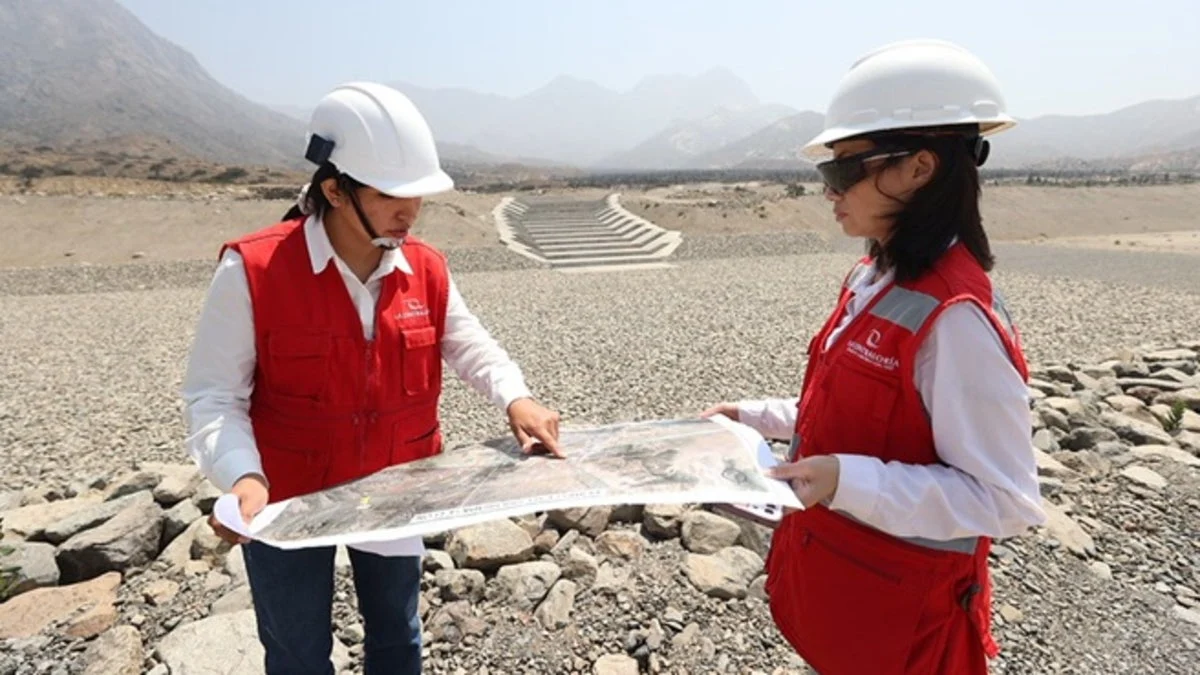
Located in the districts of La Esperanza and Huanchaco in La Libertad, this project was designed to prevent future flooding. The initial investment of S/ 473 million ballooned to S/ 818 million upon commercial closure, nearly doubling the cost.
The Educational Crisis
Perhaps the most damaging impact is found in the school sector. Four major educational institutions were analyzed, and their delays have forced over 2,800 students to attend classes in substandard, temporary, or borrowed facilities for years.
- I.E. Genaro Martínez Silva (Piura): Construction time surged from 150 days to 1,036 days.
- I.E. No. 14064 (Piura): Extended from 120 days to 1,002 days.
- I.E. No. 80374 José Sevilla Escajadillo (La Libertad): A budget jump from S/ 11.7 million to S/ 62 million, with completion taking 976 days instead of the planned 165.
These are not merely statistics; they represent a generation of students whose education has been disrupted by a failure to properly vet initial designs and manage contractual risks.
Analysis: Why Did the System Break?
The audit highlights a failure in the "pre-investment" phase. Many projects were launched based on insufficient geotechnical and civil engineering surveys. The Comptroller noted that 51 cases of design modifications and 47 cases of unforeseen technical conditions were the primary drivers of these cost spikes.
Furthermore, the transition from the ARCC to the ANIN did little to mitigate the systemic issues. Instead of tightening controls, the "compensable events" system continued to operate under the same logic, resulting in 140 such events across just six major infrastructure projects, totaling S/ 381 million in additional costs and 2,860 days in total delays.
Implications for Public Policy
The findings of the Comptroller General pose a serious challenge to the Peruvian government’s reliance on international procurement models. While the G2G modality was intended to provide a "gold standard" of infrastructure delivery, the lack of rigorous oversight during the execution phase rendered the potential benefits moot.
Fiscal Sustainability
With the government still bound by the G2G agreement until the end of 2026, there is an urgent need to reform how these contracts are managed. The current trajectory suggests that if the remaining 100+ projects under the PIRCC follow the same trend as the 32 audited, the fiscal impact could reach levels that jeopardize other social investment programs.
Institutional Capacity
The audit effectively proves that international contracts are only as effective as the local institution monitoring them. Without a robust internal team to challenge the "compensable events" filed by contractors, the public entity acts as little more than a blank check for the private sector.
Looking Forward: A Call for Reform
The Comptroller General’s report is not merely a post-mortem; it is a call to action. To prevent the continued drain on public coffers, the following steps are deemed essential by policy experts:
- Mandatory Technical Rigor: No project should move to the execution phase under G2G without definitive, high-resolution engineering and geotechnical studies.
- Contractual Renegotiation: The government must revisit the NEC3 "Option F" clauses to limit the scope of compensable events and shift more risk back to the contractors.
- Transparency in Adendas: The history of constant extensions to the UK agreement must be audited to ensure that the extensions are not merely covering up past inefficiencies but are actually delivering tangible progress.
The reconstruction of Northern Peru was meant to be a symbol of national resilience. Instead, it has become a masterclass in how institutional complacency and poor contract design can inflate costs and delay progress, leaving the most vulnerable populations to pay the price. Whether the government has the political will to pivot and rectify these systemic issues remains the central question as the 2026 deadline approaches.