The landscape of healthcare infrastructure in the Cajamarca region is undergoing a monumental transformation. In the heart of Chota, the construction of the new Hospital José Soto Cadenillas has officially transitioned from the foundational phase to a high-precision engineering endeavor. As the project advances, it serves as a testament to the integration of modern seismic technology and comprehensive medical planning, designed to provide state-of-the-art care for thousands of residents in northern Peru.
With an investment totaling S/ 598.8 million, this facility is not merely a building project; it is a critical investment in the regional health security of the Andes. The project is currently being monitored by the National Program of Investment in Health (PRONIS), an arm of the Ministry of Health, ensuring that every cubic meter of concrete and every structural steel reinforcement meets the highest international safety standards.
Main Facts: A Landmark of Modern Construction
The structural profile of the future José Soto Cadenillas Hospital is as impressive as its medical capacity. The design comprises a complex of 11 levels in total, distributed across two expansive subterranean floors and nine upper levels. This vertical configuration is necessitated by the challenging topography of the region and the need to centralize highly specialized medical services within a limited footprint.
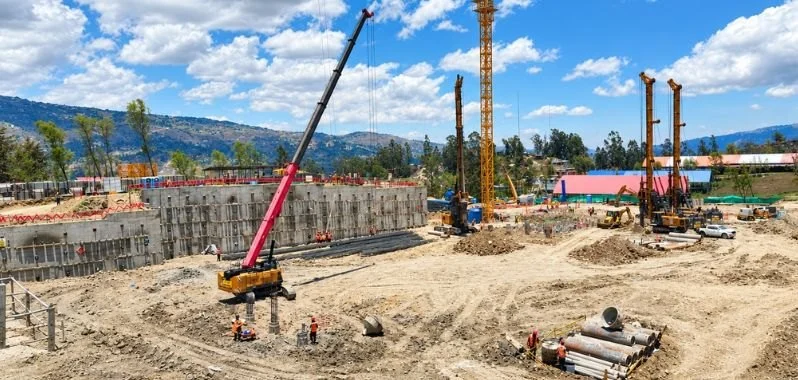
Currently, the construction site is a hub of intense activity, marked by the successful installation of over 700 deep-foundation piles. This is a vital milestone in a project that requires a total of 1,602 piles. These elements, which reach depths of up to 18.5 meters, serve as the "roots" of the hospital, anchoring it firmly into the earth and providing the necessary load-bearing capacity to support a nine-story structure in a seismically active zone.

Beyond the physical structure, the hospital is designed to be a comprehensive health hub. Upon completion, it will feature:
- Specialized Surgical Suites: Advanced operating rooms equipped for high-complexity procedures.
- Diagnostic Imaging Center: A robust radiology department housing tomographs, mammographs, echographs, and high-resolution X-ray systems.
- Obstetric and Surgical Hubs: Dedicated wings for maternal and surgical care.
- Extensive Clinical Capacity: Modern hospitalization wards and a high-efficiency emergency department.
Chronology of Progress
The development of the Hospital José Soto Cadenillas is a multi-year effort that reflects the government’s commitment to decentralizing healthcare. While the project is currently in the active foundation stage, its progress is part of a broader timeline of infrastructure development.
- Planning and Design Phase: Initial assessments focused on geological studies of the Chota region, determining that the soil required deep-piling solutions to ensure long-term structural integrity.
- The Foundation Milestone (Current Phase): The installation of 1,602 deep-piles represents the most critical structural work performed to date. As of late 2026, the project has surpassed the 700-pile mark, with heavy machinery working in shifts to ensure the schedule is maintained.
- Future Structural Progression: Once the piling and subterranean levels are solidified, the project will transition to the assembly of the primary frame, including the installation of the specialized seismic base-isolation system.
- Equipment Integration: The final phase will involve the delivery and calibration of over 6,600 pieces of medical and biomedical equipment, transforming the shell of the building into a functional, life-saving facility.
Engineering for Safety: The Seismic Factor
Perhaps the most significant aspect of the hospital’s engineering is its seismic resilience. Peru is situated along the "Ring of Fire," and the Cajamarca region is no stranger to tectonic activity. Consequently, the new hospital is being equipped with a sophisticated system of seismic base isolators.
These devices act as a buffer between the foundation and the structure itself. In the event of an earthquake, the base isolators decouple the hospital’s mass from the violent vibrations of the ground. This technology is critical for a hospital, which must not only survive a major earthquake but remain fully operational immediately afterward to handle potential surges in casualties. By utilizing these isolators, the facility guarantees that its sensitive medical equipment—such as the high-end tomographs—will be protected from the kinetic energy of a seismic event.

Official Oversight: The Role of PRONIS
The presence of the National Program of Investment in Health (PRONIS) is central to the project’s success. PRONIS acts as the regulatory and technical supervisor, ensuring that the project does not deviate from its technical specifications.
Official reports from the site emphasize that the construction is following a rigorous monitoring process. Engineers from the Ministry of Health conduct regular audits of the soil composition, the quality of concrete mixtures, and the integrity of the steel reinforcements. This level of oversight is essential for a project of this scale, which aims to provide decades of service to the people of Chota. The collaboration between the Ministry of Health and the executing construction firms creates a transparent framework where safety and functionality take precedence over speed.
Implications for Healthcare in Cajamarca
The impact of this hospital extends far beyond the town of Chota. Currently, many residents in the rural areas surrounding Cajamarca must travel long distances to access specialized diagnostic services or surgical care. The introduction of over 6,600 new medical devices means that residents will no longer need to face the financial and physical burden of traveling to regional capitals for routine screenings or complex procedures.
1. Strengthening the Regional Health Network
By providing a facility that includes specialized labs and diagnostic imaging, the hospital acts as a "hub" for the local health network. Smaller clinics in the area will be able to refer patients to the José Soto Cadenillas Hospital, knowing that the facility is equipped to handle everything from emergency trauma to elective surgical interventions.

2. Economic and Social Growth
Large-scale infrastructure projects are known drivers of economic development. The construction phase itself generates hundreds of local jobs, from civil engineers to logistics specialists. Once operational, the hospital will provide permanent employment for medical professionals, nursing staff, and administrative personnel, effectively creating a new pillar for the local economy.
3. Closing the Gap in Medical Infrastructure
Peru has historically faced a "gap" in medical facilities, particularly in the mountainous regions. The investment of S/ 598.8 million is a clear move to address this inequality. By bringing modern technology—such as advanced mammography and digital imaging—to a rural population, the project serves as a model for how the state can bring equity to public health.
Conclusion: A Vision for the Future
The construction of the new Hospital José Soto Cadenillas is a complex, multi-layered achievement that balances architectural ambition with the harsh realities of mountain terrain. By investing in deep-foundation piling and advanced seismic isolation, the project architects are ensuring that the hospital will stand as a resilient guardian of public health for generations to come.
As the structure rises above the soil of Chota, it symbolizes a shift toward a more modern, efficient, and prepared healthcare system in Peru. With the progress currently at the 700-pile mark, the momentum is building, and the community eagerly anticipates the day the facility opens its doors, fully equipped with the tools necessary to save lives and provide a higher standard of care for all citizens of the Cajamarca region.