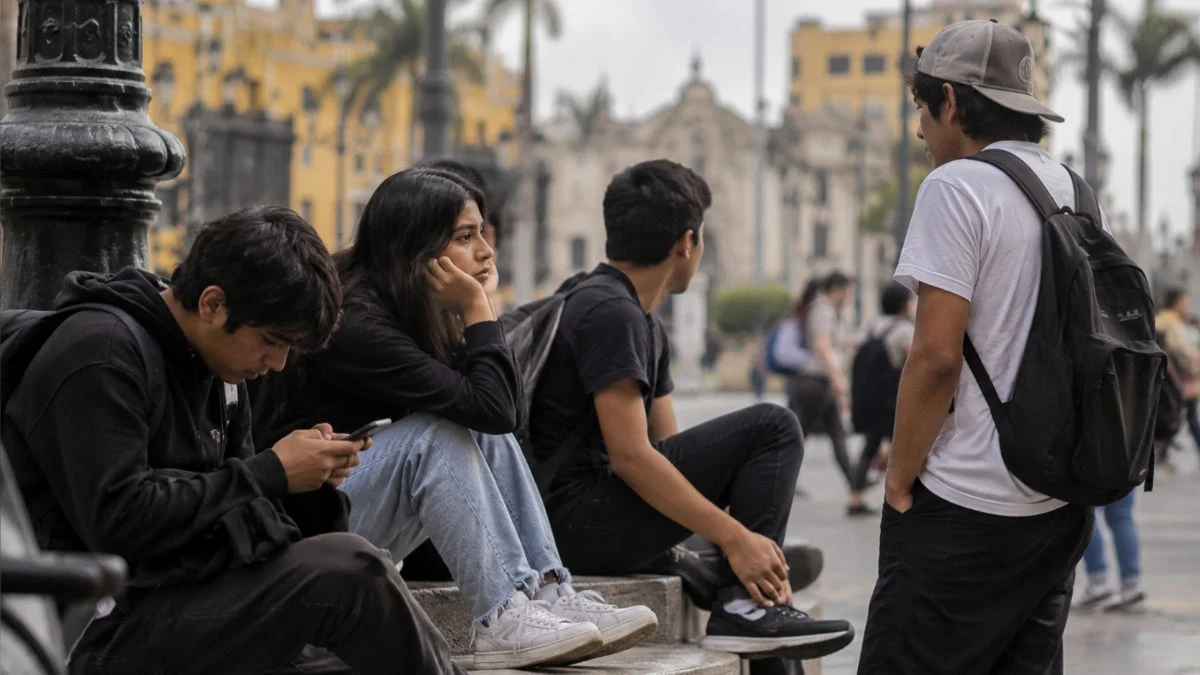
The Peruvian labor market stands at a precarious crossroads. While national macroeconomic indicators often suggest growth, the reality for the average worker tells a starkly different story: a landscape dominated by informality, where 12 million citizens operate outside the protection of the state. With informality rates exceeding 86% in four key regions and the agricultural sector struggling with stagnant productivity, the nation faces a structural challenge that transcends simple policy tweaks. As regional elections approach, the spotlight turns to local authorities, who hold the keys to transforming the nation’s economic backbone.
Main Facts: The Anatomy of Informality
In Peru, the term "informal worker" is not merely a statistical category; it represents a lack of basic human security in the workplace. Seven out of every 10 Peruvian workers currently toil without the fundamental benefits that define formal employment: no health insurance, no paid vacations, no gratuities, and no Compensation for Time of Service (CTS).
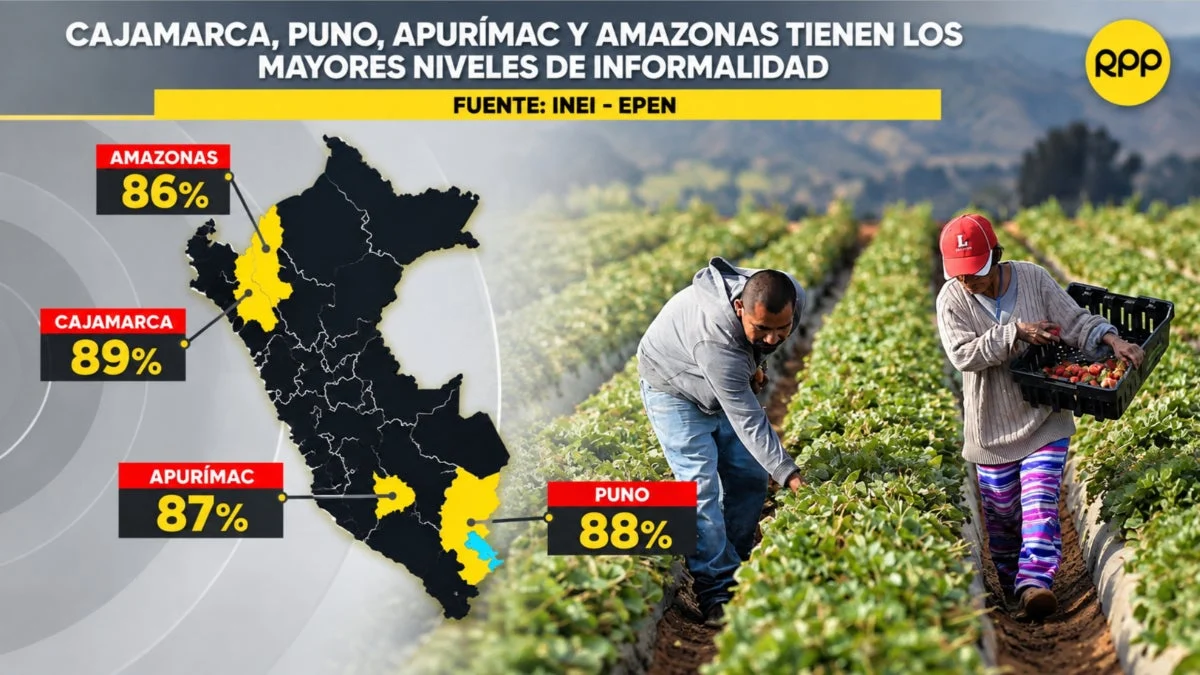
This massive, unorganized workforce—comprising 12 million individuals—acts as a drag on national productivity. The core of the problem lies in the disconnect between traditional economic activities and modern market requirements. In regions such as Cajamarca, Puno, Apurímac, and Amazonas, the situation is critical, with nine out of every 10 workers trapped in the informal sector. These areas remain heavily reliant on subsistence agriculture, a sector characterized by low margins, minimal technological integration, and high vulnerability to climate and market volatility.
Chronology of a Persistent Problem
To understand the current crisis, one must look at the historical trajectory of Peru’s economic development over the last two decades:
- Early 2000s: Peru experienced an "economic miracle," with high growth driven by commodity exports. However, this growth was largely concentrated in coastal urban centers, leaving rural highland and jungle regions behind.
- 2010s: The gap between the modernized, export-oriented coast and the traditional, subsistence-based interior widened. While Lima, Moquegua, and Arequipa saw significant private investment, infrastructure and education in the provinces failed to keep pace.
- 2020–2022 (The Pandemic Shock): The COVID-19 pandemic laid bare the fragility of the informal economy. Millions of workers without social safety nets were left defenseless, forcing the state to acknowledge the systemic failure of the labor model.
- 2025–2026: As the country heads toward the October 4th regional elections, the focus has shifted from national macroeconomic management to the role of subnational governments. There is a growing consensus that the "top-down" approach has failed, and that the next wave of formalization must be built from the regional level up.
Supporting Data: The Productivity Gap
The relationship between informality and productivity is best described as a "vicious cycle." Data provided by the Peruvian Institute of Economics (IPE) reveals that a formal worker in Peru produces, on average, six times more than an informal worker.
The Productivity Trap
Paola Herrera, an economist at the IPE, explains that this disparity is not accidental. "The high level of informality is deeply linked to the low productivity of labor and the enterprises within a region," Herrera notes. "There are structural gaps in education, technical capacity, and basic infrastructure. These gaps prevent workers from accessing high-quality employment, which in turn reinforces the informal nature of the economy."
![La informalidad laboral roza el 90% en cuatro regiones del Perú: ¿Qué les toca hacer a los próximos gobernadores? [INFORME]](https://f.rpp-noticias.io/2026/10/02/475947_1913991.jpg?width=860&quality=80)
In regions like Cajamarca, more than 50% of the population is engaged in traditional or subsistence agriculture. When a sector produces little, it generates little revenue. Without capital, these enterprises cannot afford the costs of formalization—such as taxes, payroll benefits, and safety standards—thereby remaining stuck in a cycle of poverty and invisibility.
Official Responses and Stakeholder Perspectives
The Agricultural Perspective: A Call for Rentability
The struggle for formalization is not just about labor laws; it is about the viability of production. Naximandro Rojas, president of the National Convention of Peruvian Agriculture (Conveagro), argues that the pressure to formalize must be accompanied by the creation of economic conditions that allow for profitability.
"It is nearly impossible to ask a small farmer to formalize when their production costs are skyrocketing," Rojas stated. "The price of diesel and fertilizers has increased, making it incredibly expensive to produce a hectare of corn, rice, or potatoes. When you add poor road conditions and a lack of cold-chain infrastructure, the small farmer is often left with no profit margin. Frequently, it is the intermediary who captures the value, while the producer is left struggling to survive."
The Role of Subnational Authorities
Both the IPE and industry leaders agree that the responsibility now lies with regional and local governments. Currently, these authorities manage over 60% of the public budget in their respective regions. However, there is a persistent failure in execution.
Rojas points out a specific administrative bottleneck: "The national government has transferred the responsibility for land titling and legal sanitation to regional governments. Yet, these regions lack the budget and the technical capacity to process these titles efficiently. Without a legal title, a farmer cannot access bank loans to invest in technology or irrigation. This is where regional authorities must step in and prioritize."
Implications: The Path Toward a Formal Economy
The road to formalization requires a multi-pronged approach that moves beyond punitive measures and focuses on enabling conditions.
![La informalidad laboral roza el 90% en cuatro regiones del Perú: ¿Qué les toca hacer a los próximos gobernadores? [INFORME]](https://f.rpp-noticias.io/2026/10/02/1913990befunky-collage-2026-10-02t105442030.jpg?width=860&quality=80)
1. Infrastructure as a Catalyst
For businesses to formalize, they require an environment that supports growth. This includes reliable access to electricity, water, sewage, and high-speed internet. These are the direct responsibilities of municipal and regional governments. When a local government fails to provide these services, they effectively force businesses to remain informal to survive.
2. Investing in Human Capital
The "education gap" mentioned by the IPE is a major hurdle. Modernizing the agricultural sector requires training farmers in new techniques, precision agriculture, and financial management. Regional governments have the mandate to foster these educational initiatives, yet they often prioritize short-term, visible public works over long-term human development.
3. The "Cost of Entry" Problem
Formalization should not be a tax on the poor. Policymakers must look at simplifying the regulatory framework for micro-enterprises. If the process of becoming a formal business is prohibitively expensive or bureaucratic, entrepreneurs will choose the shadow economy every time.
4. Electoral Accountability
As the October 4th elections approach, the electorate is demanding more than empty promises. The challenge for the next generation of regional governors is to bridge the gap between their regions’ potential and their current reality. This means:
- Prioritizing high-impact infrastructure: Focusing on roads and irrigation projects that connect farmers to wider markets.
- Aggressive legal sanitation: Expediting land titles to allow for capital accumulation.
- Strategic partnerships: Working with the private sector to bring investment into regions that have historically been neglected.
Conclusion: A Turning Point
The 86% informality rate in the most vulnerable regions is a reflection of a system that has, for too long, relied on the resilience of the poor rather than the strategic investment of the state. Peru is at a critical juncture. The upcoming regional elections are not just about choosing new leaders; they are about deciding whether the country will continue to tolerate a dual economy—one that is modern, productive, and formal, and another that is stagnant, informal, and marginalized.
If the new authorities can successfully leverage their budgets to address the fundamental barriers of infrastructure, education, and legal certainty, they may finally trigger the transition toward a more inclusive economy. The 12 million informal workers in Peru are not "choosing" to be outside the system; they are waiting for the system to provide them with the tools, the security, and the dignity of formal employment. The path forward is difficult, but the consequences of inaction are even more severe. The time for regional-led reform is now.