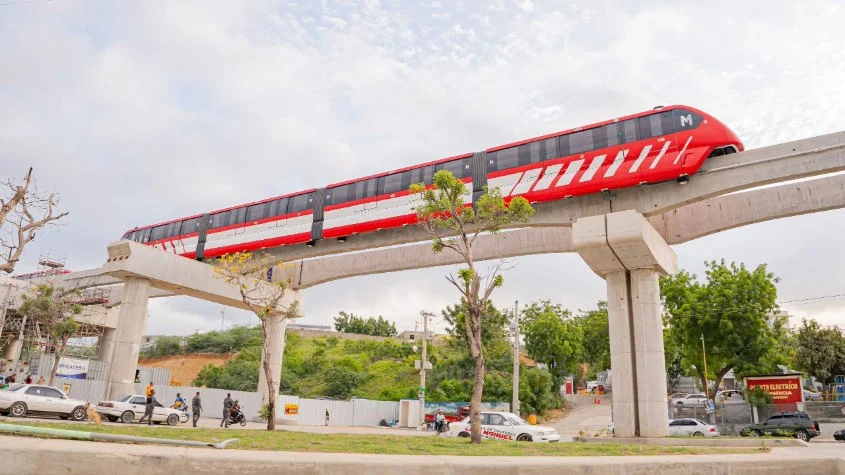
The Dominican Republic is on the cusp of a transformative leap in public transportation. In the heart of Santiago de los Caballeros, the nation’s second-largest city, the Monorail project has reached a monumental milestone, with 95% of its structural development now complete. As the government prepares to initiate the first train tests this October, the project stands as a flagship initiative designed to redefine urban mobility, economic efficiency, and environmental sustainability in the Cibao region.
The Dawn of a New Transit Era: Project Overview
The Santiago Monorail is not merely a construction project; it is the cornerstone of the Integrated Transport System (SIT) of Santiago. Spearheaded by the administration of President Luis Abinader, this massive infrastructure investment aims to modernize the city’s transit landscape, which has suffered from decades of underinvestment. By connecting the bustling industrial districts with the city’s residential core, the monorail is poised to serve as the primary artery for daily commuters.
The system is engineered to handle massive throughput, with projections indicating a capacity to transport 200,000 passengers per day, maintaining a frequency of up to 20,000 passengers per hour during peak times. This high-capacity transit solution is designed to alleviate the chronic traffic congestion that has long plagued Santiago’s metropolitan area, effectively linking the populous sector of Cienfuegos with the Beijing neighborhood while traversing key commercial hubs, universities, and industrial free trade zones.
Chronology and Construction Milestones
The trajectory of the Santiago Monorail has been one of consistent, accelerated progress. Over the past several years, the landscape of the city has been reshaped by the massive scale of the viaduct construction.
- Foundation Phase: The project necessitated an industrial-scale mobilization of materials, involving the installation of 4,252 deep-foundation piles, 662 complex foundations, 716 reinforced columns, and 658 structural capitals.
- Structural Assembly: The backbone of the system comprises 1,132 massive concrete beams. As of late 2026, the fabrication of these elements is complete, with final mounting scheduled for completion by mid-October.
- The Final Stretch: Current work is concentrated on the final structural challenges, specifically the Nibaje Bridge and the beam placement near the Pontificia Universidad Católica Madre y Maestra (PUCMM). These are the final pieces of a 13-kilometer elevated viaduct that will support the train’s movement.
- Electromechanical Integration: Having already achieved full electrical connectivity for the system, the project is moving into the final integration of signaling, telecom backups, and operational control centers.
According to official updates, the structural work is reaching its definitive close, allowing the transition toward system-wide testing.

Official Perspectives: Ensuring Operational Excellence
Jhael Isa Tavárez, the executive director of the Fideicomiso para el Desarrollo del Sistema de Transporte Masivo (FITRAM), has been the primary voice explaining the technical readiness of the network. During a recent edition of "La Agenda Semanal," Tavárez confirmed that the electrical infrastructure—the heart of the monorail’s operation—is fully operational.
"We have successfully completed the electrical connection," Tavárez stated. "From October onwards, we will begin the actual circulation of the trains to commence rigorous testing phases."
This testing phase is a critical safety and calibration period. Engineers will be monitoring everything from the performance of the rolling stock at speeds ranging from 60 to 80 kilometers per hour to the precision of the automated stop intervals, which are designed to occur every 90 seconds. The government has emphasized that the goal is not just a fast launch, but a safe, reliable, and world-class service.
Supporting Data: Infrastructure and Technical Specifications
The scope of the Santiago Monorail is defined by its impressive technical footprint. The 13-kilometer route is supported by 14 stations, each strategically located to maximize accessibility for the public. A dedicated depot-workshop (patio-taller) covering 3.2 kilometers of service tracks will serve as the hub for maintenance and fleet management.
A unique feature of this project is the engineering sensitivity shown toward the city’s heritage. In the Zona Monumental, near the historic Monument to the Heroes of the Restoration, the transit system descends into a 500-meter trench. This design choice was specifically implemented to preserve the aesthetic and historical integrity of the monument, ensuring that the elevated structure does not overshadow the city’s most important cultural landmark.

Furthermore, the system includes two major bridges crossing the Gurabo and Nibaje ravines, bridging not only geographical barriers but also socio-economic divides by providing faster access to jobs and education.
Integration: A Multimodal Ecosystem
The monorail does not operate in a vacuum. It is the central pillar of a broader, integrated mobility strategy. To ensure the project’s success, the Dominican government is simultaneously developing a multi-layered transit ecosystem:
- Teleférico de Santiago: The existing cable car system is being fully integrated with the monorail, creating a seamless transfer experience.
- Corridors and Buses: Seven specialized bus corridors are being established to feed into the monorail stations, expanding the reach of the system into the furthest suburbs of the metropolitan area.
- Public Bicycles: A bike-sharing initiative will be implemented to address the "last mile" problem, encouraging residents to cycle from stations to their final destinations.
This strategy intends to serve over 500,000 residents across the metropolitan area, including commuters traveling from neighboring provinces such as Puerto Plata, La Vega, and Espaillat. By creating a unified fare and route system, the government is lowering the barrier to entry for public transit and promoting a shift away from private vehicle reliance.
Implications: Economic and Social Transformation
The completion of the Santiago Monorail is expected to have a profound impact on the Cibao region’s economy. Santiago has long been a powerhouse of Dominican industry, and a modern, high-speed transport network will reduce the "time cost" of commuting, allowing for higher productivity and a better quality of life for the workforce.
Economic Revitalization
By linking industrial zones to residential sectors, businesses will see an increase in the accessibility of their labor force. Additionally, the construction phase alone has generated thousands of jobs, while the long-term maintenance and operation of the monorail will provide high-skilled employment opportunities for local engineers, technicians, and transit planners.

Environmental Impact
The transition from thousands of combustion-engine vehicles and aging public transport vans to an electric, high-capacity monorail will drastically reduce the city’s carbon footprint. This aligns with global sustainability trends and positions Santiago as a regional leader in green urban development.
Social Equity
Perhaps most importantly, the project represents a social bridge. By providing an efficient, safe, and dignified way to travel, the monorail reduces the disparity in transit quality between different social classes. It turns the long, grueling daily commute into a predictable, fast, and comfortable experience.
The Path Forward: From Testing to Public Service
As the calendar turns toward the final quarter of 2026, the public eye is fixed on the first dynamic tests of the trains. While the government has opted for a gradual rollout—starting with guided tours and familiarization visits before moving toward full commercial operation—the message is clear: the system is becoming a reality.
The final months of 2026 will be defined by the finishing touches on station facades, the installation of high-tech signage, and the refinement of the operational software that governs the fleet. With 95% of the heavy lifting behind them, the authorities are now entering the phase of fine-tuning, ensuring that when the doors finally open for the citizens of Santiago, the system operates with the precision of a world-class transit network.
The Santiago Monorail is more than a line on a map; it is a testament to the potential of strategic infrastructure. By integrating cutting-edge technology with thoughtful urban planning, the Dominican Republic is setting a new standard for Latin American cities, proving that even the most complex transit challenges can be solved with vision, investment, and a commitment to the public good.