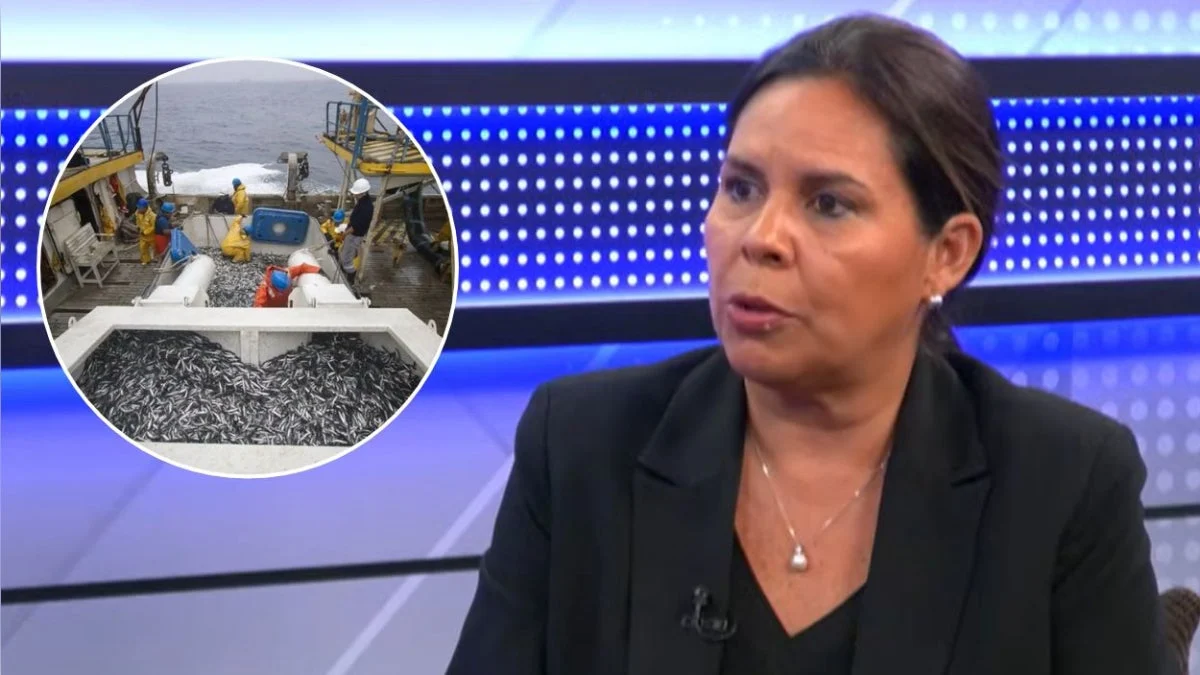
Peru, a global titan in the fishmeal and fish oil trade, is currently grappling with an industrial crisis of historic proportions. As the oceanic effects of the El Niño phenomenon intensify, the nation’s primary industrial engine—the anchoveta fishing sector—has been brought to a virtual standstill. Jéssica Luna, president of the National Fisheries Society (SNP), has issued a dire warning: the industry is facing a collapse that could span an entire year, threatening not only the stability of major corporations but the livelihoods of over a quarter-million people who rely on this sector for their daily bread.
The Anatomy of a Crisis: Why the Anchoveta Vanished
The crisis began in earnest in May, when the government was forced to suspend the first season of anchoveta fishing. The decision, while scientifically necessary to protect the biomass from the warming waters of the Pacific, effectively severed the industry’s primary revenue stream. Unlike previous climate-driven fluctuations, the current El Niño has created conditions so severe that the industry has been unable to pivot to alternative species.
Jéssica Luna has characterized the current situation as the "COVID of the fishing industry." Much like the global pandemic forced businesses into hibernation, the ecological disruption caused by rising sea temperatures has forced a complete halt in operations. Without the ability to harvest anchoveta, the backbone of Peru’s export economy, the entire value chain—from high-seas industrial trawlers to land-based processing plants—has ground to a halt.
Chronology of the Disruption: A Year of Uncertainty
To understand the gravity of the situation, one must look at the timeline of the collapse:
- May 2023: The Peruvian government officially suspends the first anchoveta fishing season, citing the presence of high numbers of juvenile fish and the encroaching warmth of the El Niño phenomenon.
- Mid-2023: As temperatures remain stubbornly high, the industry hopes for a rebound in the second half of the year. However, environmental monitoring confirms that the biomass remains too dispersed and deep for industrial extraction.
- Late 2023: The realization sets in that the second season will be largely non-existent or severely restricted. The SNP shifts its focus from "recovery" to "survival."
- 2024 Outlook: Projections suggest that the disruption will carry into the first half of 2024. If conditions do not normalize, even the first season of the coming year faces the risk of being delayed until May or June, effectively creating a 12-month vacuum of activity.
Supporting Data: Economic Impact and Labor Vulnerability
The economic ripples of this shutdown are massive. According to an extensive study commissioned by the SNP and conducted by Apoyo Consultoría, the contraction is set to slash the sector’s contribution to the national GDP by more than half—dropping from 2.1% to a meager 1%.
The Human Cost
The numbers behind the job losses are staggering. The SNP estimates that:
- 81,000 jobs are at immediate risk throughout 2023 due to the lack of fishing seasons.
- An additional 20,000 positions are projected to be lost by 2027 if the ripple effects of the current crisis cause a structural decline in industry capacity.
- In total, 250,000 individuals—including workers in maintenance, logistics, security, and transport—are currently staring at a future of extreme financial instability.
The impact is not limited to the giants of the industry. Thousands of small and medium-sized enterprises (SMEs) that provide essential support services—ranging from maritime equipment maintenance to catering and security—are currently unable to access credit. Without cash flow, many of these businesses are on the verge of bankruptcy, which would create a "permanent scar" on the industry’s ability to resume operations once the climate stabilizes.
Economic Contraction: The S/ 14 Billion Gap
The total economic impact is estimated at a loss of S/ 14 billion (soles). This figure represents the total loss of output, including the direct impact on fishing quotas and the indirect impact on the ancillary service sectors that support the coastal ports.
Luna emphasizes that this is not merely a seasonal dip. "A temporary climatic crisis cannot be allowed to become a structural crisis that destroys our productive capacity," she stated in an interview. The risk is that the technical expertise and the supply chain networks built over decades will dissolve, leaving the country unable to reclaim its market position when the Humboldt Current eventually returns to its productive equilibrium.
Official Responses and Proposed Solutions
While the SNP maintains an active channel of dialogue with the Ministry of Production, the industry argues that the government has yet to deploy the "oxygen" needed to keep the sector afloat.
The SNP Proposal
The fishing industry has presented a three-tiered proposal to the government, aimed specifically at cash flow management rather than handouts:
- Tax Deferral Programs: Allowing companies to push back tax obligations to a later date when income streams resume, preventing immediate liquidity crises.
- Credit Facilitation: Working with the state banking sector to provide grace periods for existing loans, recognizing that the lack of revenue is due to a state-mandated shutdown (force majeure).
- Social Protection Measures: Targeted support for workers who are facing long-term layoffs, ensuring that the human capital does not migrate to other sectors permanently.
Crucially, Luna is adamant: "We are not asking for debt forgiveness, nor are we asking for subsidies or bonuses. We are asking for the time and the flexibility to pay our obligations once we are back on our feet."
The Plight of Artisanal Fisheries
While the industrial sector dominates the headlines, the artisanal segment—often composed of families and small coastal cooperatives—is suffering even more acutely. The SNP reports that artisanal landings have plummeted by approximately 60%.
Alternative species, such as jurel and caballa, have migrated away from the warm, nutrient-poor waters, and while the government has authorized experimental fishing for samasa, these measures are insufficient to cover the income gap for artisanal families. In the northern regions, the situation is particularly dire, as the economic paralysis caused by the lack of fish coincides with the infrastructure damage caused by El Niño-related rainfall. Luna has expressed deep concern regarding the potential for social unrest, as these communities reach a breaking point between environmental disaster and economic starvation.
Implications for the Future
The situation in Peru serves as a cautionary tale for the global blue economy. As climate change increases the frequency and intensity of events like El Niño, the industries that rely on stable marine ecosystems are becoming increasingly volatile.
If the Peruvian government does not act to preserve the industrial and artisanal supply chains, the country risks a scenario where it loses its competitive advantage in the global market. The loss of infrastructure and skilled labor in the fishing sector could take years to rebuild.
"We are at a crossroads," Luna concluded. "The government must decide if it will allow this temporary natural phenomenon to turn into a permanent industrial recession. We have the expertise, the ships, and the processing plants—we only need the breathing room to survive the storm."
The coming months will be decisive. As the Pacific warms, the eyes of the global fishmeal industry remain fixed on Lima, waiting to see if the government will implement the fiscal bridge necessary to save one of the world’s most productive fishing sectors from a total, and perhaps irreversible, collapse.