In a significant political development that underscores the ongoing friction between the executive and legislative branches in Peru, the President of the Council of Ministers (PCM), Luis Galarreta, has signaled a strategic shift in the government’s approach to legislative reform. Following the Congress’s decision to grant only 27 of the 66 requested legislative faculties, the administration has announced a dual-track strategy: immediate implementation of authorized decrees and the introduction of independent legislative bills to address the rejected proposals.
This tension marks a critical juncture for the current administration, which had positioned its request for faculties as a vital instrument to tackle national emergencies, specifically focusing on citizen security and the looming threats posed by the El Niño climate phenomenon.
Main Facts: The Scope of the Dispute
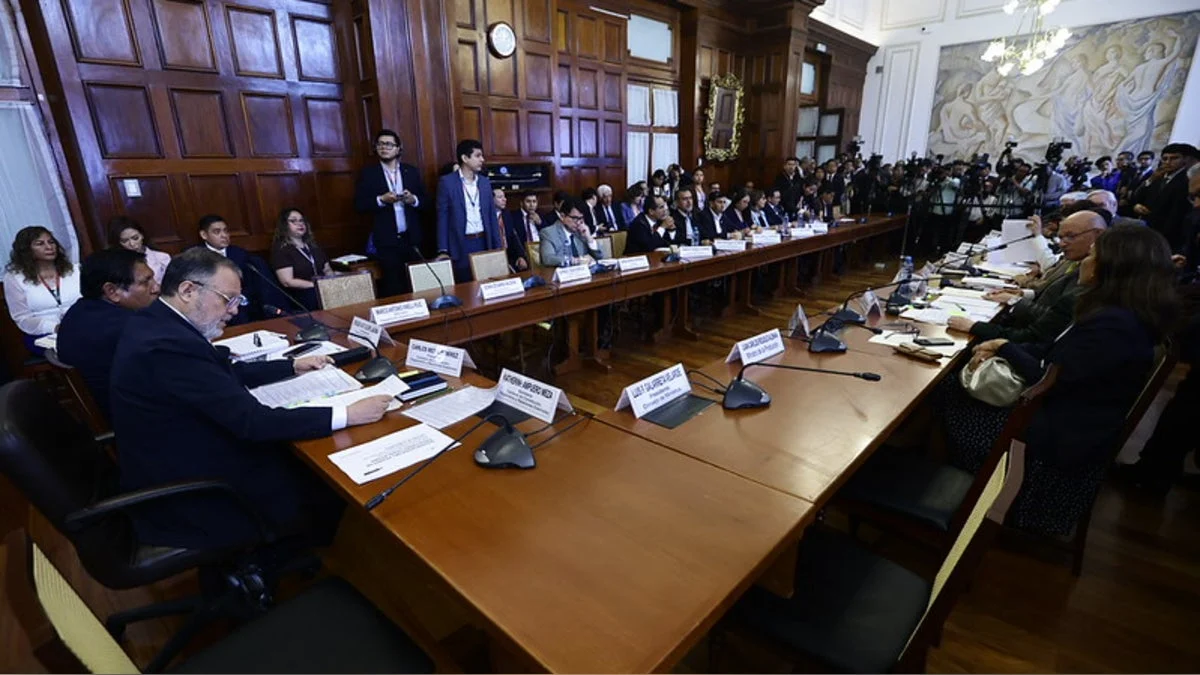
The core of the conflict lies in the legislative delegation process. The Executive branch, seeking to streamline governance, requested authorization to legislate on 66 specific areas. However, the Parliament—citing concerns over executive overreach and political disagreement—authorized only 27.
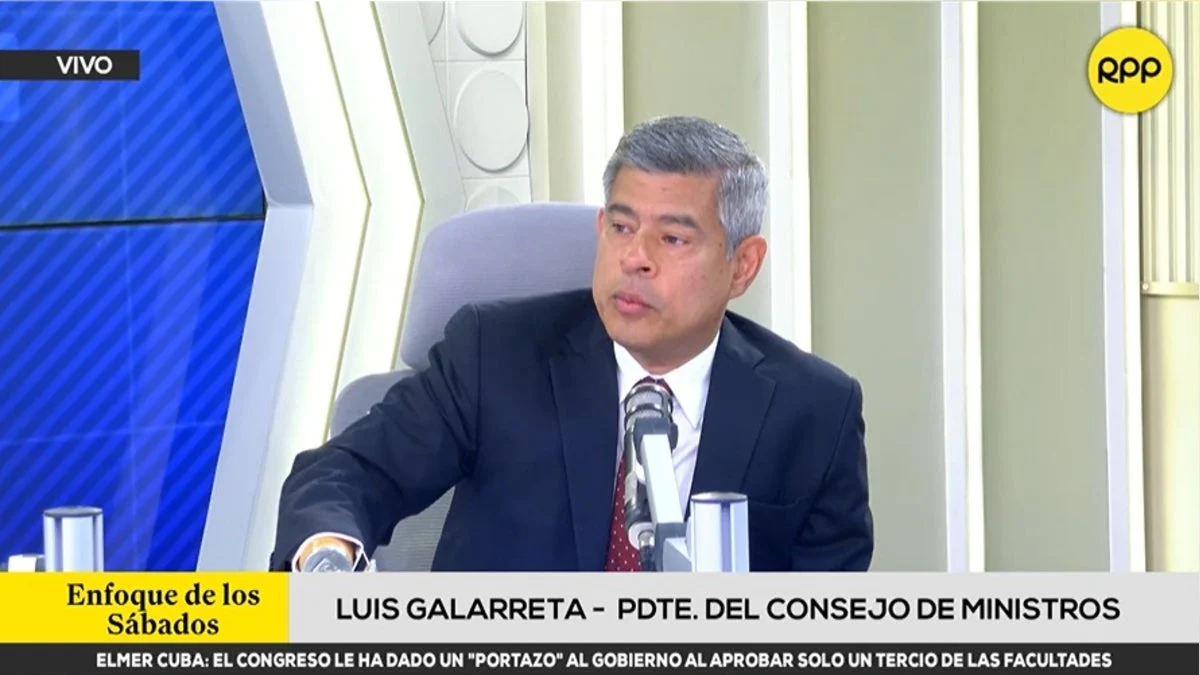
Prime Minister Galarreta, speaking on the program Enfoque de los Sábados, expressed clear dissatisfaction with the outcome. He characterized the legislative body’s response as a mix of political generosity from supportive factions and “meanness” from an obstructionist minority. Despite this, the Cabinet has committed to an aggressive timeline, promising the publication of the first set of decrees within 12 days, focusing primarily on security and climate disaster prevention.
The government maintains that its initial request was not an ultimatum, but rather a standard starting point for political negotiation. "Nobody can be so obtuse as to say: ‘Give me everything or I take nothing,’" Galarreta noted, emphasizing that the 66-item list was a baseline intended to be negotiated down to a functional 40 or 45 areas.
Chronology of the Legislative impasse
The process leading to this standoff has been characterized by weeks of intense back-and-forth between the executive and the legislative chambers:
- Initial Submission: The Cabinet formally presented the request for 66 legislative faculties, arguing that the urgency of the economic and security crises required the executive to have the power to enact immediate changes without the delays inherent in standard congressional deliberation.
- Congressional Scrutiny: During the committee phase, several parliamentary groups expressed skepticism. Critics within the opposition argued that the request was too broad and risked undermining the constitutional role of the legislature.
- The Vote: The final vote resulted in a truncated mandate. Only 27 faculties were approved, leaving the administration without authorization to address critical areas, such as specific tax relief for small and medium-sized enterprises (MYPES) and incentives for youth employment.
- The Post-Vote Rebuttal: Following the announcement of the results, high-ranking government officials, including Miguel Torres, criticized the “obstructive” nature of the voting process, labeling the outcome insufficient for the scale of the challenges facing the country.
- The Current Phase: Prime Minister Galarreta has now announced that the government will pivot to the standard legislative process, submitting individual bills to Congress for the items that were rejected during the faculties debate.
Supporting Data: Why the Rejected Measures Matter
The implications of the rejected faculties extend beyond political point-scoring; they touch upon the structural stability of the Peruvian economy and social peace.
The MYPES and the Climate Crisis
One of the most contentious points of the rejection involves tax relief for Micro and Small Enterprises (MYPES). These businesses form the backbone of the Peruvian economy but are highly vulnerable to the climate-driven volatility associated with El Niño. The government’s rejected proposal sought to provide flexible tax windows to prevent mass bankruptcies in the event of extreme weather. Without these special powers, these measures must now navigate the slow, often gridlocked committee stages of the legislature.
Youth Employment Initiatives
The administration also aimed to implement tax incentives for companies that prioritize the hiring of young, first-time employees. With youth unemployment rates remaining a persistent structural issue in Peru, the government argued that a rapid decree was necessary to stimulate hiring. The legislature’s refusal to grant this faculty forces the government to present this as a stand-alone bill, delaying its implementation by months.
Official Responses and Political Rhetoric
The discourse surrounding this impasse reveals a deeply polarized political landscape. Prime Minister Galarreta’s comments reflect a government that feels besieged by partisan interests rather than governed by national priorities.
"There has been meanness from a minority sector and generosity from another," Galarreta stated. His words underscore the government’s attempt to frame the opposition not as a legitimate check on power, but as a group actively working against the interests of the public. By publicly acknowledging the "generosity" of certain parties, the PCM is clearly attempting to fracture the opposition, incentivizing those who have been more cooperative while isolating the "obstructionists."
Conversely, members of the opposition have defended their stance by asserting that the government’s request was an attempt to bypass the legislative branch entirely. They argue that the 27 faculties granted are more than sufficient for the government to act if it possesses a clear and coherent strategy, suggesting that the "emergency" narrative is being used to mask a lack of technical preparedness.
Implications: A New Strategy for Governance
The decision by the government to bypass the lack of faculties by using "regular channels"—meaning the introduction of individual bills—signals a change in the executive’s tactical approach.
1. Shift to Legislative Proactivity
By opting to submit projects of law rather than relying solely on the executive decree mechanism, the government is essentially betting that it can win the public opinion battle. By forcing the Congress to vote on high-profile issues like "youth employment" or "disaster relief" in the open, the administration hopes to put pressure on the opposition to pass these measures or face the electoral consequences of blocking popular legislation.
2. The 12-Day Deadline
The immediate focus is on the 27 faculties that were granted. The 12-day window for the first set of decrees is a display of political strength. The government is signaling to the public that it remains in control and that it can produce tangible results despite the "meanness" of its critics. This is a crucial move to maintain public confidence as the threat of El Niño looms large.
3. Long-term Political Friction
This situation is unlikely to resolve quickly. As the government continues to use the legislative process to challenge the Congress to vote on rejected items, the intensity of the political debate is likely to rise. The administration’s promise that "everything that was not given… we will still solve" serves as a pledge to the electorate, but it also increases the stakes for the Executive. If these bills fail in Congress, the government will have no further excuses, placing their credibility entirely on their ability to negotiate and persuade.
4. Constitutional Governance
Ultimately, this crisis tests the boundaries of the Peruvian constitutional framework. The power of the legislature to deny faculties is a fundamental check on the executive, but the executive’s power to propose laws is equally foundational. The current impasse suggests a system where both branches are testing the limits of their authority, which may lead to a more rigid, polarized environment in the coming months.
Conclusion
The standoff between the PCM and the Congress represents more than a disagreement over procedural powers; it is a battle for the mandate of governance. Prime Minister Galarreta’s pledge to find solutions despite legislative obstruction serves as both a roadmap for the next few months and a warning to the political opposition. As the government prepares to release its first wave of decrees, the nation will be watching closely to see if this strategy of "doing it the hard way" will provide the stability and growth the administration has promised, or if it will simply lead to further institutional gridlock.