The landscape of terrestrial freight transport in Peru is undergoing a profound transformation. As the nation strengthens its position as a regional logistics hub, the demand for high-performance heavy-duty vehicles has reached unprecedented levels. This shift is not merely quantitative—driven by surging cargo volumes—but qualitative, as logistics operators prioritize efficiency, safety, and the total cost of ownership (TCO) over traditional procurement metrics.
In this context, the partnership between the Chinese manufacturing giant Foton and the local distributor Tracto Camiones USA has taken center stage. With the recent launch of the "Galaxus" tractor-truck model, the industry is signaling a departure from standard machinery toward sophisticated, tech-integrated assets designed for the unique geographic challenges of the Peruvian territory.
Main Facts: A Market in Full Acceleration
The Peruvian logistics sector is currently enjoying a period of robust expansion. According to data provided by Mordor Intelligence, the market for terrestrial freight transport was valued at US$ 8.62 billion in 2025. Projections indicate a steady upward trajectory, with the market expected to reach US$ 9.17 billion by the end of 2026. Looking toward the horizon, analysts anticipate a compound annual growth rate (CAGR) of 5.37%, potentially pushing the market valuation to US$ 11.91 billion by 2031.
This economic momentum is mirrored by a record-breaking surge in vehicle sales. Data from the Peruvian Automotive Association (AAP) confirms that between January and June of this year, a total of 13,478 trucks and tractor-trucks were sold—a staggering 42.7% increase compared to the same period in 2025. This represents the highest semestral volume ever recorded in the country’s history, underscoring the urgency with which companies are expanding and renewing their fleets to meet infrastructure and commercial demands.
Chronology of Market Transformation
The current state of the industry is the result of several years of strategic evolution:

- 2023–2024 (Foundation Phase): Following the post-pandemic recovery, the focus shifted toward infrastructure connectivity. Major port developments and road improvement projects began to incentivize companies to upgrade their older fleets.
- Early 2025 (Expansion Phase): The economic rebound led to increased activity in the mining and retail sectors, creating a "bottleneck" where existing fleet capacities were unable to keep pace with demand.
- Mid-2025 (Technological Shift): Logistics firms began moving away from "lowest-price" procurement, favoring units with better fuel efficiency and advanced telematics.
- Late 2025 – Present (The Galaxus Era): With the introduction of the Foton Galaxus, the market has entered a phase where "smart logistics" is the benchmark. The focus has shifted toward driver comfort, safety systems, and long-term durability under extreme conditions, such as high-altitude Andean routes.
Supporting Data: Investment and Market Segmentation
The investment required to participate in this high-growth market is significant. Depending on the configuration, power, and level of technological sophistication, the cost of a single unit ranges from US$ 50,000 for entry-level models to upwards of US$ 200,000 for specialized heavy-haul configurations.
Market Drivers by Sector
The demand for heavy-duty vehicles is not uniform; it is heavily dictated by the specific needs of two primary economic engines:
- Mining: This sector requires vehicles capable of handling extreme payloads and navigating treacherous, steep, and unpaved terrain. The priority here is mechanical reliability and high torque performance.
- Retail and Distribution: This segment emphasizes high-frequency logistics. These companies require units that can operate reliably across the country with minimal downtime, prioritizing fuel economy and digital fleet management systems to optimize distribution routes.
Tracto Camiones USA, currently holding a 14% market share, has set an ambitious target to commercialize 3,600 units by the end of this year. This goal reflects both the company’s confidence in its new product line and the broader market’s willingness to invest in higher-quality assets.
Official Responses: The Strategic Vision
Jorge Martínez, General Manager of Tracto Camiones USA, has been a vocal proponent of the industry’s shift toward total cost optimization. Reflecting on the company’s 30-year history in the Peruvian market, Martínez emphasizes that the era of simply adding more trucks to a fleet is over.
"Today, it is no longer just about incorporating more vehicles," Martínez stated during the unveiling of the Galaxus. "It is about having units that allow companies to transport more, operate with greater efficiency, integrate technology, improve safety, and optimize costs. In a scenario where every trip and every kilometer impacts the bottom line, selecting a reliable, efficient vehicle is a strategic business decision."

Martínez highlights that modern operators are now evaluating a comprehensive "scorecard" before purchasing. This includes:
- Total Cost of Ownership (TCO): Long-term maintenance vs. initial purchase price.
- Safety and Ergonomics: Recognizing that the driver is the most important component of the operation.
- After-sales Support: The importance of a robust network of spare parts and technical service, which is critical in a country with Peru’s complex geography.
Implications: The New Standard for Logistics
The introduction of the Foton Galaxus is emblematic of how foreign manufacturers and local distributors are collaborating to address local pain points. The Galaxus was developed specifically to address the challenges of the Peruvian landscape, which is defined by drastic changes in altitude, temperature, and road quality.
The Role of the Driver
One of the most critical implications of this new market trend is the focus on the human element. The Galaxus features a redesigned cabin that emphasizes ergonomics. This is not merely a luxury; it is a safety and productivity necessity. By reducing driver fatigue, companies report fewer accidents, better maintenance of the vehicle, and higher overall operational consistency.
Technological Integration
As the sector becomes more competitive, the adoption of technology—such as real-time tracking, fuel consumption monitoring, and predictive maintenance software—has become standard. The Galaxus represents a bridge between "traditional trucking" and "connected logistics." This digital integration allows companies to transform their fleets from simple transportation assets into data-generating hubs that inform business decisions.
Economic Impact
The broader implication is that the efficiency of the trucking industry directly affects the cost of goods for the average Peruvian consumer. By reducing the cost per kilometer through more efficient, durable, and technologically advanced trucks, logistics companies can stabilize the supply chain, even when faced with rising fuel costs or economic volatility.

Future Outlook: A Sustainable Path Forward
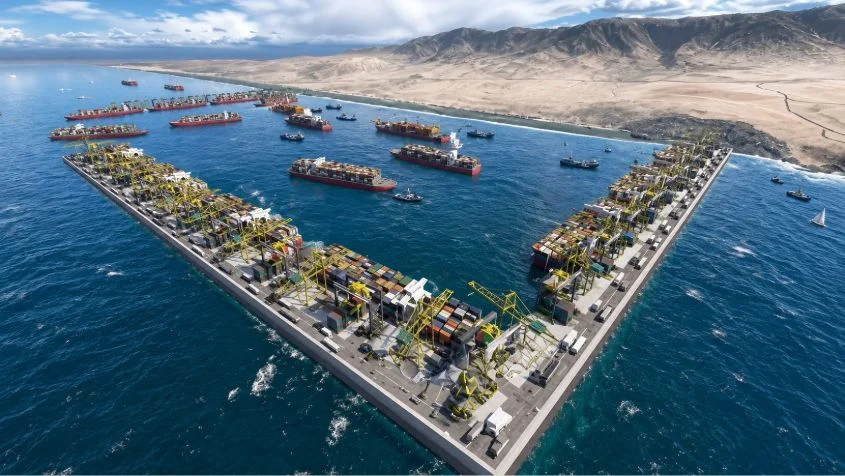
Looking ahead, the market is poised for continued growth. With the approval of large-scale infrastructure projects—such as the Master Plan for the Port of Corio, which involves investments exceeding US$ 800 million—the demand for heavy-duty transport is expected to remain high for the foreseeable future.
For companies like Tracto Camiones USA, the strategy is clear: provide a holistic solution that goes beyond the vehicle itself. By offering financing, technical support, and state-of-the-art machinery, they are positioning themselves as an essential partner in Peru’s economic development.
In conclusion, the evolution of the Peruvian heavy-duty transport market from a volume-based industry to a performance-based one is a positive indicator of the nation’s economic maturation. The arrival of the Galaxus is just the beginning of a cycle where technology, safety, and efficiency define the success of the logistics sector, ensuring that as the country’s economy grows, its infrastructure remains resilient and capable of meeting the demands of a globalized world.