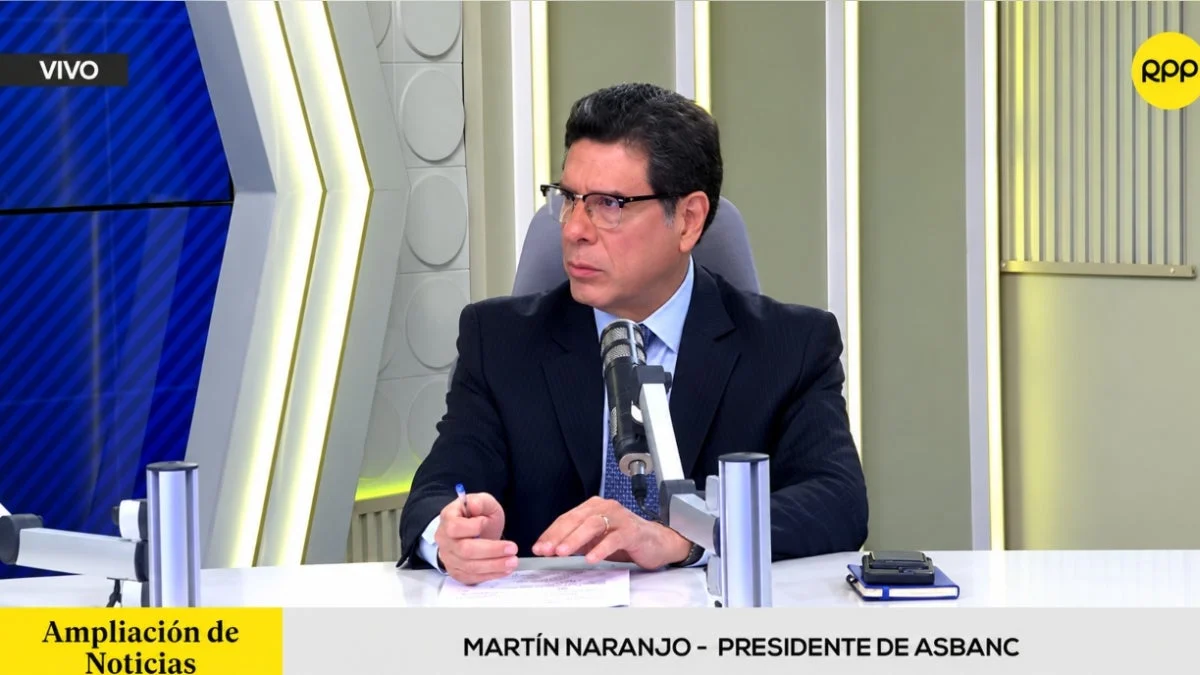
In a landscape defined by both climatic uncertainty and rapid technological transformation, the Peruvian financial system finds itself at a critical juncture. Martín Naranjo, president of the Association of Banks of Peru (Asbanc), recently provided a comprehensive overview of the sector’s health, asserting that the nation’s banking infrastructure is significantly more robust today than in previous decades. As the country braces for the potential economic impacts of the El Niño phenomenon, the integration of digital finance and government-led inclusivity initiatives are reshaping how capital is accessed and managed across the Andean nation.
The Pillars of Financial Stability: Resilience Against El Niño
The potential arrival of the El Niño climate phenomenon has long been a source of anxiety for Peru’s economy, given its history of disrupting agriculture, infrastructure, and supply chains. However, according to Asbanc, the banking sector has evolved into a formidable bulwark against such shocks.
Superior Capitalization and Liquidity
During a recent interview on RPP’s Ampliación de Noticias, Martín Naranjo emphasized that the current Peruvian financial system is "substantially better prepared" than it was during the climate crises of 1983 or 1998. The key difference lies in the balance sheets of the nation’s banking institutions.
Today, banks hold significantly higher levels of capital, providing a greater buffer to absorb potential loan losses caused by environmental disruptions. Furthermore, liquidity positions—the amount of readily available cash and liquid assets—are more expansive. This dual strength ensures that even if credit quality temporarily declines due to an economic downturn, the institutions themselves remain solvent and operational.
Access to Global Markets
Naranjo highlighted that the Peruvian banking sector is no longer an isolated ecosystem. The presence of global financial giants from Spain, the United States, Canada, and China has fostered a highly competitive and interconnected environment. This integration grants Peruvian banks access to international capital markets and global liquidity pools, providing a safety net that local institutions lacked in the late 20th century. By benchmarking themselves against world-class standards, Peruvian banks have adopted rigorous risk-management practices that align with global best practices.
A Chronology of Economic Preparedness
To understand the current state of the banking sector, it is necessary to examine the evolution of the Peruvian economy through the lens of financial regulation and institutional maturation.
- The Late 20th Century (1983–1999): During the El Niño events of the 1980s and late 90s, the Peruvian financial system was considerably more fragile. The country was navigating a transition from periods of high inflation and political instability. The 1998–1999 crisis was compounded by broader global financial volatility, which exposed the lack of capital buffers in many domestic institutions.
- The Regulatory Shift (2000s–2010s): Following the turn of the century, the Superintendency of Banking, Insurance, and Private Pension Funds (SBS) implemented stricter capital requirements and oversight. These measures were designed to ensure that banks could survive prolonged periods of economic stress.
- The Digital Acceleration (2020–Present): The COVID-19 pandemic acted as a catalyst for digital adoption. Forced by physical restrictions, the banking sector fast-tracked the implementation of mobile wallets and digital payment systems. This shift has not only increased operational efficiency but has also created a new data-rich environment for risk assessment.
- The Current Era (2023–2024): With the threat of a modern-day El Niño, the sector is leveraging this improved digital infrastructure to identify vulnerable clients early and provide targeted financial relief, a capability that was nonexistent during previous climate crises.
Digital Wallets: The New Frontier of Financial Inclusion
One of the most significant breakthroughs in the Peruvian economy has been the explosive growth of digital wallets. Asbanc reports that 17 million Peruvians now actively use these tools—a figure that represents approximately 83% of the country’s Economically Active Population (PEA).
Efficiency and Data-Driven Lending
The impact of digital wallets extends far beyond simple transaction convenience. The high frequency of use—averaging over 700 operations per person annually—generates a vast repository of transactional data. Naranjo explained that this data is revolutionizing the way banks evaluate creditworthiness.
Historically, the process of assessing a potential borrower’s capacity and willingness to pay relied on static, manual data points: interviews, physical visits, and limited documentation. This traditional approach often excluded the informal sector, where most Peruvians operate. Today, digital footprints allow banks to observe real-time cash flow patterns. This "transactional intelligence" provides a more accurate reflection of an individual’s financial behavior, allowing lenders to extend credit to those who previously lacked a formal credit history.
Bridging the Gap
While digital wallets are a powerful tool, Naranjo cautioned that they are not a "silver bullet." The adoption of these technologies does not automatically guarantee loan approval; rather, it provides a more nuanced lens through which banks can apply their existing, rigorous credit evaluation criteria. The goal is to lower the barrier to entry, transforming the informal economy into a participant in the formal financial system.
Government Initiatives and the High-Level Commission
In September, the Peruvian government announced the formation of a "High-Level Commission for Inclusion and Access to Financing." This initiative aims to address structural bottlenecks that prevent households and small businesses from accessing credit, while simultaneously strengthening the capital markets.
Initial Coordination and Stakeholder Alignment
According to Naranjo, the commission is currently in its nascent stage, focusing on information gathering and inter-institutional coordination. The committee, which has a nine-month mandate, is currently holding high-level meetings with the SBS, the Superintendency of the Securities Market (SMV), and the Development Finance Corporation (COFIDE).
The commission’s approach is collaborative, drawing on technical expertise from international organizations, including:
- The World Bank
- The Inter-American Development Bank (BID)
- The Development Bank of Latin America (CAF)
The objective of these preliminary meetings is to identify "market failures"—specific points in the economic chain where credit flow is restricted—and prioritize interventions that can be executed rapidly. By aligning local regulatory bodies with international financial experts, the commission hopes to foster a regulatory environment that encourages innovation while maintaining the stability that the banking sector has worked so hard to achieve.
Implications for the Future of the Peruvian Economy
The combination of a well-capitalized banking sector, a digital-first payment ecosystem, and a coordinated government push for inclusion signals a maturing financial landscape.
A More Resilient Consumer Base
The movement toward digital finance has created a "virtuous cycle." As more citizens adopt digital wallets, the cost of financial services drops, and the speed of transaction increases. This efficiency allows small businesses to manage their cash flow better, making them more resilient to the economic shocks often brought by events like El Niño.
The Role of Financial Literacy
While the technological infrastructure is in place, Naranjo and other industry leaders emphasize that financial education remains a critical component. For the millions of new digital users, understanding the nuances of debt, interest rates, and savings is essential to ensuring that increased access to credit translates into long-term prosperity rather than unsustainable debt burdens.
Conclusion
Peru’s banking sector stands at a point of unprecedented strength. By learning from the failures of the past and embracing the digital tools of the present, institutions like Asbanc are ensuring that the national economy is not merely surviving, but evolving. As the High-Level Commission moves forward with its mandate, the focus will remain on refining these tools to ensure that the benefits of financial stability reach every segment of the Peruvian population. The resilience demonstrated by the banks is not just a triumph of balance sheets, but a testament to the country’s progress in building a more inclusive and technologically capable financial future.