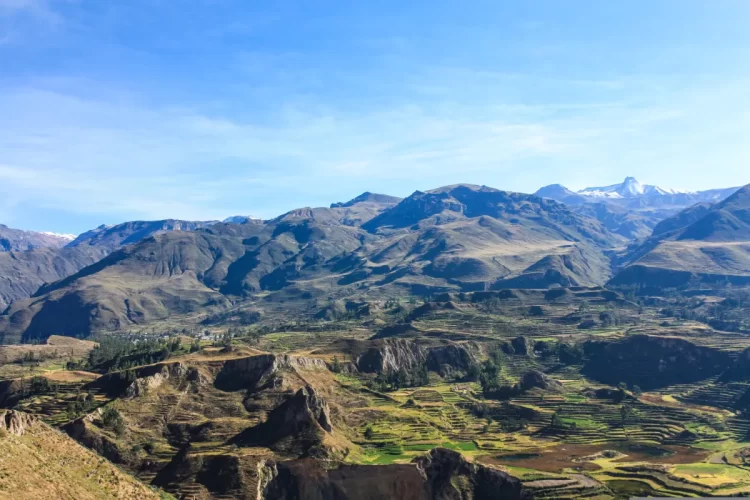
In a groundbreaking convergence of high-energy physics and Andean geography, an international consortium of 26 institutions spanning nine countries has unveiled a bold initiative: to transform the majestic Colca Canyon in Arequipa, Peru, into a world-class laboratory for neutrino detection. The project, known as TAMBO (Tau Air-shower Mountain-Based Observatory), aims to harness the unique topography of the Andes to capture "ghost particles"—neutrinos—that hold the keys to understanding the most violent and energetic phenomena in the cosmos.
This ambitious scientific endeavor has recently gained global attention following the publication of its foundational proposal in Nature Astronomy, one of the most prestigious scientific journals in the world. By positioning Peru at the center of international astrophysics, TAMBO represents a significant leap forward in both scientific research and regional development.
Main Facts: What is TAMBO?
At its core, TAMBO is designed to overcome the immense challenges associated with detecting high-energy neutrinos. Neutrinos are subatomic particles that possess almost no mass and travel through the universe at nearly the speed of light. Because they rarely interact with matter, they pass through planets, stars, and galaxies unimpeded, making them incredibly difficult to detect. However, when these particles reach the highest energy levels, they originate from cataclysmic cosmic events—such as black hole mergers or supermassive star collapses—carrying pristine information about the origin of the universe.

The Natural Telescope
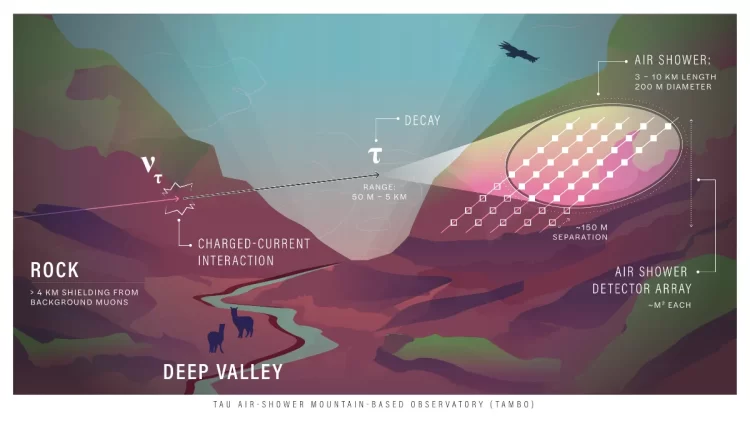
The innovation behind TAMBO lies in its architectural philosophy: it treats the mountains themselves as an integral component of the telescope. Unlike traditional detectors that require building massive, expensive underground vats of water or ice (such as the IceCube project at the South Pole), TAMBO utilizes the colossal mass of the Colca Canyon’s walls as a target.
When a high-energy "tau neutrino" strikes the dense rock of the canyon wall, it interacts with the material and creates a cascade of secondary particles. These particles emerge into the valley, where an array of approximately 5,000 sensitive detectors will be strategically placed on the opposite slope. The canyon essentially acts as a gargantuan, naturally occurring lens, allowing scientists to track these rare events with unprecedented precision and at a fraction of the cost of traditional observatories.
Chronology of the Initiative
The journey of TAMBO is a testament to the power of international scientific diplomacy and interdisciplinary collaboration.
- Mid-2025: The Universidad del Pacífico (UP) officially joins the international consortium. Their involvement marks a shift from purely hard-science participation to an interdisciplinary model that includes economic analysis, social impact assessment, and digital humanities.
- Late 2025 – Early 2026: The scientific team refines the technical proposal for the observatory, finalizing the conceptual model of using the Colca Canyon as a mountain-based target.
- August 2026: The project receives a major milestone boost with the publication of its findings in Nature Astronomy, validating the methodology and placing TAMBO on the map of "frontier science."
- Late 2026 – 2027: The project enters its pilot phase with the development and construction of TAMBITO. This prototype serves as a testing ground for the sensor technology and data acquisition systems required for the full-scale array.
- 2028 (Projected): The target date for the commencement of the full-scale observatory construction, assuming successful data validation from the prototype phase.
Supporting Data: Why the Colca Canyon?
The selection of the Colca Canyon is not merely an aesthetic choice; it is a calculated geological decision based on the principles of particle physics.
- Topographic Efficiency: The canyon’s specific depth and the steep, parallel orientation of its walls provide the ideal "target-to-detector" geometry. The distance between the canyon walls is optimal for catching the secondary particle showers generated by neutrino interactions.
- Cost-Effectiveness: By leveraging natural rock formations, the project significantly reduces the "civil engineering" footprint. This makes the project highly attractive for funding bodies and ensures that limited scientific budgets are spent on high-tech instrumentation rather than massive excavation or cooling infrastructure.
- Environmental Safety: The detection process is entirely passive. It involves no radiation, no chemical emissions, and no disruption to the physical landscape. It is a non-invasive, eco-friendly method of exploring the universe, ensuring that the local ecosystem and the communities living in the valley remain undisturbed.
Official Responses and Strategic Vision
The leadership team behind TAMBO emphasizes that the project is as much about social progress as it is about astrophysics.
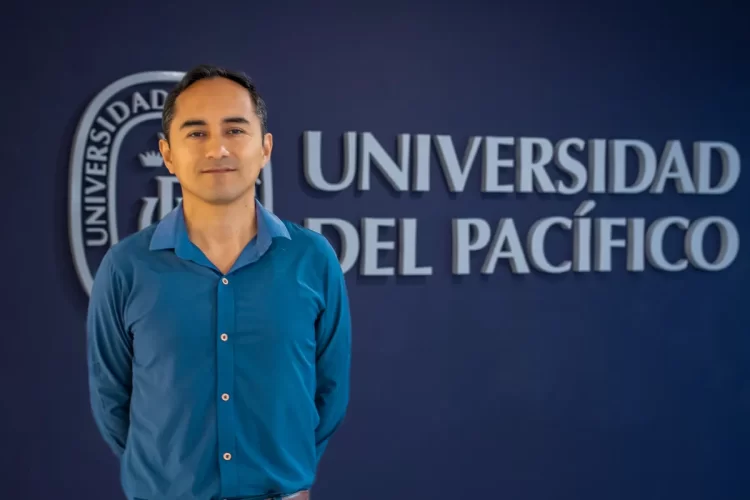
Saneli Carbajal, the lead investigator for the initiative at the Universidad del Pacífico, notes: "The natural advantages offered by the geography of the Peruvian Andes drastically reduce infrastructure costs compared to other projects, making TAMBO a highly efficient alternative for the future of neutrino astronomy. We are not just building a detector; we are creating a model for how developing nations can lead in big science."
The multidisciplinary nature of the team is what sets TAMBO apart. Luciano Stucchi, Dean of the Faculty of Engineering at the Universidad del Pacífico, explains that the project is structured to benefit the local population as much as the global scientific community:
"Our participation is not limited to physics. We are developing a cost-benefit methodology for scientific infrastructure in developing nations. We want to ensure that this project leaves a legacy of development, territorial planning, and social inclusion in the Arequipa region."
Bridging the Gap: Digital Humanities
One of the most unique aspects of the project is the involvement of the University’s Digital Humanities department. Recognizing that the complexities of neutrino physics can be abstract, the team is creating immersive experiences and augmented reality (AR) tools. These tools are designed to translate complex scientific data into accessible, visual narratives, ensuring that the local communities and schools in Arequipa can engage with and understand the science occurring in their own backyard.
Broader Implications
The implications of TAMBO for Peru and the global scientific community are profound.
Strengthening STEM in Peru
TAMBO is positioned to become a catalyst for STEM (Science, Technology, Engineering, and Mathematics) education in Peru. By establishing a world-class research hub in the region, the project aims to create pathways for local students to pursue careers in physics and engineering. The collaboration with local universities in Arequipa is expected to strengthen the academic infrastructure of the region, providing students with access to global research networks.
Global Scientific Leadership
For decades, high-energy physics has been the domain of the Global North. TAMBO challenges this status quo. By providing a site that is geologically superior to many northern locations for this specific type of research, Peru is transforming from a passive observer of international science into an active, indispensable partner. The Nature Astronomy publication is a clear signal that the international community recognizes the scientific rigor and the strategic value of the Peruvian proposal.

Future Perspectives
As the team prepares to deploy the TAMBITO prototype, the focus remains on reliability and scalability. The data collected by the prototype will be crucial in calibrating the 5,000 sensors planned for the final observatory. If successful, TAMBO will not only shed light on the darkest, most distant corners of the universe—where neutrinos are born in the hearts of exploding stars—but it will also illuminate a path for how international scientific collaboration can foster sustainable development and intellectual growth in the Andes.
In the grand scope of history, the Colca Canyon has been a site of geological wonder and cultural heritage. With the advancement of the TAMBO project, it is poised to become a monument to human curiosity, proving that even the most elusive particles in the universe can be captured by looking up from the depths of our own mountains.
About the Project:
TAMBO is an international collaboration involving 26 institutions across nine countries. It is currently in the pilot phase, with research led by the Universidad del Pacífico. For more information on the technological specifications and the scientific impact of this study, refer to the recent publication in Nature Astronomy.