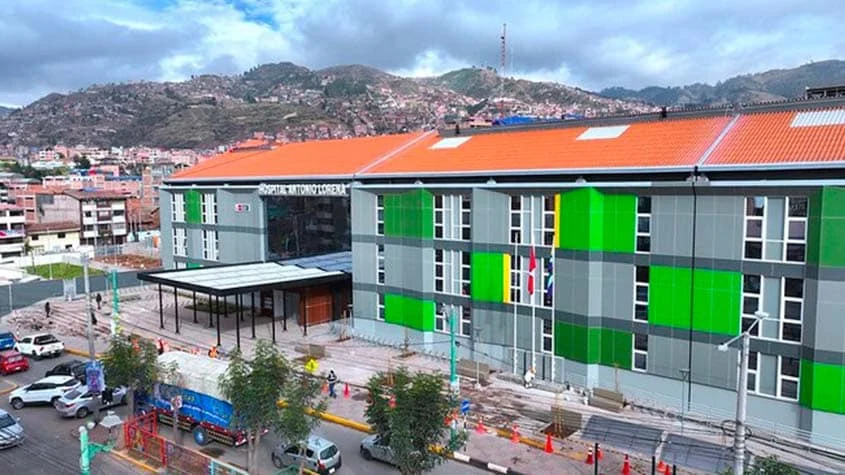
After a grueling 14-year period marked by administrative hurdles, legal disputes, and the hopes of an entire region, the Antonio Lorena Hospital in Cusco is finally preparing to open its doors. The Ministry of Health (Minsa) has officially confirmed that the high-complexity medical facility will be transferred to the Regional Government of Cusco this November, marking the end of a long-standing infrastructure saga that had become a symbol of stalled public works in Peru.
The announcement came following a high-level coordination meeting between the Minister of Health, Luis Dyer, and the Governor of Cusco, Werner Salcedo. Supported by technical experts from the National Program for Health Investment (Pronis), the authorities successfully cleared the path for the handover, ensuring that the facility—categorized as a Level III-1 hospital—is ready to serve the population of the Imperial City and its surrounding provinces.
The Long Road: A Chronology of Delays
To understand the significance of this November milestone, one must look back at the arduous history of the project. The Antonio Lorena Hospital was conceived as a cornerstone of healthcare in Southern Peru, intended to provide advanced specialized services that were previously unavailable in the region.
However, the path to completion was fraught with obstacles. Following its initial groundbreaking, the project faced multiple interruptions, including contract rescissions with construction firms, litigation over performance bonds, and technical disagreements regarding the structural integrity of the facility. For over a decade, the site remained a skeleton of what it was promised to be, frustrating medical professionals and citizens alike who were forced to seek treatment in overcrowded or under-equipped facilities.

By 2024 and 2025, efforts to accelerate the completion intensified. The intervention of central government authorities, specifically the oversight provided by Pronis, proved decisive in navigating the complex regulatory landscape. The decision to prioritize the medical service delivery over the ongoing legal disputes with contractors has been widely lauded by local community leaders.
Technical Specifications: A State-of-the-Art Medical Hub
The new Antonio Lorena Hospital is not merely a replacement for an old clinic; it represents a monumental leap in the quality of healthcare technology available in Cusco. Covering an expansive footprint of over 45,000 square meters, the hospital is a massive architectural achievement spread across six distinct levels.
The facility’s technical capabilities place it at the forefront of Peruvian medicine:
- Imaging and Diagnostics: The hospital boasts a cutting-edge 320-slice CT scanner, high-resolution magnetic resonance imaging (MRI) units, and a hybrid ceiling-mounted angiograph, enabling complex cardiovascular and neurological interventions.
- Oncological Care: A dedicated oncology wing features an advanced linear accelerator for radiation therapy and specialized braquiterapy services, which will significantly reduce the need for patients to travel to Lima for cancer treatment.
- Surgical and Critical Care: The hospital includes a state-of-the-art surgical center with multifuncional suites, an obstetric unit, and comprehensive Intensive Care Units (ICU) and Intermediate Care units designed to handle critical emergencies.
- Operational Capacity: With over 500 beds, the hospital is engineered to serve as a high-complexity referral center, capable of managing complex pathologies that were previously beyond the scope of regional medical facilities.
Official Responses and Administrative Guarantees
During the recent press conference held in the wake of the meeting between Minister Dyer and Governor Salcedo, the focus remained on the logistical readiness of the hospital. Minister Dyer addressed the elephant in the room: the ongoing financial and legal disputes with former contractors.

"The government is firm in its stance," Minister Dyer stated. "Any existing disputes, claims, or economic differences with the construction companies will be addressed through the appropriate arbitral and legal channels. These proceedings will not be allowed to hold the hospital’s opening hostage. Our priority is the health of the people of Cusco."
The Minister further clarified that the Executive Branch has successfully ring-fenced the necessary budget for the "Marcha Blanca"—the initial testing and phased operational start-up phase. This funding ensures that not only will the building be ready, but the staff, supplies, and maintenance protocols will be fully financed for the upcoming fiscal year. This commitment from the national government is vital, as it prevents the common pitfall of having a finished building that remains non-functional due to a lack of operating capital.
Implications for the Southern Region
The inauguration of the Antonio Lorena Hospital is expected to have a profound impact on the healthcare ecosystem of Southern Peru. Cusco has long served as a nexus for regional trade and tourism, but its medical infrastructure had struggled to keep pace with its demographic growth.
A Referral Hub for the South
By achieving Level III-1 status, the hospital will transition into a primary referral center for the entire Cusco region, as well as neighboring provinces in Apurímac and Puno. This creates a "hub-and-spoke" model where smaller clinics can rely on the Antonio Lorena for specialized surgery and advanced diagnostic imaging, effectively decentralizing high-complexity medicine in Peru.

Economic and Social Impact
Beyond the immediate medical benefits, the hospital’s operation is expected to boost the local economy. The requirement for a massive workforce—ranging from specialized surgeons and oncologists to administrative, maintenance, and cleaning staff—will generate hundreds of direct and indirect jobs in the region. Furthermore, the ability to treat patients locally reduces the economic burden on families, who previously had to shoulder the massive costs of medical tourism to Lima.
Boosting Local Healthcare Morale
For the medical community in Cusco, the opening represents a long-awaited professional upgrade. The ability to work with world-class equipment will allow local doctors to perform procedures that were previously impossible in the region. This is expected to curb the "brain drain" of medical specialists leaving for the capital, as the new facility provides the necessary tools and environment for high-level medical research and practice.
Conclusion: A Turning Point
The 14-year wait for the Antonio Lorena Hospital has been a test of patience for the people of Cusco. While the road to completion was difficult, the project now stands as a testament to what can be achieved when regional and national authorities align their priorities toward a common good.
As November approaches, the focus shifts from construction and administration to patient care and operational readiness. The inauguration will not only provide a life-saving resource for thousands of citizens but will also serve as a blueprint for the completion of other stalled infrastructure projects across Peru. The Antonio Lorena Hospital is set to redefine the standards of public health in the Andean region, ensuring that the Imperial City is as modern in its medical care as it is rich in its history.