Executive Summary: A Milestone for Regional Development
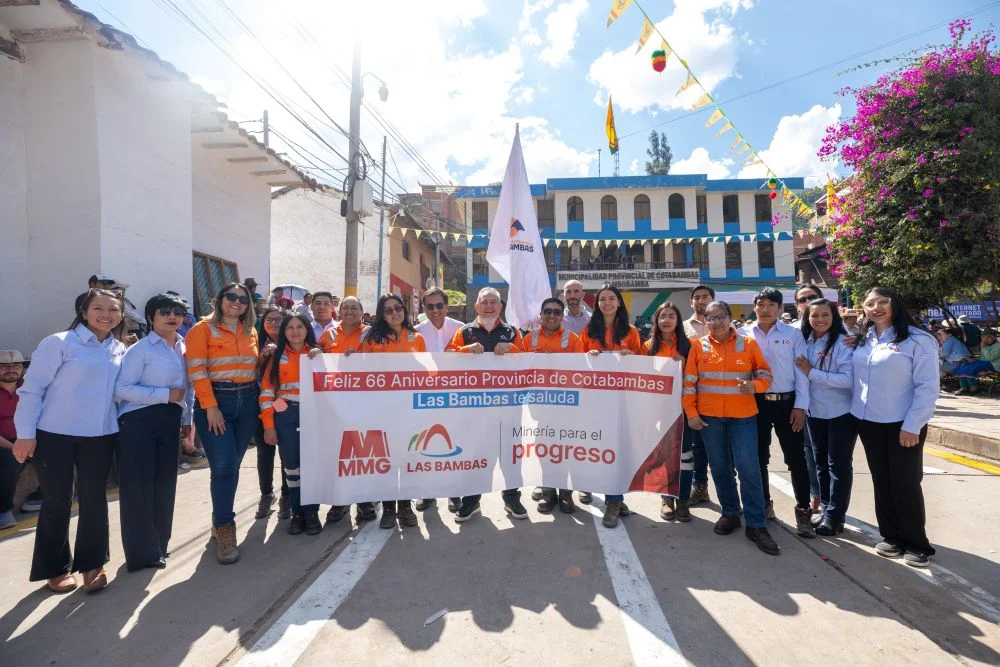
On August 30, the province of Cotabambas, located in the Apurímac region of Peru, marked a significant historical milestone: the 66th anniversary of its political restitution. Amidst the vibrant atmosphere of civic parades, cultural displays, and official commemorations, Minera Las Bambas—one of the world’s largest copper mining operations—took center stage not only as a guest but as a strategic partner in regional development.
During the festivities, the mining company reaffirmed its commitment to the province by announcing a direct investment of S/ 1.5 million aimed at strengthening the local healthcare infrastructure. This initiative, executed through the established "Convenio Marco" (Framework Agreement), serves as a testament to the evolving model of collaborative governance between private industry and provincial authorities.
Chronology: From Political Restitution to Modern Partnership
To understand the significance of this anniversary, one must look back at the trajectory of Cotabambas.
- August 30, 1958: Cotabambas achieved its political restitution, reclaiming its status as a provincial entity. This date has since become the focal point for regional identity and pride.
- The Mining Era: With the arrival of large-scale mining projects like Las Bambas, the province transitioned into a critical hub for the Peruvian economy. However, this transition brought the challenge of ensuring that national wealth translates into local well-being.
- The Framework Agreement (Convenio Marco): Over the past decade, a new mechanism for dialogue was established. This mechanism allows for the transparent allocation of funds toward projects identified as "priorities" by the community, moving away from reactive philanthropy toward proactive, planned development.
- August 30, 2024 (66th Anniversary): The latest celebration served as a platform for the delivery of critical medical equipment, marking a shift toward high-impact social investments that address specific gaps in the rural healthcare system.
Supporting Data: Direct Impact on Healthcare
The S/ 1.5 million investment is not a generalized donation; it is a targeted intervention designed to mitigate the specific challenges of geography and medical access in the Andean highlands. The allocation is divided into two strategic pillars:
1. Enhancing Rural Mobility (S/ 566,667)
The acquisition of a Type II Rural Ambulance addresses one of the most critical issues in the region: the "golden hour" in emergency medical care. Due to the rugged topography of Cotabambas, the time it takes to transport a patient from a remote community to a hospital can be the difference between life and death. This vehicle is equipped for basic life support and is designed to navigate the difficult terrain of the province, ensuring that rural families have reliable access to tertiary healthcare facilities.
2. Upgrading Surgical and Emergency Infrastructure (S/ 933,333)
The remainder of the funds—nearly a million soles—is focused on modernizing the hospital’s technological capacity:
- Laparoscopic Surgery System: By introducing minimally invasive surgical technology, the local health center can now perform procedures that previously required patients to travel to larger cities like Cusco or Lima. This reduces the financial and emotional burden on families.
- Cold Chain Infrastructure: Essential for the preservation of vaccines and medication, the construction of a robust cold chain is a vital upgrade for the public health system.
- Emergency Triage and Tópico: The construction of a dedicated emergency room ensures that acute cases are managed in a sanitary, organized environment, increasing the hospital’s daily patient capacity.
Official Responses and Stakeholder Perspectives
The Industry Stance
José Chirinos, representing Minera Las Bambas, emphasized that the company’s presence in the region is defined by more than just extraction. During his address at the anniversary ceremony, he stated:
"In this 66th anniversary, we want to pay a fair tribute to Cotabambas and, at the same time, contribute with actions that directly benefit its families. We will continue working together, convinced that doing mining for progress also means contributing to the well-being and development of our province."
This rhetoric marks a shift in the corporate narrative, positioning the mine as an engine for institutional strengthening rather than a standalone economic entity.
The Municipal and Community Perspective
Local authorities viewed the donation as a collaborative win. By working through the Convenio Marco, the municipality maintained control over project selection, ensuring the equipment aligns with the actual needs of the residents rather than the preferences of the donor. This collaborative model is intended to reduce social friction and build long-term trust between the mining operation and the surrounding communities.
The Broader Implications: Mining as a Driver of Regional Development
The investment in Cotabambas offers a microcosm of the "Shared Value" model in the mining industry. As global demand for copper rises—driven by the green energy transition—the expectations on mining companies to act as catalysts for development have never been higher.
1. Reducing the Healthcare Gap
In many rural regions of Peru, the state’s presence in healthcare has historically been insufficient. When companies like Las Bambas fill these gaps, they effectively become social service providers. While this is a temporary solution for the community, it presents a challenge for long-term sustainability: How will these assets be maintained and operated once the initial investment is spent? The involvement of the local municipal government is the key factor in ensuring these systems remain functional for years to come.
2. The Social License to Operate
Mining in Peru often faces resistance due to environmental and social concerns. By investing in highly visible, essential services like healthcare, companies attempt to secure their "social license to operate." When a resident of Cotabambas sees an ambulance arrive at their village, the perception of the mining company shifts from an external entity to a vital partner in their daily life.
3. Strengthening Local Governance
The Convenio Marco acts as a training ground for local governments. By managing complex procurement processes for medical equipment, municipal officials gain experience in public administration and project oversight. This contributes to the professionalization of the local bureaucracy, which is a necessary step for the eventual decentralization of power in Peru.
Conclusion: Looking Toward the Future
The 66th anniversary of Cotabambas was more than a celebration of the past; it was an exercise in planning for the future. Through the partnership between Minera Las Bambas and the provincial authorities, the community has taken a tangible step toward self-sufficiency in public health.
As the province looks toward its 70th and 80th anniversaries, the success of these health initiatives will serve as a benchmark. If the infrastructure is maintained and the health outcomes for the population improve, it will provide a blueprint for how mining operations can integrate into the social fabric of the regions where they operate.
For now, the people of Cotabambas have secured a modern medical infrastructure that will serve thousands of families. It is a reminder that in the high-stakes world of modern mining, the most valuable commodity is not just copper, but the stability and health of the people who call the mining region their home.
The commitment from Las Bambas to "work in an articulated manner" serves as a pledge that this anniversary marks not an end, but a new chapter in a partnership intended to outlast the life of the mine itself. Through consistent investment in human capital and infrastructure, the promise of "mining for progress" finds its most profound expression in the improved quality of life for the people of the Andes.