TARIJA, BOLIVIA – In a significant milestone for regional infrastructure and economic integration, the Bolivian government is set to officially inaugurate the Acheral-Choere highway segment this Wednesday. The project, which faced several challenges before its successful reactivation and completion, represents a pivotal development for the department of Tarija. With a total investment exceeding Bs 100 million, the delivery of this road is expected to catalyze trade, improve transit safety, and solidify the long-awaited "Ruta al Chaco."
The inauguration ceremony will be led by President Rodrigo Paz Pereira and the Minister of Public Works, Mauricio Zamora. Their presence underscores the administration’s commitment to finishing legacy infrastructure projects that serve as the backbone of the nation’s logistical network.
Technical Scope and Engineering Marvels
The Acheral-Choere project is not merely a stretch of asphalt; it is a complex engineering endeavor designed to navigate the challenging topography of the Tarija region. Spanning 17.59 kilometers, the project was executed with a focus on durability, safety, and long-term sustainability.
The technical specifications of the construction include:
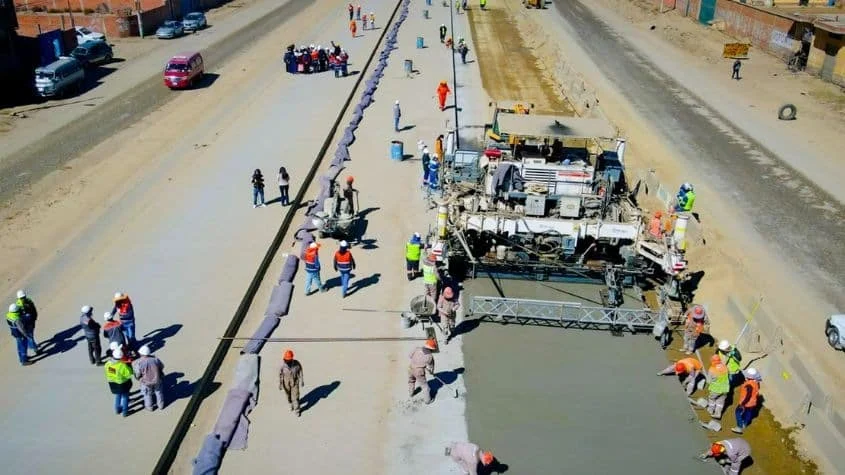
- Asphalt Paving: High-specification road surfacing designed to withstand heavy freight traffic and extreme weather conditions.
- Structural Components: The inclusion of eight massive viaducts and two major bridges, which were essential to bypass difficult terrain and steep elevations.
- Slope Stabilization: Extensive geological work was conducted to prevent landslides and soil erosion, a critical necessity in the Andean and sub-Andean regions of Bolivia.
- Hydraulic Infrastructure: A comprehensive drainage system has been installed to manage high-volume runoff during the rainy season, ensuring the road remains operational year-round.
These elements combine to transform a historically difficult transit route into a modern corridor, effectively reducing travel times and lowering vehicle maintenance costs for local transport operators.

A Chronology of the Project: From Inception to Completion
The path to the completion of the Acheral-Choere highway has been a journey defined by perseverance. The project was initially conceived as part of a broader strategy to connect the interior of Tarija with the prosperous Chaco region.
Phase 1: Planning and Initial Bidding
The project entered the planning phase with the objective of bypassing older, narrower, and more dangerous roads that had hindered commercial growth for decades. The initial bidding processes aimed to secure contractors capable of handling the high-altitude engineering required for viaduct construction.
Phase 2: The Stagnation Period
Like many infrastructure projects in the region, the Acheral-Choere segment faced significant delays. Issues ranging from budgetary reallocations to administrative bottlenecks slowed progress, leaving the project in a state of uncertainty for an extended period. During this time, local stakeholders and transport unions frequently expressed concerns regarding the delay, citing the economic impact on the Chaco’s productivity.
Phase 3: Reactivation and Final Execution
Under the current administration, a concerted effort was made to prioritize the completion of stalled projects. The Ministry of Public Works, led by Mauricio Zamora, conducted a thorough audit of the construction requirements, secured the necessary funding to reach the Bs 100 million investment threshold, and re-mobilized the workforce. The final push involved round-the-clock labor to meet the inauguration deadline, ensuring that the stabilization and final asphalt layers were completed to international standards.
Implications for the Chaco Tarijeño
The completion of this segment is a cornerstone for the "Ruta al Chaco," a strategic arterial road that serves as the gateway to Caraparí, Villa Montes, and Yacuiba. The implications of this infrastructure are far-reaching:

Economic Integration
The Chaco region is a vital hub for agricultural and hydrocarbon activity. By streamlining the connection between Tarija and these urban centers, the government is lowering the "logistical tax" on producers. Farmers can now transport their goods to central markets with greater speed and less risk of spoilage, which is expected to boost regional GDP.
Enhanced Safety and Transit
The old routes were characterized by narrow lanes and sharp curves that were frequently the site of accidents. The new viaducts and widened roadway allow for safer passage, particularly for the heavy cargo trucks that move essential resources to the border regions.
Social Connectivity
Beyond economics, the road serves a social function. It facilitates easier access to healthcare, education, and government services for rural populations living along the route. It effectively shrinks the distance between the isolated communities of the Chaco and the administrative center of Tarija.
Official Responses and Strategic Vision
During the preparations for the ribbon-cutting ceremony, government officials emphasized that this project is part of a larger, systemic approach to national development.
"The delivery of Acheral-Choere is not just an isolated road project; it is a promise kept to the people of Tarija," stated a representative from the Ministry of Public Works. "By investing over Bs 100 million, we are demonstrating that this administration prioritizes the infrastructure that connects our citizens, drives our economy, and ensures that no region is left behind."

Local government leaders in Tarija have also praised the collaboration between the national and regional entities. The project serves as a model for how inter-governmental cooperation can overcome the bureaucratic gridlock that often plagues large-scale public works.
Supporting Data: Why This Matters
To understand the scale of the investment, one must look at the traffic volume and economic potential of the route.
- Traffic Flow: The corridor serves thousands of vehicles daily, ranging from passenger buses to heavy-duty fuel tankers and agricultural haulers.
- Investment Efficiency: While the final cost reached over Bs 100 million, the cost-benefit analysis suggests that the reduction in transit time and vehicle repair costs will offset the initial expenditure within the next decade.
- Regional Synergy: The road acts as a bridge between the Andean highlands and the Chaco lowlands, two regions with distinct economies that are now more integrated than ever.
Looking Ahead: The Future of Bolivian Infrastructure
As the ribbon is cut this Wednesday, the conversation in Bolivia is already shifting toward the next phase of development. The successful completion of Acheral-Choere provides a "blueprint for success" that the Ministry of Public Works intends to replicate in other parts of the country.
Future plans include the continuous maintenance of the new segment to prevent the degradation that often plagues high-traffic roads in humid or mountainous climates. Furthermore, there is talk of expanding the connectivity of the Chaco route further toward the borders of Argentina and Paraguay, effectively positioning Bolivia as a central transit hub for South American trade.
The inauguration of this highway is a testament to the fact that when infrastructure is prioritized and effectively managed, it has the power to transform the socio-economic fabric of a nation. For the residents of Tarija and the Chaco, the road ahead is now smoother, faster, and full of promise.