The Peruvian financial landscape has entered a new chapter of institutional continuity. The Judiciary recently officiated the swearing-in of the first three new directors appointed by the Executive Branch to the Board of the Central Reserve Bank of Peru (BCRP) for the 2026-2031 term. This transition, marked by the reappointment of highly experienced technocrats, signals a deliberate commitment to macroeconomic stability in an era of global economic volatility.
While these three officials have assumed their roles, the composition of the seven-member board remains incomplete. The nation awaits the finalization of the legislative process regarding the remaining three directors to be designated by the Senate, as well as the formal ratification and subsequent oath-taking of Julio Velarde, who has been confirmed to lead the institution for another five-year tenure.
The Core Appointments: Profiles of Economic Expertise
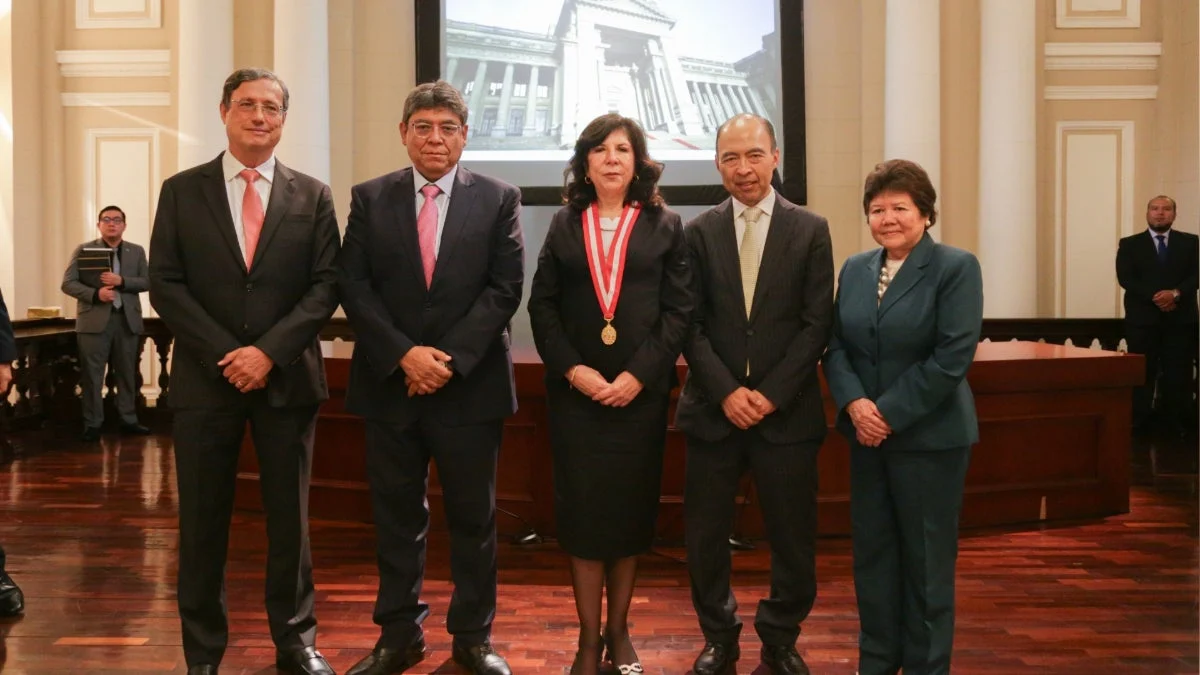
The ceremony, presided over by the President of the Judiciary, Janet Tello Gilardi, served as a formal validation of the administration’s strategy to prioritize deep technical knowledge over political experimentation. The three newly sworn-in directors—Inés Marylin Choy Chong, Luis Miguel Palomino Bonilla, and Gustavo Adolfo Yamada Fukusaki—were officially appointed via Supreme Resolution No. 250-2026-PCM on August 5.
Inés Marylin Choy Chong: The Institutional Pillar
Marylin Choy is widely regarded as a stalwart of the BCRP. A career official who joined the institution in 1977 after graduating at the top of her class from the XXIV University Extension Course, she represents the historical memory of the Bank. Holding a degree in Economics from the National University of San Marcos and a Master’s in Economics from Rice University, her expertise is grounded in both local institutional culture and international academic rigor. Her previous tenure as General Manager (2020-2021) and her leadership in the Central Operations Division make her a critical asset for monetary policy implementation.
Luis Miguel Palomino Bonilla: Financial Strategy and Market Acumen
Luis Miguel Palomino brings a distinct focus on financial markets. An economist from the University of the Pacific with a PhD in Finance from the Wharton School at the University of Pennsylvania, Palomino’s resume bridges the gap between academia and the private sector. Having served as a director and vice president of the BCRP between 2016 and 2021, and as a director of the Lima Stock Exchange, he understands the mechanical intersection of monetary policy and capital market behavior. His current role as president of the Peruvian Institute of Economics (IPE) further underscores his deep engagement with the structural challenges of the Peruvian economy.
Gustavo Adolfo Yamada Fukusaki: Academic Depth and Policy Research
Gustavo Yamada completes this trio with a focus on labor economics and social policy. With a PhD in Economics from Columbia University and a long-standing career as a principal professor at the University of the Pacific, Yamada provides the Board with analytical depth. His experience at the Inter-American Development Bank (IDB) and the International Monetary Fund (IMF), combined with his previous service as a Vice Minister of Social Promotion, ensures that the BCRP remains attuned to the socio-economic impacts of its decisions.
Chronology of the Transition
The path to the current Board composition has been a meticulous exercise in legal and administrative coordination.
- August 5, 2026: The Executive Branch issues Supreme Resolution No. 250-2026-PCM, formally designating the three directors.
- Late August 2026: Official swearing-in ceremony conducted by the Judiciary, signaling the legal commencement of the 2026-2031 term for the Executive-appointed cohort.
- Ongoing Phase: The Senate is tasked with the selection and vetting of the remaining three directors. Concurrently, the ratification process for Julio Velarde, proposed by the President of the Republic, Keiko Fujimori, continues to move through the legislative pipeline.
- Future Milestone: Once the Senate completes its appointments and ratifies the presidency of the BCRP, a final swearing-in ceremony will be held to formalize the full seven-member board.
Macroeconomic Context: The BCRP’s Expanding Mandate
The transition of the board occurs against a backdrop of significant modernization within the BCRP. Under the current leadership, the Bank has been aggressively pushing for the digitalization of the Peruvian economy.
One of the most notable recent initiatives is the BCRP’s push for instantaneous payment systems. Banks, savings institutions, and digital wallets are currently transitioning to a new regulatory framework that will allow for real-time fund transfers using only a mobile phone number, DNI, or QR code. This move is designed to diminish the reliance on cash, reduce informality in the financial system, and increase transaction efficiency for millions of Peruvians.
Furthermore, the Bank has demonstrated resilience in its forecasting. Despite the environmental and logistical challenges posed by the Niño Costero weather phenomenon, the BCRP recently raised its growth projection for the Peruvian economy to 3.4% for 2026. This optimism is tied to the expectation that a stable, experienced board will manage inflation effectively and maintain the independence of the Central Bank from short-term political pressures.
Official Responses and Institutional Presence
The swearing-in ceremony served as more than a formality; it was a display of institutional cohesion. The presence of key government officials, including the Minister of Economy and Finance, Elmer Cuba, and the Vice Minister of Finance, Erick Lahura, alongside the BCRP’s General Manager, Paul Castillo, emphasized the alignment between the Ministry of Economy and the Central Bank.
For the international investment community, the presence of these specific individuals is a "seal of approval." By selecting economists who have spent decades within the BCRP or in high-level research institutions, the government has mitigated fears of a radical shift in monetary policy. The consensus among financial analysts is that the new Board is composed of "technocratic heavyweights" who prioritize low inflation and currency stability above all else.
Implications for the 2026-2031 Period
The composition of the Board for the next five years carries significant implications for Peru’s development trajectory:
- Monetary Policy Independence: By reappointing veteran figures, the state reinforces the autonomy of the BCRP, protecting it from populist impulses that often plague emerging market central banks.
- Financial Inclusion: The ongoing modernization of payment systems, led by the BCRP, will continue to integrate the informal sector into the formal economy, a long-term goal that is vital for sustainable growth.
- Credibility and Investment: In a global environment characterized by high interest rates and geopolitical uncertainty, having a predictable and respected Board of Directors provides Peru with a "credibility premium," keeping borrowing costs lower than they would be in a less stable institutional environment.
- Addressing Structural Inequality: With experts like Gustavo Yamada on the board, the BCRP is better positioned to understand how monetary policy affects the labor market, ensuring that the bank’s actions are not viewed in isolation from the country’s social realities.
Looking Ahead: Completing the Quorum
The appointment process is currently in a state of "legislative pause" regarding the Senate-appointed seats. The appointment of these three additional directors is critical, as the BCRP board functions most effectively when all seven members are present to deliberate on interest rate movements, reserve requirements, and the management of the country’s international reserves.
Furthermore, the ratification of Julio Velarde as President is perhaps the most significant outstanding piece of the puzzle. Velarde’s leadership has been a cornerstone of Peruvian economic policy for over a decade, providing a sense of security to both domestic businesses and foreign investors. His continued presence, alongside the newly sworn-in directors, ensures that the institution will maintain its trajectory of sound financial governance.
As the BCRP navigates the complexities of the second half of the 2020s, the continuity represented by Choy, Palomino, and Yamada offers a foundation of stability. For Peru, this is not just a change in personnel; it is a reaffirmation of the rules of the game that have allowed the country to weather previous crises and set the stage for future growth. The focus now turns to the Senate to complete the Board, ensuring that the institution can return to its full operational capacity as soon as possible.